Business Expense Reduction: 10 Proven Programs for 2026

TL;DR
Business expense reduction in 2026 demands more than broad budget cuts. Cloud waste is rising for the first time in five years, SaaS auto-renewals keep catching teams off guard, and parcel carriers are quietly hiking surcharges. This guide compares 10 programs and categories (with real pricing models, user sentiment, and tradeoffs) that can free up cash this quarter without ripping out existing systems. If you want the fastest path to multi-category savings, start with a free Savings Estimate Report that benchmarks your current spend in about 48 hours.
At a Glance: How to Reduce Business Expenses in 2026
To achieve maximum cost reduction in 2026, businesses should focus on three high-impact areas:
Cloud & AI FinOps: Address the 29% average waste in cloud spend by automating commitment purchases.
SaaS Governance: Reclaim the 15-20% of licenses that sit idle using automated license deprovisioning.
Switch-less Negotiations: Use SKU-level benchmarks to lower rates with current vendors in categories like parcel shipping and payment processing without the operational risk of switching providers. The Fastest ROI: Programs using a shared-savings model (like Varisource or ProsperOps) offer the lowest barrier to entry as they require $0 upfront budget.
What Changed: The 2026 Expense Headwinds Hitting Every Budget
Before picking a program, it helps to understand why costs are climbing even for companies that already went through belt-tightening rounds.
Cloud waste is back up. Flexera’s 2026 State of the Cloud report found that wasted cloud spend rose to 29%, the first increase in five years, driven largely by AI workloads. Meanwhile, 81% of organizations now use generative AI, and 63% have dedicated FinOps teams trying to manage the sprawl. Source. The takeaway: even “optimized” environments need a fresh look.
SaaS overspend is structural, not accidental. Zylo’s SaaS Management Index continues to flag multi-million-dollar annual waste from unused or underused licenses across enterprise portfolios. Source. Practitioners on Reddit’s r/procurement thread put it bluntly: “Auto-renew is the hidden tax. Teams miss notice windows, the owner who signed the deal leaves, and the vendor locks you in for 12 more months at a higher rate.” Source.
Parcel carriers raised more than base rates. FedEx and UPS 2026 General Rate Increases (GRIs) signal continued upward pressure, but the real cost inflation comes through surcharges: residential delivery, DIM weight adjustments, and fuel add-ons that don’t show up in headline discounts. Source.
Payment processing fees are quietly creeping. Interchange rates, junk fees, and opaque tiered pricing models mean many businesses pay 0.5% to 1.0% more than they should on every card transaction. Source.
These headwinds make business expense reduction not a one-time project but an ongoing discipline. For a broader view of enterprise cost reduction strategies, the key shift is from reactive cuts to proactive, data-backed savings execution.
Category | Average Annual Waste | 2026 Trend | Risk Factor |
Cloud/Infrastructure | 29% | Increasing (AI Workloads) | High |
SaaS Licenses | 15%–25% | Stable | Medium |
Parcel Shipping | 15%–20% | Increasing (Surcharges) | High |
Telecom/Internet | 10%–12% | Stable | Low |
At-a-Glance Comparison Table
Program | Price Model | Key Differentiator | Best For | Avg Rating | Notable Tradeoffs |
|---|---|---|---|---|---|
Varisource | Shared savings, no upfront cost | Group buying + rebates + benchmarks across 300+ categories | Mid-market and enterprise indirect spend | N/A (see proof points) | Not a full P2P suite |
Vendr | $36K–$120K/yr (G2) | SaaS buying with benchmarks + savings guarantees | High SaaS spend orgs ($1M+) | 4.6/5 (G2) | SaaS-centric only |
Tropic | From ~$3,167/yr (Capterra, verify) | SaaS procurement + AI benchmarks + workflows | Teams wanting in-platform orchestration | G2 “Leader” | Pricing varies; info asymmetry |
Zylo | Quote-based | Deep license utilization + renewal management | Enterprises rightsizing SaaS | 4.8/5 (G2) | Requires integrations; SMP scope |
Productiv | Quote-based | Feature-level usage analysis + governance | Portfolio rationalization | 4.6/5 (G2) | Learning curve for advanced reporting |
ProsperOps | Savings-share | Automated cloud commitment optimization | Cloud-heavy orgs | 4.7/5 (G2) | Scope limited to rate optimization |
Ramp | No annual fee (core) | Free card + expense controls + credits | Fast-moving finance teams | Reviewed by NerdWallet | New Bill Pay fees as of June 2026 |
Navan | Base fee + per-booking | Unified T&E + expense management | Travel-heavy companies | Mixed (Reddit) | UX variance; per-trip costs |
Parcel shipping optimization | Contingency/savings-share | Contract audits + multi-carrier simulations | E-commerce/ops with parcel volume | Community-recommended | Data prep needed; watch lock-ins |
Payments fee audit | % of savings or flat + % | Interchange-plus shift + fee cleanup | Card-heavy businesses | Practitioner-validated | Provider incentives can conflict |
Now, the full breakdown.
The 10 Business Expense Reduction Programs
1. Varisource
Best for: Mid-market and enterprise teams that need fast, low-risk savings across 100+ indirect categories, not just software.
Pricing
No upfront cost. Varisource operates on a shared-savings model, meaning you only pay when savings are actually achieved. A free Savings Estimate Report is typically delivered within 48 hours of sharing your AP vendor data.
What you get
Group buying discounts that deliver hard-dollar savings versus prior or list pricing
Rebates on renewals and new purchases (often without switching vendors)
50M+ SKU-level and quote-level data points for price benchmarking
Renewal savings automation with contract reminders to avoid auto-renew traps
AI agents purpose-built for savings: Savings AI, Benchmark AI, Sourcing AI, Extraction AI, Request AI, Negotiation AI, and Contract Reminder AI
Done-for-you and done-with-you execution across SaaS, cloud, security, telecom, hardware, payments, travel/shipping, MRO, office supplies, insurance, consulting, and managed services
Centralized tracking of contracts, inventory, and spend with escalation support
Explore the full list of savings categories to see just how broad the coverage is.
User proof points
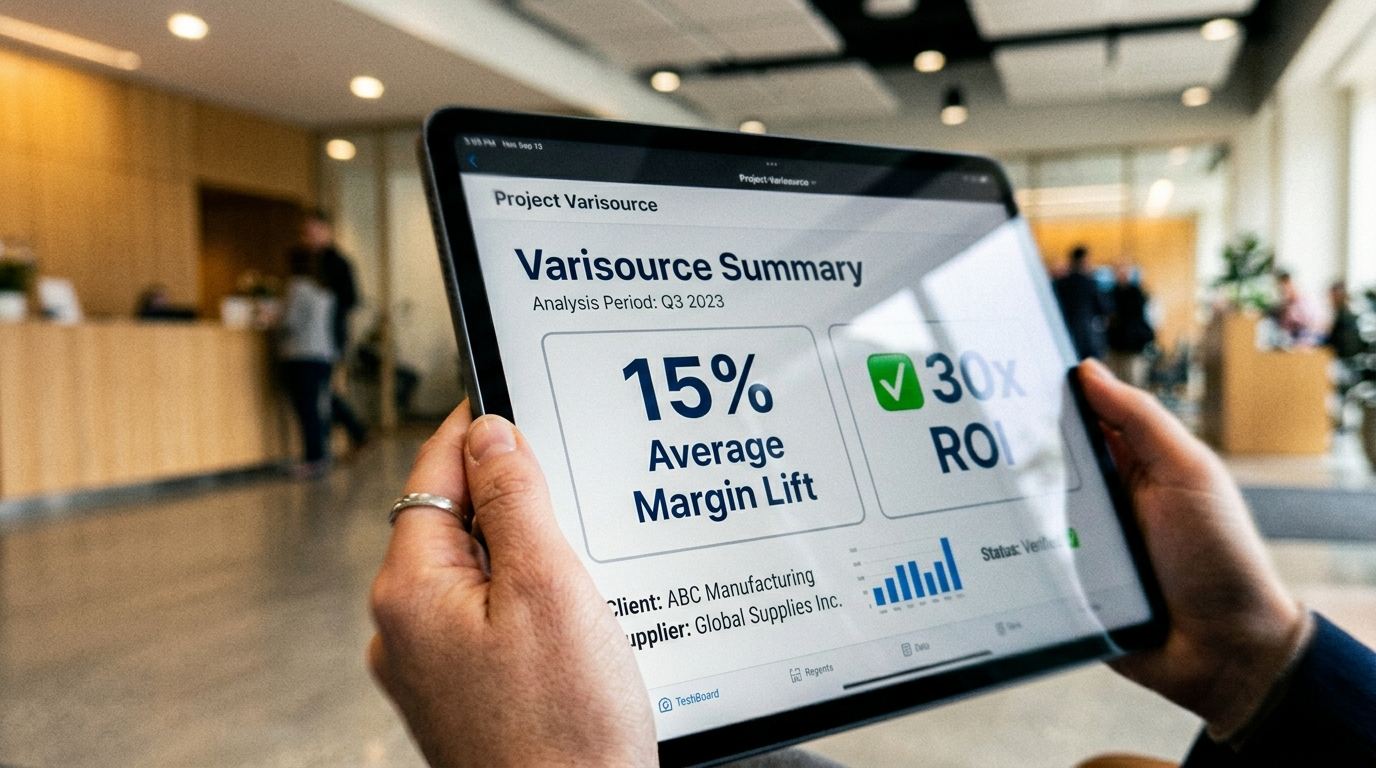
Varisource reports 30x ROI, less than 30 days to initial savings, and a 15% average margin lift. Through partners like OMNIA Partners, the platform has documented 20–30%+ average savings and 120+ hours saved per month.
Tradeoffs
Not a full procure-to-pay suite, so it complements rather than replaces existing procurement systems
Requires sharing AP and vendor data for the benchmarking engine to work
Programs may leverage preferred or partner ecosystems
No public pricing tiers listed
Where it fits in your 30/60/90
Varisource is the fastest entry point because the shared-savings model eliminates budget approval friction. Request the free estimate in week one, review benchmark-backed savings targets by week two, and begin capturing discounts and rebates within the first 30 days.
Get a free Savings Estimate Report to see benchmark-backed savings across your vendor portfolio, delivered in about 48 hours with no upfront cost.
2. Vendr
Best for: Companies with $1M+ annual SaaS spend seeking outsourced negotiation leverage and a predictable renewal cadence.
Pricing
G2 lists three editions: Starter at $36,000/year, Growth at $78,000/year, and Enterprise at $120,000/year, each with a savings guarantee. Pricing table last updated October 2024. Treat as directional and verify during the sales cycle. Source.
What you get
Negotiation services for SaaS renewals and new purchases
Renewal tracking and supplier record management
Integrations with G Suite, Okta, and Zip
Price benchmarks drawn from transaction data
User perspective
G2 reviewers (4.6/5 overall) highlight pricing transparency and time saved. Some note that results can vary deal to deal, and a few mention occasional technical hiccups. Source.
Tradeoffs
Focused exclusively on SaaS, so it doesn’t cover telecom, shipping, payments, or other indirect categories
Annual commitment starts at $36K, which means you need significant SaaS volume to justify the cost
Savings outcomes are not guaranteed to a specific dollar figure on every individual deal
3. Tropic
Best for: Teams that want in-platform procurement orchestration combined with pricing intelligence for SaaS purchases.
Pricing
Capterra lists a starting plan at approximately $3,167/year, though pricing and packaging vary. Confirm scope and inclusions directly with sales. Source.
What you get
SKU-level price benchmarks for SaaS contracts
Negotiation playbooks and AI-assisted recommendations
Intake and renewal workflows built into the platform
AI agents that surface savings opportunities
User perspective
G2 reviewers praise the “hard dollar” savings tied to pricing intelligence, calling out the ability to go into negotiations armed with market data. Source.
Tradeoffs
Pricing signals from public sources can be inconsistent, so always verify what’s included
Primarily SaaS-focused, similar to Vendr
Smaller teams may find the workflow features heavier than needed
For IT teams managing SaaS, cloud, and security renewals, tools like Tropic handle one slice of the puzzle, but the broader challenge is connecting SaaS savings with all other indirect categories.
4. Zylo
Best for: Enterprises with sprawling SaaS portfolios that need a system of record and aggressive license rightsizing before renewals.
Pricing
Quote-based. Tiers exist but are not publicly priced.
What you get
License utilization insights down to the user level
Renewal calendar with alerts and deprovisioning recommendations
Benchmarking data for negotiation leverage
Optional managed services for renewal execution
User perspective
Zylo holds a 4.8/5 on G2, with users calling out improved license reclamation and portfolio visibility as the primary wins. Source.
Tradeoffs
Value depends heavily on integrations and data breadth across SSO, financial, and HR systems
Scope is limited to SaaS management, so non-software categories require separate tools
Setup and integration can take time for large environments
Here’s a quick math exercise: reclaiming just 15% of idle seats in a $1M SaaS portfolio frees approximately $150,000 per year. Layer on one category re-tiering at 20% savings ($200K) and you’re looking at $350K annually from two moves alone.
5. Productiv
Best for: Organizations that want governance plus data-driven renewal cases built on actual feature-level usage.
Pricing
Quote-based.
What you get
Feature-level usage analysis (not just login data, but actual feature adoption)
Intake and renewal workflows
AI-powered price benchmarks
Shadow IT detection and cost allocation
User perspective
Productiv holds a 4.6/5 on G2. Reviewers praise the visibility into app usage and the leverage it provides during renewals, though some cite a learning curve for advanced reporting. Source.
Tradeoffs
Implementation depth requires time investment, especially for large portfolios
Reporting complexity may overwhelm lean teams
Like other SMP tools, scope is limited to SaaS
For more on how AI procurement tools can accelerate cost savings across categories beyond just software, the combination of AI benchmarking and execution support is where the next wave of business expense reduction is heading.
6. ProsperOps
Best for: Cloud-heavy organizations with fluctuating usage and limited bandwidth to actively manage commitment purchases (Savings Plans, Reserved Instances).
Pricing
Savings-share model. ProsperOps charges a percentage of realized savings rather than a flat license fee. Gartner Peer Insights and community sources confirm the usage/savings-based structure. Source.
What you get
Automated management of Savings Plans and Reservations across AWS, Azure, and GCP
“Effective savings rate” reporting that normalizes commitment performance
Near-real-time execution that adjusts to workload changes
FinOps-friendly dashboards
User perspective
ProsperOps holds a 4.7/5 on G2. FinOps community threads frequently cite tangible results versus manual commitment management, with practitioners noting it removes the guesswork from commitment purchasing. Source.
Tradeoffs
Scope is centered on rate optimization (commitment management), not application rightsizing or architecture decisions
Verify how fees apply to future-realized savings versus immediate savings
Works within specific cloud savings scope, so you may need complementary tools for broader FinOps
Given that cloud waste just hit 29% according to Flexera’s 2026 data, this is one of the most time-sensitive business expense reduction moves available. Source.
7. Ramp
Best for: Fast-moving finance teams wanting immediate control over T&E and AP spend with minimal software fees.
Pricing
The core corporate card and expense platform has no annual fee. However, Ramp’s Bill Pay service began charging per-transaction fees effective June 1, 2026 (waived under certain account conditions). Check the latest fee schedule and underwriting requirements. Source.
What you get
Spend controls and real-time policy enforcement
Automated receipt capture and categorization
Credits and vendor discounts through Ramp’s partner network
Accounting integrations (NetSuite, QuickBooks, Sage, and others)
User perspective
Practitioners on Reddit praise the strong controls and credits. The April 2026 Bill Pay fee announcement drove active cost comparisons in the r/Ramp community, with users evaluating whether the Bill Pay changes alter the overall value equation. Source.
Tradeoffs
Corporate card underwriting has thresholds that may exclude earlier-stage companies
Bill Pay pricing changes mean you need to model total cost of ownership, not just the “free” card
Vendor savings perks are curated and may not cover your specific stack
8. Navan
Best for: Travel-heavy companies that want to consolidate booking, expense, and policy enforcement under one roof.
Pricing
Typically a base platform fee plus per-booking transaction fees for SMB and mid-market. Confirm contract details including term length and support tiers. Source.
What you get
Unified travel booking and expense management
Negotiated airfare and hotel content
Policy controls with real-time traveler nudges
Analytics on travel spend patterns and compliance
User perspective
Reddit sentiment on Navan is mixed. Some users in r/humanresources report smooth deployments and low per-trip costs that keep finance leadership happy, while others flag UX variance and slow support response times. Source.
Tradeoffs
UX quality varies by deployment configuration and company size
Per-booking fees can add up for high-volume travel programs
Ensure fee transparency and SLA commitments before signing multi-year terms
9. Parcel Shipping Contract Optimization
Best for: E-commerce or distributed shipping operations feeling the pinch from 2026 GRIs and surcharge inflation.
Pricing
Most providers operate on a contingency or savings-share basis, sometimes with a flat-fee audit component plus a percentage of documented savings.
What you get
Simulation of multi-carrier lanes to identify optimal routing
Surcharge-focused analysis (residential, DIM weight, fuel, minimum charges)
Audit and claim recovery for billing errors
Renegotiation playbooks and benchmark data
User perspective
Operators on Reddit’s r/logistics and r/UPS forums cite 15–25% cost deltas simply by optimizing routing choices and negotiating tiered discounts. The consensus: multi-carrier strategy beats single-carrier loyalty, especially when volumes fluctuate seasonally. Source.
One experienced shipper noted that “the real money is in surcharges, not base rates. Negotiate fuel, residential, and DIM separately or you’ll leave the biggest savings on the table.”
Tradeoffs
Data preparation and historical shipment analysis require upfront time investment
Some providers lock clients into long-term agreements, so scrutinize portability and exit terms
Savings depend on volume consistency; highly seasonal shippers may see less predictable results
10. Payments Fee Audit and Interchange Optimization
Best for: Card-heavy businesses (B2B or omnichannel retail) with opaque processing statements and rising effective rates.
Pricing
Typically a percentage of realized savings or a flat audit fee plus contingency.
What you get
Migration from flat or tiered pricing to interchange-plus (the most transparent model)
Level-2 and Level-3 data enablement for lower B2B interchange rates
Junk fee identification and cleanup
Downgrade prevention (ensuring transactions qualify at the lowest interchange tier)
Statement transparency and ongoing monitoring
User perspective
Small business owners on Reddit report successfully negotiating reductions with their current processors, no switch required, once they understood line-item details. The key warning from multiple threads: be cautious about “no-fee processing” programs that simply shift costs to customers through surcharges, which can hurt the buying experience. Source. Source.
Tradeoffs
Provider incentives can conflict with your interests (they earn more when you pay more), so insist on transparent, written rate structures
Some auditors focus on one-time gains rather than ongoing monitoring
Results vary based on transaction volume, average ticket size, and card mix
Why AI-Powered Sourcing is the 2026 Standard
Traditional procurement relies on historical data; AI-driven expense reduction uses real-time, SKU-level benchmarks across thousands of companies.
Predictive Renewals: AI agents now predict price hikes 90 days out based on market volatility.
Automated Benchmarking: Instead of manual "three-bid" processes, AI instantly compares your quote against 50M+ data points.
Negotiation Bots: Platforms are increasingly using "Request AI" to handle initial vendor outreach, ensuring no contract falls into an auto-renew trap.
The Four Levers of Business Expense Reduction
Every program above maps to one or more of these four savings levers. Understanding the framework helps you stack multiple approaches for compounding results.
Buy Cheaper. Group buying, benchmarks, and rebates. This is where Varisource’s network (covering 300+ categories with 50M+ data points) and Vendr’s SaaS benchmarks operate. The goal is paying less for what you already need.
Use Less. License reclamation, rightsizing, and workload shutdowns. Zylo, Productiv, and ProsperOps live here. Every unused seat or oversized instance is pure waste.
Pay Smarter. Interchange-plus pricing, better contract terms, per-booking models that align cost with value. Payments audits and Ramp’s controls fit this lever. So does renegotiating parcel contracts to target surcharges, not just base rates.
Avoid Leaks. Auto-renew traps, zombie vendor subscriptions, surcharge creep, and missed claim recoveries. This is the most overlooked lever, and it’s where the Renewal 120 framework (below) pays off.
The most effective business expense reduction programs stack at least two of these levers simultaneously. That’s why broad-coverage platforms tend to outperform single-category tools on total savings.
The Renewal 120 Framework: Stop Leaving Money on the Table
One of the most common (and expensive) mistakes in business expense reduction is scrambling at renewal time. Practitioners on Reddit consistently flag auto-renewals as the single biggest source of avoidable overspend. Here’s a timeline that puts you in control.
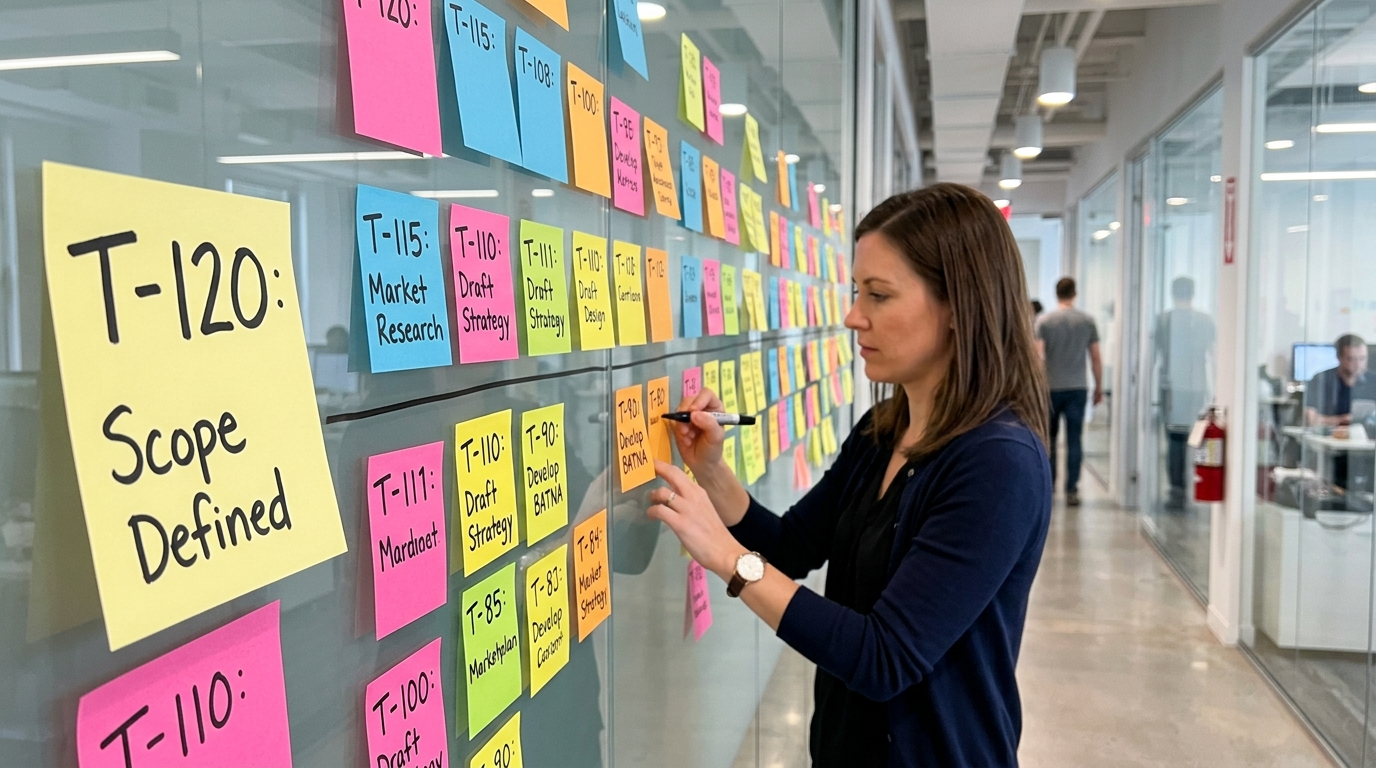
T-120 days (four months out): Benchmark current pricing using market data. Run a usage audit to identify underutilized licenses or features. Build internal consensus on what you actually need for the next term.
T-90 days: Develop your BATNA (best alternative to negotiated agreement). Get competitive quotes from alternative vendors. This is leverage, even if you don’t plan to switch.
T-60 days: Submit your pricing and term request with proof: benchmark data, usage reports, competitive alternatives. Vendors respond differently when you bring data instead of opinions.
T-30 days: Escalate if needed. Lock in the agreement before the auto-renew window closes. Get signatures and confirmation in writing.
For procurement teams managing dozens or hundreds of renewals, Varisource’s renewal automation and Contract Reminder AI handle the calendarization and benchmarking at scale, turning what’s usually a fire drill into a repeatable process.
The “Switch-less Savings” Playbook
A major barrier to business expense reduction is the assumption that saving money means changing vendors. That’s often wrong. Here are six moves that free cash without switching:
SaaS seat reclamation and downgrades. Audit usage, remove inactive licenses, downgrade users who don’t need premium tiers.
Cloud commitment optimization. Adjust Savings Plans and Reserved Instances to match actual workloads. ProsperOps automates this.
Parcel surcharge renegotiation. Target fuel, residential, and DIM surcharges with your existing carrier. Many shippers leave 15–25% on the table.
Payment processor markup reduction. Move to interchange-plus pricing and clean up junk fees with your current processor.
Contract term escalation. Use benchmark data and competitive quotes to renegotiate without actually switching.
GPO and consortium discounts layered on current vendors. Group buying power through programs like Varisource delivers savings even when you keep the same supplier.
The common thread: data and leverage beat vendor replacement every time. If you want to understand how automated savings workflows make these moves repeatable at scale, the combination of AI benchmarking plus done-for-you execution is the key.
For finance leaders focused on margin improvement without disrupting operations, the switch-less approach removes the biggest objection stakeholders usually raise.
Your 30/60/90-Day Business Expense Reduction Plan
Days 1–30: Quick wins
Request a free Savings Estimate Report to benchmark current spend across all indirect categories
Run a SaaS license audit (start with SSO login data; tools like Zylo and Productiv accelerate this)
Flag all contracts renewing in the next 120 days and assign owners
Pull your last three months of payment processing statements for line-item review
Days 31–60: Structural moves
Launch renegotiations on the top 10 contracts by spend, armed with benchmark data
Implement cloud commitment adjustments (manual or through a tool like ProsperOps)
Engage a parcel shipping audit if monthly spend exceeds $10K
Shift at least one processor relationship to interchange-plus pricing
Days 61–90: Systematize
Establish a renewal calendar with T-120 triggers for every material contract
Set up automated alerts for usage thresholds, auto-renew dates, and surcharge changes
Review initial savings results and reinvest a portion into growth initiatives
Document playbooks so the next round of renewals runs on autopilot
This quarterly cadence turns business expense reduction from a one-time event into continuous margin improvement.
A Note for PE Operating Partners
Private equity teams running savings across an entire portfolio face a unique challenge: speed matters more than perfection, and every month of delay is lost EBITDA. The shared-savings model (where you pay nothing upfront and share only realized savings) is purpose-built for this scenario because it eliminates the budget approval cycle that slows everything down.
For PE-specific portfolio cost reduction programs, the combination of broad category coverage and fast time-to-value means you can deploy across multiple portfolio companies simultaneously without each one needing to build its own procurement function.
Frequently Asked Questions
Do I need to switch vendors to reduce business expenses?
Not necessarily. Many of the most effective business expense reduction tactics work with your existing vendors. SaaS seat reclamation, cloud commitment optimization, parcel surcharge renegotiation, and payment processor markup reduction can all be executed without changing providers. The key is bringing benchmark data and competitive alternatives to the table as leverage. Programs like Varisource are designed to layer group buying discounts and rebates on top of current vendor relationships.
What is a shared-savings model, and why does it matter?
A shared-savings model means you pay nothing upfront. The savings provider earns a percentage of the documented savings they deliver. This aligns incentives: if they don’t save you money, they don’t get paid. It’s particularly valuable for teams that lack budget approval for new software licenses but need to show results quickly. Varisource and ProsperOps both operate on this model.
How does the Renewal 120 framework work in practice?
Start 120 days before any contract renewal. At T-120, benchmark your current pricing and audit usage. At T-90, develop alternatives and competitive quotes. At T-60, present your pricing request with data. At T-30, escalate and finalize. This cadence prevents the last-minute scramble that leads to auto-renewals at inflated rates. Assign a specific owner for each renewal to prevent the “ownership gap” that procurement practitioners consistently cite as the top cause of overspend.
How much can a typical company save through business expense reduction programs?
Results vary based on spend volume, category mix, and current contract terms. As benchmarks: enterprises routinely find 15–25% of SaaS licenses are unused (Zylo data), cloud waste sits at 29% according to Flexera’s 2026 report, and parcel shippers often discover 15–25% savings through surcharge renegotiation. Across all indirect categories, Varisource reports a 15% average margin lift and typical savings realization in under 30 days.
What’s the difference between SaaS management platforms and broad expense reduction programs?
SaaS management platforms (Zylo, Productiv) focus specifically on software license utilization, renewal tracking, and portfolio governance. Broad expense reduction programs like Varisource cover 100+ categories including cloud, telecom, hardware, payments, shipping, insurance, and professional services. The first type gives you deep visibility into one category. The second gives you savings execution across your entire indirect spend. Many companies use both.
Why is cloud waste increasing despite FinOps adoption?
Flexera’s 2026 data shows cloud waste rose to 29%, the first increase in five years, primarily because AI workloads are being spun up faster than teams can optimize them. With 81% of organizations now running generative AI, the gap between provisioning and optimization is widening. Even companies with mature FinOps teams (63% now have dedicated teams) struggle to keep pace with the rate of new workload deployment.
How quickly can business expense reduction programs show results?
It depends on the program. Shared-savings models like Varisource typically deliver initial savings in under 30 days because they can apply group buying discounts and rebates to upcoming renewals and new purchases immediately. SaaS management platforms may take 60–90 days to fully deploy integrations and build a complete license inventory. Cloud commitment tools like ProsperOps can begin optimizing within weeks of activation. The fastest wins usually come from reclaiming unused licenses and renegotiating contracts that are up for renewal in the current quarter.
What should I look for when evaluating a business expense reduction partner?
Focus on five things. Category breadth: does it cover just SaaS, or your full indirect spend? Pricing alignment: shared-savings models eliminate upfront risk. Data depth: look for SKU-level benchmarks, not just category averages. Execution support: benchmarks without negotiation help are just reports. And transparency: insist on documented savings methodology and written rate structures. A free savings assessment is the lowest-risk way to see what’s possible before making any commitment.
What is the average ROI for a business expense reduction program?
Most enterprises see a 10x to 30x ROI. In 2026, the average margin lift is approximately 15% when addressing both software and indirect spend categories like shipping and payments.
Can I reduce expenses without cutting headcount?
Yes. Modern expense reduction focuses on "non-labor" or indirect spend. By optimizing cloud waste, SaaS sprawl, and carrier surcharges, companies often find 15%+ savings without impacting payroll.
About the Author

Victor Hou
Victor Hou is the founder of Varisource, the first ever Savings Automation Platform that automates Savings for Your Business. Victor helps companies access discounts, rebates, benchmark data, savings for renewals and new purchases across 100+ spend categories automatically to increase your company's margins and equity value by at least 15-20%. Victor is active and passionate about using AI + automation to help your business save time, money and run more efficiently.
%201.svg)

Varisource’s Savings Automation Platform guarantees savings and maximized leverage on every dollar spend across 100+ spend categories


