Cost Reduction Procurement: 15 Strategies for 2026

Procurement accounts for 50% to 80% of a company’s total cost base, yet most organizations capture only a fraction of available savings. This guide ranks 15 procurement cost reduction strategies from fastest to implement (under 30 days) to most transformational (6+ months), with concrete savings benchmarks for each. The biggest untapped opportunities sit in indirect spend categories like SaaS, telecom, and professional services, where group purchasing, contract audits, and AI-powered benchmarking routinely deliver 10 to 25% savings. Start with visibility into what you’re actually spending, then work through the strategies that match your timeline and capacity.
Direct Takeaway: How to Reduce Procurement Costs in 2026?
To achieve sustainable procurement cost reduction, organizations should follow a three-pillar framework:
1. Data Visibility: Audit existing vendor contracts and SaaS licenses to eliminate "dark spend" (typical savings: 5–15%).
2. Leverage Aggregation: Use Group Purchasing Organizations (GPOs) and supplier consolidation to increase negotiation power (typical savings: 18–22%).
3. Process Intelligence: Deploy AI-driven benchmarking and automated renewal calendars to prevent "auto-renewal traps" and price creep. The Bottom Line: A 10% reduction in procurement spend can improve EBITDA margins by up to five percentage points.
Why Procurement Cost Reduction Deserves Your Attention Now
Procurement touches more of your P&L than almost any other function. According to McKinsey & Company, procurement represents 50% to 80% of a company’s entire cost base. A 10% improvement in procurement spending often has the same bottom-line impact as a 30% increase in revenue.
Yet most companies leave significant money on the table. Poor contract management alone costs businesses $2 trillion per year globally, according to research from Deloitte and DocuSign. The Hackett Group’s 2025 research found that top-performing procurement organizations generate 2.03X greater cost savings as a percentage of spend while operating with 31% fewer full-time employees.
The gap between top performers and everyone else is widening. Companies that treat procurement as a strategic function (not just a back-office transaction center) consistently outperform their peers. In fact, McKinsey’s benchmarking shows that companies with top-quartile procurement maturity have EBITDA margins at least five percentage points higher than less mature peers.
The 15 strategies below are organized into three tiers based on how quickly you can see results. Some can deliver savings this month. Others take quarters to build but create structural advantages that compound over years. For a broader look at business cost reduction strategies beyond procurement, that’s worth exploring too.
The Procurement Value Matrix
Strategy Type
Focus Area
Primary Benefit
2026 Priority Level
Tactical
Price Haggling & Audits
Immediate Cash Flow
High (Quick Win)
Structural
GPOs & Consolidation
Sustainable Unit Cost
Critical (Scalability)
Agentic
AI-Led Benchmarking
Market Agility
Emerging (Competitive Edge)
At-a-Glance: All 15 Strategies Compared
Quick Wins (Under 30 Days)
#
Strategy
Timeline
Typical Savings
Best For
Complexity
1
Audit Vendor Contracts
Quick Win
3–7% recovered
Any org with contracts >2 years old
Low
2
Eliminate Auto-Renewal Traps
Quick Win
10–25% per renewal
SaaS/software-heavy companies
Low
3
Benchmark Pricing
Quick Win
8–15% on renegotiations
Mid-market and enterprise
Low–Medium
4
Challenge Specifications
Quick Win
5–15% per category
Orgs with legacy vendor specs
Low
5
Tackle Maverick Spend
Quick Win
5–10% cost premium eliminated
Decentralized organizations
Medium
Medium-Term Strategies (1 to 6 Months)
#
Strategy
Timeline
Typical Savings
Best For
Complexity
1
Consolidate Suppliers
Medium-Term
5–10% from volume leverage
Orgs with fragmented vendor base
Medium
2
Implement Category Management
Medium-Term
10–15% per category
Enterprise with diverse spend
Medium–High
3
Rightsize SaaS Licenses
Medium-Term
17% at renewal + waste elimination
Tech-heavy organizations
Medium
4
Use Group Purchasing Power
Medium-Term
18–22% average
Stretched procurement teams
Low–Medium
5
Renegotiate with Benchmark Data
Medium-Term
8–15% per contract
Orgs approaching major renewals
Medium
Strategic Plays (6+ Months)
#
Strategy
Timeline
Typical Savings
Best For
Complexity
1
Automate with AI
Strategic
25–40% efficiency gains
Mature procurement functions
High
2
Build Vendor Intelligence System
Strategic
Enables all other strategies
Data-fragmented organizations
High
3
Optimize Payment Terms
Strategic
1–3% + working capital gains
Cash-flow-conscious businesses
Medium
4
Develop Strategic Supplier Partnerships
Strategic
5–15% through collaboration
Orgs with concentrated spend
Medium–High
5
Adopt a Done-For-You Savings Program
Strategic
15–30% across indirect spend
Capacity-constrained teams
Low
Part 1: Quick Wins (Under 30 Days)

These cost reduction procurement strategies require minimal investment and can surface savings almost immediately. They work because they exploit what’s already there: existing contracts, existing data, and existing relationships that simply haven’t been examined recently.
1. Audit Your Current Vendor Contracts for Missed Savings
Best for: Any organization that hasn’t reviewed vendor contracts in two or more years.
Contracts not reviewed regularly almost always contain savings. Pricing creeps upward through annual escalators, bundled services go unused, and volume commitments no longer match actual consumption. According to Opstream’s research, organizations lose 3 to 7% of savings every year simply because contracts are not used or enforced correctly.
The problem is widespread. An estimated 55 to 70% of organizations lack effective contract management systems, according to WebinarCare data cited by Procurement Tactics. That means most companies are flying blind on their own agreements.
Key actions:
- Pull your accounts payable file and list all vendors by annual spend
- Flag every contract older than two years that hasn’t been renegotiated
- Identify terms you’re paying for but not using (support tiers, user seats, premium features)
- Cross-reference contracted rates against actual invoiced amounts
Limitations:
- Requires access to centralized contract data, which many organizations lack
- Legal review may slow down renegotiations
- Some contracts have termination penalties that limit flexibility
For a deeper look at how spend analysis can boost your bottom line, that’s a natural next step after completing this audit.
2. Eliminate Auto-Renewal Traps
Best for: SaaS-heavy companies managing dozens or hundreds of software subscriptions.
Vendors design auto-renewal clauses to benefit themselves. When a contract renews automatically, it locks in last year’s pricing (or worse, includes a built-in escalator) without any negotiation opportunity. The financial stakes are real: 88% of procurement professionals surveyed by Procurement Tactics emphasized the significant financial implications of proactive renewal management.
The scale of the problem is staggering. According to the Zylo 2026 SaaS Management Index, the average organization manages 211 SaaS renewals annually. That’s nearly one renewal per business day, and each one is an opportunity to either save money or lose it through inaction.
Key actions:
- Create a renewal calendar covering every vendor contract with an auto-renewal clause
- Set alerts 90 to 120 days before each expiry date
- Prepare benchmark data and alternatives before any renewal conversation
- Negotiate opt-out windows into future contracts
Limitations:
- Requires ongoing discipline to maintain the calendar
- Some vendors bury auto-renewal terms in dense contract language
- Small subscriptions may not justify individual negotiation time
Improving your SaaS vendor management process is the systematic answer to this challenge.
3. Benchmark Pricing Against Market Data
Best for: Mid-market and enterprise organizations that negotiate contracts without reliable market pricing.
You can’t negotiate what you can’t measure. Most procurement teams enter vendor discussions armed with last year’s invoice and a vague sense of what’s “fair.” That’s not enough. McKinsey’s research shows that top procurement organizations differentiate themselves through data and analytics, with maturity scores at least 40% higher than average players in strategy, digital, and analytics capabilities.
The Hackett Group found that top performers’ analysts spend 26% more time on data analysis rather than manual data collection. They’re not working harder; they’re working with better information.
Key actions:
- Obtain SKU-level benchmark data for your highest-spend categories
- Compare current pricing to market medians, not just competitor quotes
- Document pricing gaps and bring them to vendor conversations as evidence
- Track pricing trends over time to anticipate vendor increases
Limitations:
- High-quality benchmark data can be expensive or hard to access
- Niche categories may have limited market pricing available
- Benchmarks are only as good as the data behind them, so source matters
4. Challenge Product and Service Specifications
Best for: Organizations with specifications written around a single vendor or brand, limiting competitive bidding.
Specifications often become artifacts of past decisions rather than reflections of current needs. When a spec names a specific brand, requires a particular certification, or demands features that go unused, it eliminates competition and inflates pricing. This is one of the simplest procurement cost reduction levers, yet it’s consistently overlooked.
Oliver Wyman’s framework for indirect spend management identifies three primary strategies: buy cheaper, spend better, and spend less. Challenging specifications falls squarely into the “spend better” category, because it forces the question of whether you actually need what you’re buying at the level you’re buying it.
Key actions:
- Review your top 10 vendor categories and their specifications
- Rewrite specs based on performance outcomes rather than brand names
- Ask internal stakeholders: “Is this specification necessary at this level?”
- Open categories to competitive bidding once specs are loosened
Limitations:
- Internal stakeholders often resist changes to “their” specifications
- Quality concerns are legitimate and need careful evaluation
- Requires cross-functional collaboration between procurement and end users
5. Tackle Maverick Spend
Best for: Decentralized organizations where departments or business units purchase independently.
Maverick spend, meaning purchases made outside approved suppliers and contracts, is one of the most expensive forms of procurement waste. According to Opstream, maverick spending typically accounts for 20 to 40% of total procurement activity and costs 5 to 10% more than compliant buying. The Hackett Group’s research reinforces this, showing that top-performing procurement organizations have 60% less savings lost to maverick buying and contract noncompliance.
Practitioners on the Art of Procurement blog stress that the fix starts with understanding why people buy off-contract in the first place. Often it’s because the approved process is too slow or the approved supplier can’t meet the need. Fix those root causes, and compliance follows.
Key actions:
- Run a spend analysis comparing actual purchases against contracted suppliers
- Identify departments and categories with the highest off-contract purchasing
- Address root causes (slow approval processes, inadequate catalogs) before enforcing compliance
- Set up approval workflows that guide users toward preferred suppliers
Limitations:
- Enforcement without fixing underlying process issues creates friction and workarounds
- Requires buy-in from department leaders, not just procurement
- Complete elimination of maverick spend is unrealistic; aim for reduction, not perfection
Part 2: Medium-Term Strategies (1 to 6 Months)
These strategies require more planning and cross-functional coordination, but they deliver larger, more sustainable savings. This is where procurement cost reduction moves from tactical fixes to structural improvement.
1. Consolidate Your Supplier Base
Best for: Organizations with a fragmented vendor base where multiple suppliers serve the same category.
Supplier fragmentation dilutes purchasing power. When five different suppliers provide similar products across different business units, none of them gets enough volume to justify their best pricing. In practice, organizations that reduce supplier counts by 20 to 40% achieve 5 to 10% cost savings simply by rationalizing their supplier base, according to Opstream.
Key actions:
- Map your supplier base by category and identify overlap
- Score suppliers on price, quality, reliability, and strategic value
- Select preferred suppliers for each category and redirect volume
- Negotiate improved terms based on consolidated volume commitments
Limitations:
- Over-consolidation creates supply chain risk (single points of failure)
- Switching costs and change management can be significant
- Some business units will resist losing “their” preferred vendors
- Regional requirements may necessitate multiple suppliers
2. Implement Category Management
Best for: Enterprise organizations with diverse spend across many indirect categories.
Category management groups related spend together and applies tailored strategies to each group. Rather than negotiating one contract at a time, you build expertise in a category and manage it holistically. EY research shows 10 to 15% cost savings through properly implemented category management.
McKinsey has observed that a suite of digitalized solutions in indirect procurement can enable cost savings of up to 15 to 20 percent. Category management is the organizational foundation that makes those digital solutions effective.
Key actions:
- Start with your highest-spend indirect categories (IT, facilities, professional services)
- Assign category owners with responsibility for total category performance
- Develop category strategies that consider total cost of ownership, not just unit price
- Review and refresh strategies quarterly
Limitations:
- Requires dedicated resources and category expertise
- Takes time to build the cross-functional relationships needed for effectiveness
- Benefits are harder to measure in decentralized organizations
For enterprise-level cost reduction strategies that go beyond category management, there’s more to explore.
3. Rightsize SaaS and Software Licenses
Best for: Technology-heavy organizations spending millions annually on software subscriptions.
Software license waste is one of the most overlooked areas in cost reduction procurement. According to the Zylo 2026 SaaS Management Index, average license utilization has improved from 47% to 54%, but that still means nearly half of all purchased licenses sit unused or underused. CFO Dive reported that companies wasted an average of $18 million on unused SaaS licenses in 2023, a 7% increase from the prior year.
What makes this harder: 48% of SaaS expenditures are driven by business units outside IT’s control. Shadow IT isn’t just a security problem. It’s a massive cost problem.
On the upside, organizations that do audit their software before renewal achieve an average of 17% savings during the renewal process.
Key actions:
- Audit software utilization across the entire organization, not just IT-managed tools
- Flag unused and underused licenses at least 90 days before renewal
- Negotiate right-sized contracts based on actual usage data
- Implement approval workflows for new software purchases
Limitations:
- Utilization data is hard to collect without a dedicated SaaS management tool
- Business units resist losing licenses “just in case”
- Some vendors make downsizing contractually difficult
For practical tips on improving SaaS spend management, that resource is worth a read.
4. Use Group Purchasing and Collective Buying Power
Best for: Small to mid-market companies and stretched procurement teams that lack negotiating leverage on their own.
Group purchasing organizations (GPOs) aggregate the buying power of many companies to negotiate volume discounts that no single member could achieve alone. According to UNA, average GPO savings put 18 to 22% back into members’ budgets.
This strategy is underrepresented in most procurement cost reduction guides, but practitioners increasingly recognize its value. The Art of Procurement blog notes that GPOs specialize in indirect and tail spend categories, providing pre-negotiated contracts and vetted suppliers that “quickly bring visibility, structure, and savings to categories that would otherwise fly under the radar.” They describe GPOs as “not a replacement for procurement” but rather “an intelligent way to scale without compromise.”
The practical benefit goes beyond price. GPOs give procurement teams access to ready-to-activate contracts, saving weeks of time on RFPs, supplier negotiations, and onboarding.
Key actions:
- Identify your indirect spend categories with the most fragmentation
- Evaluate group purchasing programs that cover those categories
- Compare GPO-negotiated rates against your current pricing
- Layer GPO discounts with your own negotiation efforts for maximum impact
Limitations:
- GPO contracts may not cover highly specialized or niche categories
- Flexibility to choose specific vendors may be limited
- Savings vary significantly by category and current pricing baseline
- Not all GPOs are created equal; vet their vendor relationships and data
Varisource offers a free savings program that combines group buying power across 100+ indirect spend categories with benchmark data, negotiation support, and AI-powered savings tools. With $80B+ in collective buying power and 50M+ data points, it’s designed to complement existing procurement teams rather than replace them. You can explore savings categories spanning SaaS, cloud, telecom, hardware, payments, and more.
5. Renegotiate Existing Contracts with Benchmark Data
Best for: Organizations approaching major contract renewals in the next 3 to 6 months.
Renegotiation is where benchmarking (Strategy 3) meets execution. Armed with market data, competitive alternatives, and usage analytics, procurement teams can approach existing vendors from a position of strength. Competitive sourcing backed by data delivers 8 to 15% cost reductions, according to Opstream.
Alvarez & Marsal’s research supports an aggressive timeline: up to 70% of indirect procurement savings can be achieved during the first year of a focused effort, with up to 20% in the first 100 days. Private equity firms apply this playbook routinely across portfolio companies.
Key actions:
- Prioritize your top 20% of vendors by annual spend
- Gather benchmark data and competitive quotes before any conversation
- Present data-driven proposals rather than asking for generic “discounts”
- Be willing to switch vendors if pricing gaps are significant
Limitations:
- Vendors may resist renegotiation mid-contract
- Switching costs are real and should be factored into any analysis
- Relationship dynamics can be strained if negotiations are handled poorly
- Some markets are supply-constrained, limiting buyer leverage
Part 3: Strategic Plays (6+ Months)
These procurement cost reduction strategies take longer to implement but create compounding advantages. They change how procurement operates, not just what it buys.
1. Automate Procurement Processes with AI
Best for: Mature procurement functions ready to invest in technology-driven efficiency.
Manual procurement processes are expensive. A traditional purchase order can cost $75 to $150 to process. Automation reduces that by 50 to 70%, often down to $25 to $50 per transaction. McKinsey estimates 25 to 40% efficiency improvement potential through agentic AI in procurement.
The investment is accelerating. Deloitte’s 2025 CPO Survey found that Digital Masters now allocate up to 24% of their budgets to technology (nearly double from 2023) and achieve an average 3.2X ROI on GenAI investments. The top use cases are spend analytics and dashboarding (53%), RFP/RFQ generation (42%), and contract summarization (41%).
IBM’s own procurement transformation illustrates what’s possible: using AI, automation, and blockchain, they reduced supplier onboarding speed by 10X and cut pricing analysis from two days to ten minutes.
A reality check is warranted, though. Gartner’s 2025 Hype Cycle places GenAI for procurement in the “Trough of Disillusionment.” Only 4% of procurement teams have achieved large-scale GenAI deployment, according to the Hackett Group, despite 49% piloting it in 2024. Focus on practical AI applications with clear ROI rather than chasing hype.
Key actions:
- Start with high-volume, rules-based processes (PO processing, invoice matching)
- Implement AI-powered spend analytics before attempting AI-driven negotiation
- Measure ROI rigorously and expand based on proven results
- Budget for change management, not just technology
Limitations:
- Implementation timelines are frequently underestimated
- Data quality issues can undermine AI effectiveness (74% of procurement leaders say their data isn’t AI-ready, per Gartner)
- Requires organizational change management, not just software deployment
- ROI varies significantly by maturity level and use case
For more on AI-powered procurement cost savings tools, that’s a deeper resource.
2. Build a Centralized Vendor Intelligence System
Best for: Organizations where contract, spend, and vendor data is scattered across multiple systems and spreadsheets.
Procurement can’t be strategic when it doesn’t know what it’s spending, with whom, on what terms, or when contracts expire. Deloitte historically found that organizations used less than 20% of their procurement data. That number is improving, but slowly.
The Deloitte 2025 CPO Survey identified the top barriers preventing procurement from delivering value: siloed ways of working (57%), competing priorities (46%), and organizational/technology capability gaps (40%). A centralized vendor intelligence system addresses the first and third barriers directly.
Key actions:
- Consolidate contract, inventory, and spend data into a single platform or system of record
- Standardize vendor naming and categorization across business units
- Build dashboards that surface renewal dates, pricing trends, and compliance metrics
- Make vendor data accessible to stakeholders beyond procurement
Limitations:
- Data migration and cleansing is time-consuming and unglamorous
- Requires buy-in from IT and every business unit with vendor relationships
- Ongoing data maintenance is just as important as the initial build
- Many organizations underestimate the governance required
3. Optimize Payment Terms
Best for: Cash-flow-conscious businesses looking for savings beyond unit pricing.
Savings exist in how and when you pay, not just what you pay. Early payment discounts (like 2/10 net 30, meaning a 2% discount for paying within 10 days) can translate to a 36%+ annualized return on that capital. On the other end, extending payment terms to 60 or 90 days improves working capital without changing a single vendor or price.
Key actions:
- Map current payment terms across all major suppliers
- Identify suppliers offering early-pay discounts and calculate the annualized return
- Negotiate extended terms with suppliers where it doesn’t damage the relationship
- Implement dynamic discounting programs for flexible optimization
- Align payment term strategy with your treasury team’s cash management goals
Limitations:
- Early payment requires available cash, which isn’t always the case
- Aggressive term extensions can strain supplier relationships
- Payment term changes may require system configuration updates
- Benefits are modest compared to unit price reductions in most categories
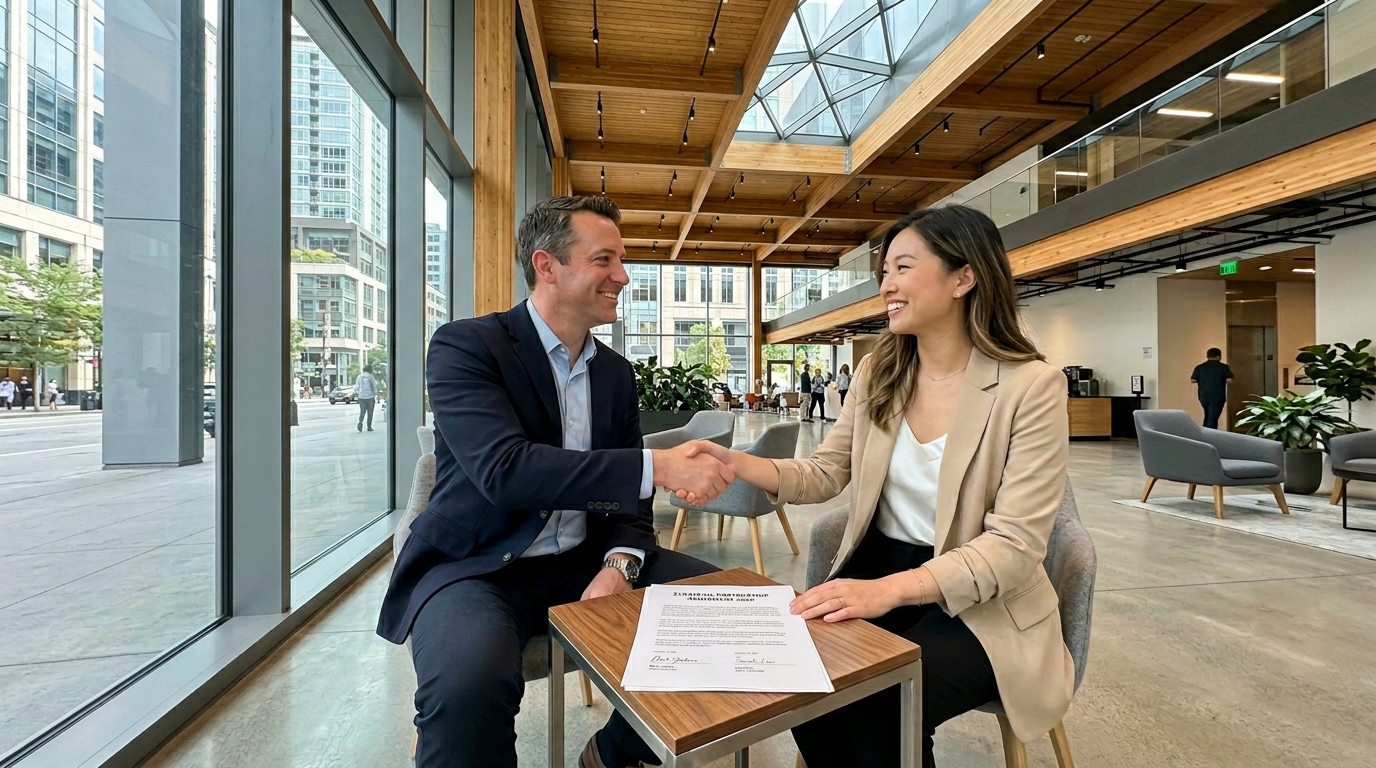
4. Develop Strategic Supplier Partnerships
Best for: Organizations with concentrated spend among a small number of critical suppliers.
Transactional relationships limit savings potential. When every interaction is a negotiation, vendors hold back their best pricing, innovation, and flexibility. Strategic partnerships unlock value that pure cost negotiations can’t reach: joint process improvements, shared risk models, volume-based rebate programs, and priority access during supply disruptions.
The Deloitte 2025 CPO Survey found that enhanced supplier collaboration ranks among the most effective risk management strategies, cited by 61% of respondents. Collaboration isn’t soft. It’s a procurement cost reduction strategy with hard-dollar results.
Key actions:
- Identify your top 5 to 10 suppliers by strategic importance (not just spend)
- Move from annual price negotiations to quarterly business reviews
- Share demand forecasts and capacity plans to enable better vendor planning
- Establish joint KPIs and savings targets with shared accountability
- Explore gain-sharing models where both parties benefit from efficiency improvements
Limitations:
- Partnership requires trust that takes time to build
- Not appropriate for commodity categories where switching costs are low
- Requires internal alignment on what “strategic” means
- Risk of complacency if the partnership becomes too comfortable
5. Adopt a Done-For-You Savings Program
Best for: Procurement, finance, and IT teams at capacity who need faster results without adding headcount.
For teams that are stretched thin, the math is simple: you can either hire more procurement professionals (expensive, slow) or bring in external expertise and technology to accelerate savings. The Deloitte CPO Survey found that 34% of CPOs cite talent gaps as a top barrier to delivering value. The EY 2025 CPO Survey found that 80% of CPOs plan to deploy GenAI over the next three years, but only 36% currently have meaningful implementations.
The Art of Procurement blog captures the practitioner perspective well: if you’re new to indirect procurement leadership, “start by listening. Ask your stakeholders, ‘What’s broken?’” The advice applies equally well to choosing a savings partner. Find the bottlenecks first, then bring in help that directly addresses them.
Varisource offers a free savings program that combines AI agents, $80B+ in group buying power, 50M+ benchmark data points, and hands-on negotiation support across 300+ spend categories. The model operates on a shared savings basis (no upfront cost; you only pay when savings are achieved), with typical results in under 30 days. It’s designed to work alongside existing procurement teams, not replace them.
Key actions:
- Identify the indirect spend categories where your team lacks bandwidth or expertise
- Evaluate done-for-you programs based on category coverage, data quality, and savings model
- Start with a pilot covering 3 to 5 high-spend categories
- Measure results against your internal baseline
Limitations:
- Requires sharing vendor and spend data with an external partner
- Not a substitute for building internal procurement capability long-term
- Results depend on the quality and breadth of the program’s vendor network
- Some categories may not be covered depending on the provider
Leveraging Agentic AI for Autonomous Cost Avoidance
In 2026, cost reduction has shifted from manual spreadsheets to Agentic AI. Unlike traditional automation, AI agents can:
- Monitor Market Fluctuations: Automatically flag when a commodity price drops, triggering a "renegotiation" alert.
- Predictive Renewal Modeling: Analyze usage patterns to suggest license downsizing before the 90-day notification window.
- Autonomous Benchmarking: Silently compare your proprietary invoice data against millions of global data points to identify "outlier" pricing in real-time.
How to Measure Procurement Cost Savings
Tracking procurement cost reduction requires distinguishing between two types of value that often get conflated.
Cost savings refers to actual reductions in spend compared to a prior period. If you paid $100,000 last year for a service and negotiate $85,000 this year, that’s $15,000 in cost savings.
Cost avoidance refers to preventing future cost increases. If a vendor proposes a 10% price increase and you negotiate it down to 3%, the 7% difference is cost avoidance, not cost savings. Both matter, but they should be reported separately. For a fuller treatment of the cost savings vs. cost avoidance distinction, that resource breaks it down.
Key KPIs to track:
- Cost reduction as a percentage of managed spend: Top performers target 3 to 7% annually
- Contract compliance rate: The Hackett Group found that top organizations have 60% less savings leakage from non-compliance
- Supplier consolidation rate: Track the number of active suppliers per category over time
- Time to savings: How quickly do new initiatives produce measurable results?
- Savings pipeline vs. realized savings: Committed savings on paper vs. validated savings in the P&L
What to Do Next
The path to procurement cost reduction doesn’t require doing all 15 strategies at once. Start with visibility. Audit your contracts, benchmark your pricing, and tackle maverick spend. Those quick wins create credibility and momentum for the medium-term and strategic plays that follow.
The organizations that outperform peers by five percentage points on both revenue growth and margins aren’t doing anything exotic. They’re reviewing and resetting indirect spend annually, using data to guide negotiations, and building systems that prevent savings erosion over time.
If you want to know where your specific savings opportunities are, Varisource offers a free Savings Estimate Report typically delivered within 48 hours. It’s a no-cost way to quantify the gap between what you’re paying and what you should be.
Expert Tip: In a 2025 audit of a mid-market tech firm, we found that 22% of SaaS spend was attributed to "Zombie Accounts"—users who had left the company but whose licenses remained active.
Frequently Asked Questions
What is cost reduction in procurement?
Cost reduction in procurement is the systematic process of lowering the total amount an organization spends on goods and services without sacrificing quality or operational capability. It encompasses strategies ranging from renegotiating existing contracts and consolidating suppliers to leveraging group purchasing power and automating procurement processes. The goal is reducing total cost of ownership, not just unit price.
How much can procurement cost reduction save?
Savings vary by organization, category, and starting maturity. Broadly, well-executed procurement programs deliver 5 to 20% annual cost reductions across managed spend. Specific strategies produce different results: supplier consolidation typically yields 5 to 10%, group purchasing returns 18 to 22%, and SaaS license rightsizing saves an average of 17% at renewal. Companies with top-quartile procurement maturity achieve EBITDA margins at least five percentage points higher than less mature peers, according to McKinsey.
What is the difference between direct and indirect procurement cost reduction?
Direct procurement covers materials and goods that become part of a finished product (raw materials, components). Indirect procurement covers everything else: software, office supplies, professional services, telecom, travel, facilities. Indirect spend is typically where the biggest untapped savings opportunities sit because it’s often decentralized, poorly tracked, and managed by non-procurement stakeholders. McKinsey has observed that digitalized solutions in indirect procurement can enable savings of 15 to 20%.
How quickly can procurement cost reduction strategies produce results?
Quick wins like contract audits, auto-renewal elimination, and benchmarking can surface savings within days to weeks. Medium-term strategies like supplier consolidation and category management take 1 to 6 months. Strategic plays like AI automation and centralized vendor intelligence systems take 6 months or longer. Private equity research from Alvarez & Marsal shows that up to 20% of indirect procurement savings can be achieved in the first 100 days with focused effort.
What are the biggest barriers to procurement cost reduction?
According to Deloitte’s 2025 CPO Survey, the top barriers are siloed ways of working (57%), competing priorities (46%), organizational and technology capability gaps (40%), and talent gaps (34%). On a practical level, lack of spend visibility, fragmented data, and maverick purchasing are the most common operational blockers. Addressing these barriers often requires executive sponsorship and cross-functional collaboration, not just better procurement tactics.
Is AI actually delivering ROI in procurement today?
It depends on the use case. Spend analytics, RFP generation, and contract summarization are delivering measurable results for organizations that have implemented them. Deloitte found that Digital Masters achieve an average 3.2X ROI on GenAI investments. However, Gartner placed GenAI for procurement in the “Trough of Disillusionment” in its 2025 Hype Cycle, and only 4% of procurement teams have achieved large-scale GenAI deployment. The practical advice: start with well-defined, data-rich use cases and scale from proven results.
How do group purchasing organizations (GPOs) work for procurement cost reduction?
GPOs aggregate the purchasing volume of multiple member organizations to negotiate volume-based discounts with suppliers. Members access pre-negotiated contracts at pricing they couldn’t achieve independently. According to UNA, average GPO savings put 18 to 22% back into members’ budgets. GPOs are particularly effective for indirect and tail spend categories where individual organizations lack the volume or expertise to negotiate aggressively.
Should we build internal procurement capability or outsource to a savings program?
It’s not either/or. The strongest approach combines internal category expertise with external leverage. Build internal capability for strategic categories where you have deep domain knowledge and supplier relationships. Use group purchasing and done-for-you programs for indirect and tail spend categories where your team lacks bandwidth. As the Art of Procurement puts it, external programs are “an intelligent way to scale without compromise.” The 34% of CPOs citing talent gaps as a barrier suggests that pure internal models leave savings on the table for most organizations.
{
"@context": "https://schema.org",
"@type": "FAQPage",
"@id": "#faq",
"mainEntity": [
{
"@type": "Question",
"@id": "#faq-question-1",
"name": "What is cost reduction in procurement?",
"acceptedAnswer": {
"@type": "Answer",
"text": "Cost reduction in procurement is the systematic process of lowering the total amount an organization spends on goods and services without sacrificing quality or operational capability. It encompasses strategies ranging from renegotiating existing contracts and consolidating suppliers to leveraging group purchasing power and automating procurement processes. The goal is reducing total cost of ownership, not just unit price."
}
},
{
"@type": "Question",
"@id": "#faq-question-2",
"name": "How much can procurement cost reduction save?",
"acceptedAnswer": {
"@type": "Answer",
"text": "Savings vary by organization, category, and starting maturity. Broadly, well-executed procurement programs deliver 5 to 20% annual cost reductions across managed spend. Specific strategies produce different results: supplier consolidation typically yields 5 to 10%, group purchasing returns 18 to 22%, and SaaS license rightsizing saves an average of 17% at renewal. Companies with top-quartile procurement maturity achieve EBITDA margins at least five percentage points higher than less mature peers, according to McKinsey."
}
},
{
"@type": "Question",
"@id": "#faq-question-3",
"name": "What is the difference between direct and indirect procurement cost reduction?",
"acceptedAnswer": {
"@type": "Answer",
"text": "Direct procurement covers materials and goods that become part of a finished product (raw materials, components). Indirect procurement covers everything else: software, office supplies, professional services, telecom, travel, facilities. Indirect spend is typically where the biggest untapped savings opportunities sit because it's often decentralized, poorly tracked, and managed by non-procurement stakeholders. McKinsey has observed that digitalized solutions in indirect procurement can enable savings of 15 to 20%."
}
},
{
"@type": "Question",
"@id": "#faq-question-4",
"name": "How quickly can procurement cost reduction strategies produce results?",
"acceptedAnswer": {
"@type": "Answer",
"text": "Quick wins like contract audits, auto-renewal elimination, and benchmarking can surface savings within days to weeks. Medium-term strategies like supplier consolidation and category management take 1 to 6 months. Strategic plays like AI automation and centralized vendor intelligence systems take 6 months or longer. Private equity research from Alvarez & Marsal shows that up to 20% of indirect procurement savings can be achieved in the first 100 days with focused effort."
}
},
{
"@type": "Question",
"@id": "#faq-question-5",
"name": "What are the biggest barriers to procurement cost reduction?",
"acceptedAnswer": {
"@type": "Answer",
"text": "According to Deloitte's 2025 CPO Survey, the top barriers are siloed ways of working (57%), competing priorities (46%), organizational and technology capability gaps (40%), and talent gaps (34%). On a practical level, lack of spend visibility, fragmented data, and maverick purchasing are the most common operational blockers. Addressing these barriers often requires executive sponsorship and cross-functional collaboration, not just better procurement tactics."
}
},
{
"@type": "Question",
"@id": "#faq-question-6",
"name": "Is AI actually delivering ROI in procurement today?",
"acceptedAnswer": {
"@type": "Answer",
"text": "It depends on the use case. Spend analytics, RFP generation, and contract summarization are delivering measurable results for organizations that have implemented them. Deloitte found that Digital Masters achieve an average 3.2X ROI on GenAI investments. However, Gartner placed GenAI for procurement in the \"Trough of Disillusionment\" in its 2025 Hype Cycle, and only 4% of procurement teams have achieved large-scale GenAI deployment. The practical advice: start with well-defined, data-rich use cases and scale from proven results."
}
},
{
"@type": "Question",
"@id": "#faq-question-7",
"name": "How do group purchasing organizations (GPOs) work for procurement cost reduction?",
"acceptedAnswer": {
"@type": "Answer",
"text": "GPOs aggregate the purchasing volume of multiple member organizations to negotiate volume-based discounts with suppliers. Members access pre-negotiated contracts at pricing they couldn't achieve independently. According to UNA, average GPO savings put 18 to 22% back into members' budgets. GPOs are particularly effective for indirect and tail spend categories where individual organizations lack the volume or expertise to negotiate aggressively."
}
},
{
"@type": "Question",
"@id": "#faq-question-8",
"name": "Should we build internal procurement capability or outsource to a savings program?",
"acceptedAnswer": {
"@type": "Answer",
"text": "It's not either/or. The strongest approach combines internal category expertise with external leverage. Build internal capability for strategic categories where you have deep domain knowledge and supplier relationships. Use group purchasing and done-for-you programs for indirect and tail spend categories where your team lacks bandwidth. As the Art of Procurement puts it, external programs are \"an intelligent way to scale without compromise.\" The 34% of CPOs citing talent gaps as a barrier suggests that pure internal models leave savings on the table for most organizations."
}
}
]
}
About the Author
.jpeg)
Victor Hou
Victor Hou is the founder of Varisource, the first ever Savings Automation Platform that automates Savings for Your Business. Victor helps companies access discounts, rebates, benchmark data, savings for renewals and new purchases across 100+ spend categories automatically to increase your company's margins and equity value by at least 15-20%. Victor is active and passionate about using AI + automation to help your business save time, money and run more efficiently.
%201.svg)

Varisource’s Savings Automation Platform guarantees savings and maximized leverage on every dollar spend across 100+ spend categories


