Procurement Process Improvement: 8 Proven Steps for 2026

Procurement process improvement is the practice of fixing how a company actually buys goods and services, from the initial request through sourcing, approval, contracting, payment, and renewal. The biggest gains usually come from better spend visibility, cleaner intake workflows, smarter approval rules, benchmark data before negotiations, and disciplined renewal management. It is not about adding more forms or buying new software. It is about making the right purchasing path easier and faster than the workaround.
How do you improve the procurement process in 2026?
To improve the procurement process, organizations must transition from manual, reactive buying to data-driven, automated workflows. The 8 proven steps for 2026 are:
Map the "Shadow" Workflow: Identify unofficial Slack/email approval paths.
Centralize Spend Data: Aggregate vendor, contract, and renewal dates into one view.
Standardize Intake: Use structured forms to prevent incomplete requests.
Tiered Approvals: Apply spend thresholds to bypass manual review for low-risk buys.
Market Benchmarking: Validate SKU-level pricing before entering negotiations.
Proactive Renewal Management: Start negotiations 90–120 days before expiration.
Stakeholder Alignment: Shift procurement from a "gatekeeper" to a strategic partner.
Selective Automation: Deploy AI for repetitive data extraction and classification.
What Is Procurement Process Improvement?
Procurement process improvement means analyzing and redesigning the steps a company uses to buy from external vendors. The goal is to reduce cost, shorten cycle times, improve compliance, strengthen supplier performance, and give procurement, finance, IT, and business stakeholders better visibility into spend, contracts, and renewals.
The key word is “real.” Every company has a documented purchasing policy somewhere. The question is whether anyone follows it. Procurement process improvement closes the gap between the official policy and the actual behavior, which often involves email threads, spreadsheet trackers, Slack messages, and informal approvals that never touch the system of record.
Here is a simple example. A company discovers that software renewals are tracked in personal spreadsheets, approvals happen over email, and vendors raise prices automatically at renewal. A procurement process improvement project would centralize contract dates, set renewal reminders 90 to 120 days before expiration, benchmark vendor quotes against market data, route approvals by spend threshold, and renegotiate before auto-renewal windows close.
The CIPS procurement process framework describes the procurement cycle as beginning with defining business needs and specifications, then moving through market analysis, strategy development, supplier engagement, contracting, and ongoing management. Improvement can happen at any of those stages.
Procurement Process Improvement vs. Related Terms
These terms overlap, but they are not identical. Understanding the differences matters because each one points to a different starting point for improvement.
Term
What it means
How it differs
Procurement process improvement
Improving the end-to-end way the business buys and manages vendors
Broad umbrella covering workflow, data, approvals, sourcing, contracts, renewals, and metrics
Procure-to-pay (P2P)
Improving requisition, PO, receiving, invoice, and payment workflows
More downstream and finance/AP-oriented
Source-to-pay (S2P)
Improving sourcing through payment
Broader than P2P because it includes sourcing and contracting
Strategic sourcing
Selecting suppliers and negotiating value through market analysis
A sourcing discipline, not the whole process
Spend management
Visibility and control over company spend
Focuses on spend data, policy, budgets, and control
Indirect procurement improvement
Improving purchases that support operations but do not go into the final product
A critical use case because indirect categories are fragmented and often under-managed
Contract lifecycle management
Managing contracts from creation through execution, compliance, and renewal
One piece of the procurement puzzle, covered well in this guide to contract lifecycle management
If your team is focused on invoice matching and payment timing, P2P improvement is probably the right frame. If the problem is that nobody knows what vendors the company uses, what those contracts say, or when they renew, you need broader procurement process improvement.
The Real Cost of Process Inefficiency (2026 Benchmarks)
Metric
Laggard Organizations
Digital Masters (Best-in-Class)
PO Cycle Time
5+ Days
< 24 Hours
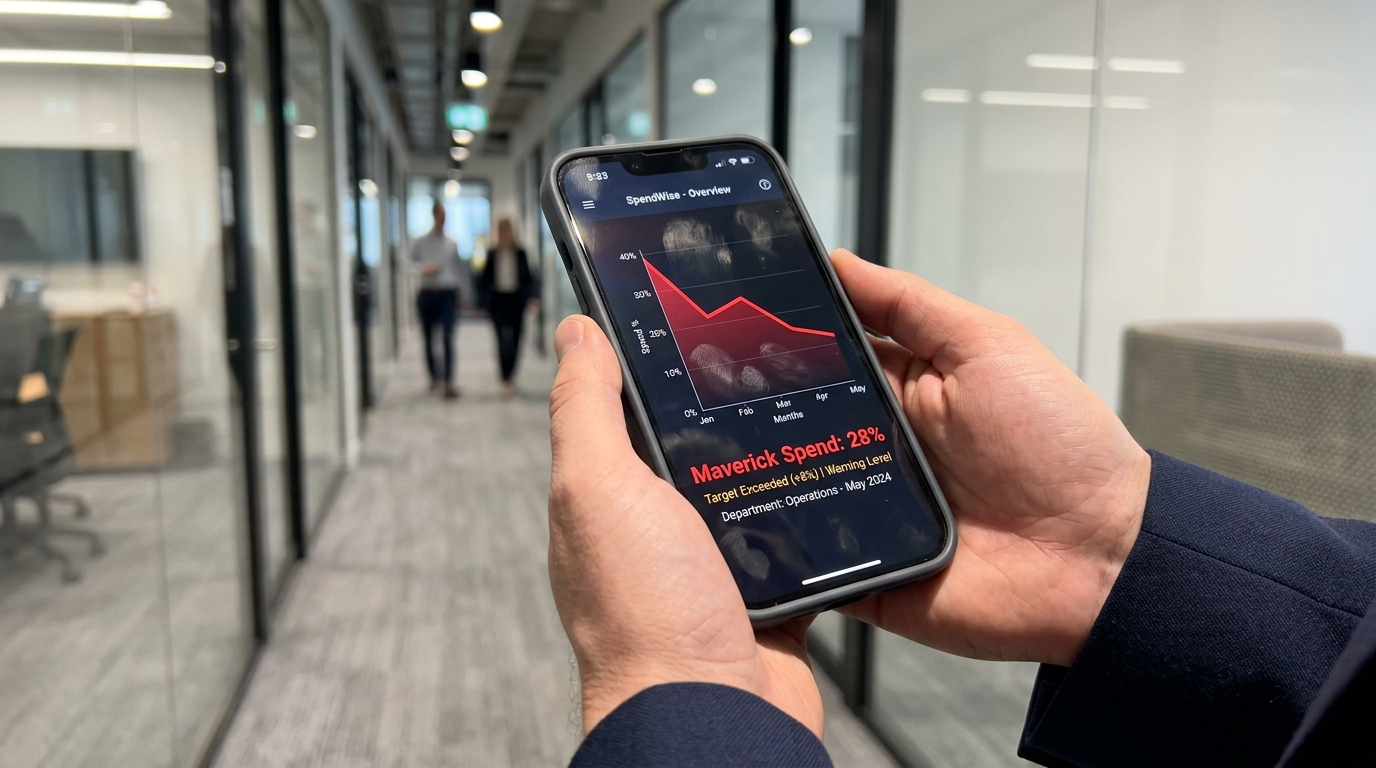
Maverick Spend
> 25%
< 5%
Contract Visibility
Fragmented (Email/Desktop)
Centralized CLM Repository
Renewal Strategy
Reactive (Post-Deadline)
Proactive (90 Days Out)
ROI on AI Tools
1.6x
2.8x
Why Procurement Process Improvement Matters
It Unlocks Real Savings
Indirect spend can represent 10%, 15%, or even 18% of revenue depending on the industry, according to McKinsey. That same research found that indirect procurement transformation can yield an initial cost reduction of about 15%, translating to roughly 1.5% in bottom-line improvement. Companies can capture most of those gains within 12 to 18 months and continue achieving annual cost reductions of about 4% afterward.
This is not administrative cleanup. It is margin expansion.
A separate McKinsey analysis found that a comprehensive suite of digital solutions for indirect procurement has enabled 15 to 20% cost savings, with tools that classify and categorize spending across ERP and other systems.
Understanding the difference between cost savings and cost avoidance is important here. Hard savings come from negotiated price reductions, rebates, and vendor consolidation. Cost avoidance comes from preventing price increases, eliminating unused licenses, and catching unfavorable renewal terms before they lock in. Both matter, and both require process discipline to capture.
It Reduces Invisible Value Leakage
WorldCC argues that contract value erosion often comes from fragmented operating models where contracting activities are split across functions, systems, and lifecycle stages without a single owner accountable for quality, integrity, or economic outcomes. Their research found that communication between legal and procurement is inconsistent or poorly executed in about 70% of responding organizations, and only 15% operate with shared contracting technology between legal and procurement.
The procurement process does not end when the PO is issued or the contract is signed. For many indirect categories, the biggest savings opportunity appears before renewal, when there is still time to benchmark, negotiate, consolidate, or change terms.
It Improves Speed Without Sacrificing Control
APQC recommends benchmarking procurement with measures such as total cost to perform procurement, cycle time to issue a purchase order, percentage of POs approved electronically, and number of POs processed per procurement employee. But they also warn that speed metrics need counterbalancing quality measures so faster throughput does not create more errors.
The goal is not fewer controls. The goal is smarter controls: thresholds for low-risk purchases, deeper review for high-risk suppliers, and exception routing when spend, scope, or risk changes.
It Makes Procurement More Strategic
Deloitte’s 2025 Global CPO Survey, based on insights from more than 250 CPOs across 40 countries, reports that CPOs are now allocating approximately 20% of their budget to procurement technology, nearly twice the relative investment reported in 2023. The survey also found that “Digital Masters” achieved an average 2.8x return on GenAI investments versus 1.6x for “Followers.”
Technology belongs in this conversation, but it should be framed as an enabler of process redesign, not the definition of process improvement.
Where Procurement Processes Usually Break
Fragmented Spend and Decentralized Ownership
Indirect procurement often spans IT, HR, marketing, facilities, finance, legal, and operations. Each function has different vendors, contracts, approval processes, and maturity levels. Ivalua notes that indirect procurement tends to be distributed across functions, making it harder to see the full picture of what the company spends, with whom, and under what terms.
A good first step is pulling together a clear view of spend data across the organization, including vendor names, categories, contract dates, and renewal terms.
Shadow Workflows Outside ERP
Practitioners on Reddit describe this problem vividly. One user outlined a purchase requisition process where requesters email procurement, committees select vendors, managers approve, budget owners assign GL codes, and only then does the requester create the PR in SAP. The whole process can take up to a month from quotation to PO creation because approvals happen offline and then repeat inside the system.
Community responses recommended moving decisions into the system of record, setting category defaults for GL and cost centers, using tolerance rules so small changes do not restart approvals, and approving an upfront budget envelope rather than re-approving every downstream step.
Weak Contract and Renewal Visibility
Reddit practitioners call contract trackers and auto-renewal flags a basic foundation because renewals become painful if ignored. When contract dates live in someone’s email or personal calendar, there is no team-level visibility, no time to benchmark, and no negotiation leverage.
Process-First Work Gets Skipped
In a Reddit thread about software adoption in procurement, users explained that new tools fail when workflows are unclear, employees are used to spreadsheets and informal approvals, and teams try to force users to match the software instead of defining the real process first. One user summarized it simply: “Process first, tool second.”
If your approval chain is unclear in email, it will still be unclear in software. Automation should follow process clarity, not replace it.
Stakeholders See Procurement as a Blocker
A LinkedIn practitioner post argued that procurement transformations fail when teams redesign workflows but skip relationship building. Stakeholders who do not trust procurement will not bring procurement in early and may route around the process entirely. A separate LinkedIn post from a procurement leader framed stakeholder management as something that can “make or break transformation,” advising teams to map stakeholders, understand their pain, build relationships, and communicate the “why.”
Procurement process improvement is also trust improvement. If stakeholders see procurement as a blocker, the improved process will be bypassed.
What Parts of Procurement Can Be Improved?
Process area
Common issue
Improvement example
Intake / request
Employees submit incomplete requests by email
Structured intake forms by category and spend type
Needs definition
Procurement gets involved after the vendor is already selected
Bring procurement in before scope and vendor decisions are locked
Supplier discovery
Teams reuse known vendors without market checks
Preferred supplier lists, benchmarks, and targeted discovery
Quote comparison
Quotes are compared manually and inconsistently
Standardized quote requirements with SKU-level pricing comparison
Approval workflow
Same people approve the same spend twice
Budget envelopes, thresholds, and tolerance rules
Contracting
Legal, procurement, and business teams work in silos
Shared roles, templates, fallback positions, and escalation paths
PO creation
PRs are created after sourcing work is already done offline
Move requests and approvals into the controlled workflow earlier
Invoice / payment
Suppliers are paid late because documents are missing
Gate required paperwork before PO creation; use three-way match
Supplier management
Performance data sits in emails and spreadsheets
Track terms, issues, service levels, and renewal dates centrally
Renewal management
Auto-renewals and price increases are discovered too late
Alerts 90 to 120 days before renewal; benchmark before negotiation
How to Improve the Procurement Process
1. Map the Real Workflow
Start by documenting how work actually happens, not how the policy says it should happen. Include intake channels (email, Slack, forms), approval paths, sourcing steps, legal review, ERP entry, AP processing, and supplier communications.
One Reddit user’s experience is typical: procurement receives an email request, gathers quotes, gets committee approval, gets manager approval, gets budget owner approval with GL codes, and only then enters everything into SAP. That is six handoffs before the system of record even knows about the purchase.
Map every shadow step. That is where the bottlenecks hide.
2. Centralize Vendor, Spend, Contract, and Renewal Data

A single view should include vendor names, categories, owners, contract dates, renewal terms, pricing, payment terms, usage, performance, and risk status. Without this foundation, every improvement effort operates partially blind.
Running a spend analysis is one of the fastest ways to identify where money goes, which vendors overlap, and which categories lack any procurement involvement.
3. Fix Intake Before Approvals
Structured intake should collect the right fields upfront: requester, business need, vendor, category, expected amount, budget owner, contract status, renewal deadline, data and security implications, and required documentation.
A practitioner on Reddit recommended risk-tiered intake that determines required documents and blocks PO creation until required items are complete. Tax forms, NDAs, SOWs, certificates of insurance, and security questionnaires should all be gated, not chased after the fact.
4. Simplify Approvals With Thresholds and Tolerance Rules
Not every purchase needs the same approval chain. Use delegated authority, spend thresholds, category risk levels, budget envelopes, and tolerance rules so that a $200 quote change does not restart an entire approval cycle.
Practitioners in the Reddit PR approval thread specifically recommended approving a budget ceiling upfront and using GL/cost-center defaults by category to reduce rework. The goal is smarter routing, not more routing.
5. Use Benchmarks Before Negotiating
Benchmarking should happen before sourcing events and renewals, not after the vendor sends the final quote. APQC recommends benchmarking procurement cost, cycle time, and productivity to understand performance. At the transaction level, SKU-level pricing benchmarks and market comparisons give negotiators the data they need to push back on inflated quotes.
Varisource offers access to 50M+ benchmark data points that support SKU and quote-level price transparency across 300+ indirect spend categories, including software, cloud, security, telecom, hardware, payments, and professional services.
6. Manage Renewals as a Process, Not a Calendar Reminder
Renewals should have owners, dates, alert windows, usage data, benchmark checks, negotiation plans, and escalation paths. This is one of the most overlooked areas of procurement process improvement, and it is where some of the largest avoidable costs accumulate.
Reddit practitioners recommend contract trackers with start and end dates and alerts before auto-renewals as a basic starting point. For SaaS specifically, understanding how to optimize software spend before renewal conversations start can shift the negotiation dynamic significantly.
7. Improve the Stakeholder Experience
The improved process should answer basic questions for every requester: Where do I submit a request? What information do I need? Who approves it? How long will it take? What happens next?
A process that procurement likes but stakeholders bypass is not an improved process. Art of Procurement stresses that stakeholders want fewer hurdles and faster turnaround, not just lower costs. Stakeholder adoption is one of the most important procurement KPIs, even if it rarely appears on dashboards.
8. Automate Repetitive Tasks After the Process Is Clear
Automation can handle spend classification, approval routing, contract extraction, reminders, supplier onboarding, and analytics. But it should not digitize a broken workflow.
The Hackett Group reports that approximately 49% of procurement teams piloted GenAI use cases in 2024, while only 4% reported large-scale deployment. AI is real and useful, but it is still early, and the roadblocks are data quality, privacy, supplier volatility, and the complexity of existing processes.
Practitioners on a Reddit procurement automation thread pointed out that platforms like Coupa and Ariba handle the transactional layer well, but much of the real work still happens in email threads and informal supplier communications outside those systems. The improvement opportunity is pulling that messy coordination into a trackable workflow.
Procurement Process Improvement Examples
SaaS Renewal Improvement
Before: SaaS contracts are stored in email, renewal dates are missed, licenses are not benchmarked, and vendors announce price increases after the auto-renewal window has passed.
After: Contracts are centralized with owners and dates. Reminders fire 90 to 120 days before renewal. Usage is reviewed, SKU-level pricing is benchmarked, and a negotiation plan is created and routed for approval before the renewal deadline.
Result: Faster renewal decisions, stronger negotiation leverage, fewer surprise renewals, and better cost control. For teams managing dozens of SaaS vendors, a good vendor management process prevents the most common renewal traps.
Cloud Commitment Review
Before: Cloud commitments renew without consumption analysis, engineering owns usage, finance owns the budget, and procurement sees the renewal late.
After: Spend and contract data are pulled earlier, commitment options are compared, pricing is benchmarked, IT/finance/procurement align, and negotiation happens before renewal pressure peaks.
Telecom and Connectivity Sourcing
Before: Locations buy telecom through local vendors with inconsistent rates and no consolidated view.
After: Invoices are gathered, services are normalized, locations are compared, market pricing is benchmarked, and renewal alerts are standardized.
Vendor Onboarding and Paperwork
Before: Vendor documents are gathered by email and checked late, causing PO and invoice delays.
After: Risk-tiered intake triggers required documents. PO creation is blocked until documentation is complete. The ERP remains the system of record after the workflow is approved. This mirrors the gated workflow approach recommended in practitioner discussions on Reddit.
Approval Workflow Compression
Before: A purchase is approved by email, approved again in ERP, and re-approved if the quote changes slightly.
After: Budget owners approve a spend ceiling upfront, GL/cost-center defaults are mapped by category, and tolerance rules prevent small changes from restarting the entire cycle. This directly reflects practitioner advice from Reddit’s PR approval discussion.
Procurement Process Improvement KPIs
KPI
What it measures
Why it matters
Procurement cycle time
Time from request to completed purchase
Shows speed and bottlenecks
PO cycle time
Time to issue a purchase order
APQC names this as a key procurement benchmark
Electronic approval rate
Share of POs moving through digital approval
Indicates process maturity and auditability
Spend under management
Share of spend visible and influenced by procurement
Shows whether procurement can actually manage categories
Maverick spend rate
Spend outside approved process or vendors
Indicates whether employees bypass the process
Contract coverage
Share of vendors/spend with contracts in a central repository
Supports renewals, compliance, and risk control
Renewal visibility
Share of contracts with owner, date, terms, and reminder
Prevents auto-renew traps and surprise increases
Savings captured
Negotiated savings realized in budgets or invoices
Separates projected savings from actual outcomes
Cost avoidance
Price increases, duplicate purchases, or unfavorable terms avoided
Critical for renewals and inflationary categories
Supplier on-time delivery
Supplier reliability and service performance
APQC recommends this as a supplier performance measure
Stakeholder satisfaction
Internal customer experience with procurement
Helps prevent bypass behavior and build trust
One important note: do not optimize for speed alone. APQC specifically warns that throughput measures should be balanced with quality measures so faster processing does not create more errors.
The Role of AI in Procurement Process Improvement
AI is useful when it removes repetitive work, improves visibility, and gives procurement better decision support. It is risky when applied on top of poor data, unclear ownership, or broken workflows.
The Hackett Group found that AI-driven procurement tools delivered up to 10% improvements in productivity, quality, and cost savings, with some organizations achieving productivity improvements of 25% or more. But the same research identified data quality, data privacy, supplier volatility, and process complexity as key roadblocks.
WorldCC reports that contracting practitioners expect AI to automate repetitive tasks and reduce drafting/review time, with 79% expecting repetitive task automation and 76% expecting faster contract drafting. Their 2024 AI in Contracting report found benefits including 44% increased productivity and 39% reduction in contracting lifecycle time.
Practical AI use cases for procurement process improvement include:
- Spend classification and data cleanup
- Contract extraction and renewal reminder setup
- Quote and SKU-level benchmark checks
- Supplier discovery and market scans
- Approval routing and status follow-up
- Negotiation preparation and pricing analysis
- Invoice and PO matching support
- Savings opportunity detection
For teams exploring AI-powered procurement cost savings tools, the key principle holds: process clarity first, then automation. AI agents work best when they are pointed at a well-defined task with clean data, not at a vague mandate to “fix procurement.”
Common Mistakes to Avoid
Automating a Broken Workflow
If the process is unclear, software makes confusion faster and more visible. Define the right workflow, data requirements, roles, and handoffs before selecting or configuring any tool.
Adding Approvals Instead of Improving Decisions
More approvals do not automatically reduce risk. Better approval design uses thresholds, spend categories, budget owners, risk tiers, and tolerance rules. The goal is to match the level of review to the level of risk.
Treating Procurement as a Late-Stage Gatekeeper
When procurement enters after the stakeholder has chosen a vendor, it loses leverage over scope, alternatives, pricing, and risk. In a Reddit thread about designing a purchasing process, commenters questioned why procurement did not enter until step 7 and recommended involving procurement earlier around need definition, scope, and vendor selection.
Ignoring Renewals
Renewal dates, auto-renew clauses, and pricing increases are major sources of avoidable cost leakage. A LinkedIn practitioner post on category management argued that many teams call their work “category management” but are really just reporting on spend, and that real management requires uncomfortable conversations about demand, what the business will stop buying, and whether current vendors still earn their position.
Measuring Only Negotiated Savings
Hard savings matter, but they are not the whole picture. Track cost avoidance (prevented price increases, eliminated unused licenses), productivity gains (fewer manual touches, faster cycles), and risk reduction (better audit trails, compliance improvements). Ivalua recommends tracking both hard savings and soft savings from process efficiency and risk mitigation.
A 30-Day Procurement Process Improvement Roadmap
Days 1 to 5: Map the Current Process
Interview procurement, finance/AP, IT, legal, department requesters, and frequent vendors. Map the real workflow, including emails, spreadsheets, ERP, approvals, and workarounds. Identify where the official process differs from actual behavior.
Days 6 to 10: Pull the Data
Export top vendors, spend by category, contracts, renewal dates, invoices, and open POs. Flag missing contract owners, missing renewal dates, duplicate vendors, and high-growth categories. Prioritize indirect spend categories with high spend and poor visibility.
Days 11 to 15: Pick Three Quick Wins
Good quick wins include:
- Renewal alerts for top 20 vendors
- Approval threshold cleanup for low-risk spend
- Vendor master cleanup for duplicate suppliers
- Benchmarking top SaaS, cloud, or telecom renewals
- Intake form for one high-friction category
Days 16 to 25: Redesign One Workflow
Choose one workflow: software renewal, telecom sourcing, vendor onboarding, or low-risk PO approvals. Define required fields, approval rules, owners, handoffs, and exception paths. Remove duplicate approvals and offline steps.
Days 26 to 30: Measure and Scale
Track cycle time, savings opportunities, stakeholder satisfaction, exceptions, and compliance. Document lessons learned. Apply the same pattern to the next category or process.
Procurement process improvement often starts with better visibility into vendors, contracts, renewals, and pricing. Varisource helps companies identify savings opportunities across indirect spend, benchmark vendor quotes, manage renewal timing, and support negotiations without replacing existing procurement, IT, or finance teams. The program covers 300+ spend categories with no upfront cost, and a free Savings Estimate Report is typically delivered within 48 hours. Talk to the Varisource team to see where your procurement process has room to improve.
Frequently Asked Questions
What is procurement process improvement?
Procurement process improvement is the practice of improving how an organization requests, sources, approves, contracts, purchases, pays for, and manages goods and services. It aims to reduce cost, shorten cycle times, improve compliance, and create better visibility into suppliers, spend, contracts, and renewals.
What is a simple example of procurement process improvement?
A common example is SaaS renewal management: centralizing renewal dates, assigning contract owners, reviewing usage, benchmarking pricing, setting reminders before auto-renewal windows, and negotiating before the vendor has timing leverage.
What are the main steps in improving a procurement process?
Map the current workflow, identify bottlenecks and leakage, clean vendor and spend data, redesign intake and approvals, use benchmarks and automation where appropriate, measure KPIs, and scale improvements across categories.
What KPIs should procurement teams track?
Useful KPIs include procurement cycle time, PO cycle time, electronic approval rate, spend under management, maverick spend, savings captured, cost avoidance, supplier performance, contract coverage, renewal visibility, and stakeholder satisfaction. APQC specifically recommends procurement cost, PO cycle time, electronic PO approval rate, and POs processed per procurement employee as key benchmark measures.
Is procurement process improvement the same as procurement automation?
No. Automation is one way to support procurement process improvement, but it is not the same thing. Process improvement defines the right workflow, data, roles, decisions, controls, and metrics. Automation helps execute those elements faster and more consistently. Automating a broken process just creates broken outcomes at higher speed.
Why do procurement process improvements fail?
They often fail because teams automate unclear workflows, add approvals instead of removing bottlenecks, ignore stakeholder trust, skip data cleanup, or treat procurement as a late-stage gatekeeper rather than an early business partner. Practitioner discussions repeatedly emphasize that process clarity, stakeholder involvement, and tool adoption are bigger challenges than the technology itself.
Where should a small procurement team start?
Start with visibility and control, not perfection. Build a basic tracker for contracts, spend, supplier master data, PO status, and auto-renewal flags. Implement a simple workflow: stakeholder submits a request, procurement reviews, a PO is issued, the supplier delivers, and finance pays after a three-way match. Then improve from there.
How does indirect spend relate to procurement process improvement?
Indirect spend (purchases that support operations but do not go into the final product) is often where procurement processes are weakest. Categories like SaaS, telecom, consulting, and office supplies tend to be decentralized, fragmented, and purchased outside formal procurement channels. That makes indirect procurement one of the highest-value targets for process improvement, which is why multiple McKinsey studies highlight it as a 15 to 20% savings opportunity.
{
"@context": "https://schema.org",
"@type": "FAQPage",
"@id": "#faq",
"mainEntity": [
{
"@type": "Question",
"@id": "#faq-question-1",
"name": "What is procurement process improvement?",
"acceptedAnswer": {
"@type": "Answer",
"text": "Procurement process improvement is the practice of improving how an organization requests, sources, approves, contracts, purchases, pays for, and manages goods and services. It aims to reduce cost, shorten cycle times, improve compliance, and create better visibility into suppliers, spend, contracts, and renewals."
}
},
{
"@type": "Question",
"@id": "#faq-question-2",
"name": "What is a simple example of procurement process improvement?",
"acceptedAnswer": {
"@type": "Answer",
"text": "A common example is SaaS renewal management: centralizing renewal dates, assigning contract owners, reviewing usage, benchmarking pricing, setting reminders before auto-renewal windows, and negotiating before the vendor has timing leverage."
}
},
{
"@type": "Question",
"@id": "#faq-question-3",
"name": "What are the main steps in improving a procurement process?",
"acceptedAnswer": {
"@type": "Answer",
"text": "Map the current workflow, identify bottlenecks and leakage, clean vendor and spend data, redesign intake and approvals, use benchmarks and automation where appropriate, measure KPIs, and scale improvements across categories."
}
},
{
"@type": "Question",
"@id": "#faq-question-4",
"name": "What KPIs should procurement teams track?",
"acceptedAnswer": {
"@type": "Answer",
"text": "Useful KPIs include procurement cycle time, PO cycle time, electronic approval rate, spend under management, maverick spend, savings captured, cost avoidance, supplier performance, contract coverage, renewal visibility, and stakeholder satisfaction. [APQC specifically recommends](https://www.apqc.org/blog/how-do-you-benchmark-procurement) procurement cost, PO cycle time, electronic PO approval rate, and POs processed per procurement employee as key benchmark measures."
}
},
{
"@type": "Question",
"@id": "#faq-question-5",
"name": "Is procurement process improvement the same as procurement automation?",
"acceptedAnswer": {
"@type": "Answer",
"text": "No. Automation is one way to support procurement process improvement, but it is not the same thing. Process improvement defines the right workflow, data, roles, decisions, controls, and metrics. Automation helps execute those elements faster and more consistently. Automating a broken process just creates broken outcomes at higher speed."
}
},
{
"@type": "Question",
"@id": "#faq-question-6",
"name": "Why do procurement process improvements fail?",
"acceptedAnswer": {
"@type": "Answer",
"text": "They often fail because teams automate unclear workflows, add approvals instead of removing bottlenecks, ignore stakeholder trust, skip data cleanup, or treat procurement as a late-stage gatekeeper rather than an early business partner. Practitioner discussions repeatedly emphasize that process clarity, stakeholder involvement, and tool adoption are bigger challenges than the technology itself."
}
},
{
"@type": "Question",
"@id": "#faq-question-7",
"name": "Where should a small procurement team start?",
"acceptedAnswer": {
"@type": "Answer",
"text": "Start with visibility and control, not perfection. Build a basic tracker for contracts, spend, supplier master data, PO status, and auto-renewal flags. Implement a simple workflow: stakeholder submits a request, procurement reviews, a PO is issued, the supplier delivers, and finance pays after a three-way match. Then improve from there."
}
},
{
"@type": "Question",
"@id": "#faq-question-8",
"name": "How does indirect spend relate to procurement process improvement?",
"acceptedAnswer": {
"@type": "Answer",
"text": "Indirect spend (purchases that support operations but do not go into the final product) is often where procurement processes are weakest. Categories like SaaS, telecom, consulting, and office supplies tend to be decentralized, fragmented, and purchased outside formal procurement channels. That makes indirect procurement one of the highest-value targets for process improvement, which is why [multiple McKinsey studies](https://www.mckinsey.com/capabilities/operations/our-insights/revolutionizing-indirect-procurement-for-the-2020s) highlight it as a 15 to 20% savings opportunity."
}
}
]
}
About the Author
.jpeg)
Victor Hou
Victor Hou is the founder of Varisource, the first ever Savings Automation Platform that automates Savings for Your Business. Victor helps companies access discounts, rebates, benchmark data, savings for renewals and new purchases across 100+ spend categories automatically to increase your company's margins and equity value by at least 15-20%. Victor is active and passionate about using AI + automation to help your business save time, money and run more efficiently.
%201.svg)

Varisource’s Savings Automation Platform guarantees savings and maximized leverage on every dollar spend across 100+ spend categories


