Procurement Transformation 2026: Definition, Steps, Examples

Procurement transformation is the strategic redesign of how an organization buys goods and services, manages suppliers, controls spend, and captures value. It goes beyond purchasing software or automating tasks. It changes the processes, data, governance, supplier relationships, and team capabilities behind every buying decision. The fastest results typically come from improving spend visibility, fixing renewal discipline, and targeting indirect spend categories where ownership is fragmented and savings are hiding in plain sight.
What is Procurement Transformation in 2026?
Procurement transformation is a strategic modernization of an organization's buying function, shifting from tactical purchasing to a data-driven, agentic AI operating model. In 2026, it prioritizes real-time spend visibility, Scope 3 ESG compliance, and autonomous sourcing agents to capture an average of 15% cost reduction in indirect spend within 12–18 months.
What Is Procurement Transformation?
Procurement transformation is the strategic redesign of an organization’s procurement function, including its processes, data, technology, supplier management, governance, and team capabilities, so procurement delivers more than purchase orders and cost control.
The Hackett Group defines it as redesigning and modernizing sourcing and procurement by reevaluating policies, processes, organizational structures, and technology to improve efficiency, savings, risk mitigation, analytics, governance, supplier relationships, and strategic growth. Source
In plain English: procurement transformation means changing how the company buys so it can make better decisions, avoid waste, negotiate from real data, manage suppliers consistently, and capture savings that actually reach the bottom line.
It is not the same as buying procurement software. Software and AI can help, but transformation only works when the business also fixes the workflows, data quality, ownership, and incentives behind how purchasing actually happens.
Procurement Transformation in Plain English
The easiest way to understand what changes is a simple before-and-after comparison.
Before transformation
After transformation
Buying happens by email or spreadsheet
Requests follow a clear intake path
Renewals surprise the business
Renewals are tracked and negotiated early
Teams buy software separately
SaaS spend is visible and benchmarked
Supplier data is scattered across systems
Supplier and contract data is centralized
Procurement is seen as a blocker
Procurement helps stakeholders move faster
Savings are negotiated but never verified
Savings are tracked through realization
No one knows what the company pays vs. market
Benchmark data informs every major negotiation
This shift does not happen overnight. But even partial progress on visibility and renewal management can unlock meaningful savings within months.
Procurement Transformation vs. Procurement Automation
These terms get confused constantly. They are not the same thing.
Term
What it means
Example
Procurement automation
Using software or AI to complete repetitive tasks faster
Auto-routing approvals, matching invoices, extracting contract dates
Digital procurement
Using digital tools across procurement workflows
E-sourcing, CLM, spend analytics, supplier portals
Procurement transformation
Redesigning the function’s operating model, workflows, data, governance, and value measurement
Moving from reactive purchasing to proactive category management with measurable outcomes
Source-to-pay transformation
Redesigning the end-to-end process from sourcing through payment
Intake, sourcing, contracting, buying, invoicing, payment, supplier management
AI procurement transformation
Using AI agents to support or execute procurement work under governance
AI for sourcing, contract review, benchmarking, supplier risk, renewal reminders
The core distinction: automation makes existing work faster. Transformation asks whether the work, ownership, process, and incentives are right in the first place.
McKinsey warns that digital procurement efforts often fail when teams start with isolated tools for single pain points rather than a user-oriented, end-to-end approach. The focus should be on the complete buying experience, not technology for its own sake. Source
Practitioners on Reddit echo this concern. In one thread, a user at a 180-person company evaluating Coupa described a six-month implementation quote and demos aimed at global procurement teams with far more complexity than their actual needs. Commenters emphasized ERP compatibility, post-go-live maintenance, and the danger of buying for the procurement organization you hope to become rather than the one you have. Source
The Shift to Agentic Procurement
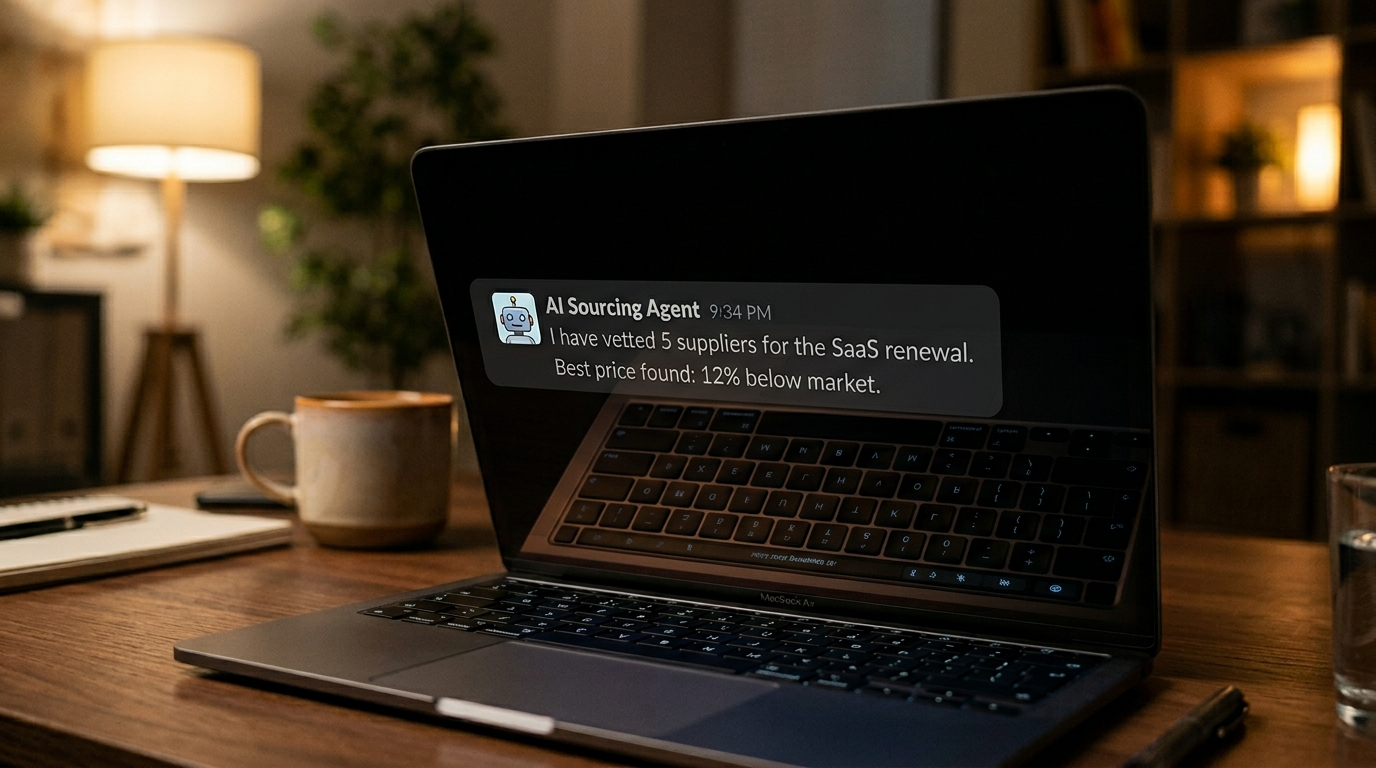
While 2025 focused on "Co-pilots," 2026 is the year of the Procurement Agent. Transformation now involves moving from human-initiated software to autonomous workflows that monitor risks and execute transactions.
Capability
Traditional Automation (2024)
Agentic Transformation (2026)
Sourcing
User manually searches for vendors.
AI Agents discover and vet suppliers 24/7.
Risk
Periodic audits (every 6 months).
Real-time monitoring of geopolitical/financial risk.
Negotiation
Humans draft emails from templates.
Predictive Intelligence drafts terms based on benchmarks.
Transactions
Manual PO entry in ERP.
Model Context Protocol (MCP) executes in-chat buying.
Why Procurement Transformation Matters Now
Procurement teams are managing more with less
Procurement’s spend managed per FTE is 50% higher today than five years ago, according to McKinsey. Teams face organizational stress, talent challenges, and accelerating expectations around digital enablement, all without proportional headcount growth. Source
Transformation is the response to that operating gap. When headcount will not grow, the only path forward is better processes, better data, and smarter use of technology and external support.
Indirect spend is a major untapped value pool
McKinsey reports that indirect spend can represent 10%, 15%, or even 18% of revenue in some industries and is often not fully managed by a single function or business owner. Done correctly, indirect procurement transformation can yield an initial cost reduction of about 15%, with most gains captured in 12 to 18 months. Source
For retailers specifically, indirect costs typically run 10% to 15% of sales. Companies using a cross-functional transformation approach have reduced annual indirect spend by 10% to 15%. Source
Indirect categories like SaaS, cloud, telecom, security, hardware, insurance, consulting, and managed services touch every department. That fragmented ownership is exactly why savings go uncaptured. For teams looking to understand where their spend analysis gaps are, indirect spend is usually the richest starting point.
Contract and renewal leakage destroy value after signature
World Commerce & Contracting research shows organizations lose an average of 11% of contract value through procurement contract value leakage. The loss happens after signature, when contracts are not managed as living commercial relationships. Source
Missed renewal dates, ignored price escalators, untracked obligations, and invoices that do not match contract terms are all leakage vectors. Procurement transformation should include post-signature management, not just better sourcing.
AI raises the bar for data and governance
McKinsey estimates AI agents could make procurement functions 25% to 40% more efficient. Source Deloitte describes agentic AI moving procurement toward governed, multi-step workflows across sourcing, contracting, compliance, and supplier management. Source
But AI does not eliminate the need for procurement transformation. It amplifies whatever state procurement is already in. Bad data, unclear decision rights, and fragmented workflows become bigger problems when AI starts taking action. Understanding how AI procurement cost savings tools actually work helps teams separate real capability from vendor hype.
Driving ESG Through Transformation
In 2026, procurement transformation is the primary vehicle for meeting environmental, social, and governance (ESG) targets.
- Traceability: Modernized data foundations allow for real-time tracking of Scope 3 emissions (supply chain), which are typically 26x greater than direct operations.
- Regulatory Shield: Transformation ensures compliance with the Empowering Consumers Directive (EmpCo) by providing auditable evidence for environmental claims.
- Supplier Diversity: AI-driven discovery surfaces "impact-oriented" suppliers that traditional manual searches often miss.
What Changes During Procurement Transformation
1. Spend visibility
A procurement team cannot transform what it cannot see. Spend visibility means the organization can answer basic questions: Who are we buying from? What categories are we spending in? Which contracts are active? Which renewals are coming up? Which purchases bypassed procurement?
McKinsey notes that indirect procurement is often fragmented across locations, business units, and categories, making enterprise-wide savings hard to identify. Source
Building a solid foundation starts with spend data management, categorizing AP data, cleaning supplier records, and creating a reliable view of what the company actually buys.
2. Category management
Category management organizes spend into groups of related products or services and manages each category strategically. The Hackett Group defines it as using spend data, market dynamics, supplier capabilities, and demand analysis to optimize cost, quality, risk, and innovation within each category. Source
Common categories include SaaS, cloud, telecom and connectivity, security, hardware, payments, travel and shipping, MRO, office supplies, insurance, consulting, professional services, and managed services.
The shift is significant: moving from “every team negotiates separately” to “each category has data, ownership, supplier strategy, and measurable outcomes.”
3. Process redesign
Processes often need redesign before automation. McKinsey says typical digital procurement transformation journeys take 18 to 24 months and should focus on user journeys across source-to-pay. Source
Key processes include intake, approval routing, sourcing, vendor onboarding, contract review, purchase orders, invoice matching, supplier performance reviews, renewal management, and savings tracking.
Practitioners on Reddit repeatedly warn that procurement software becomes painful when companies automate broken processes. In one thread about implementation failures, a user described their company spending two years on a platform rollout only to scrap it, with replies pointing to implementation partner quality, organizational resistance to change, and duplicate PO issues. Source
4. Data foundation
McKinsey found that for tail spend, only 20% to 40% of tendering data was centrally stored and readily available. The rest was scattered across systems, business units, and local purchasing teams. Source
The data required for transformation includes supplier master data, contract metadata, renewal dates, pricing and SKU data, invoice line data, purchase order history, category taxonomy, user and license usage, budget owner data, supplier performance data, and benchmark or market price data.
Reddit procurement communities confirm this reality. One discussion about messy spend data advised keeping taxonomy simple and noted that procurement cannot fix global requisition data alone if buying channels and finance data ownership are weak. Source
AI is only as useful as the procurement data it can trust.
5. Supplier and contract management
Transformed procurement functions manage suppliers beyond contract signature: performance, obligations, risk, service issues, and collaboration.
Understanding contract lifecycle management matters here because value leakage is primarily a post-signature problem. Contracts need active tracking, not just filing.
6. Technology and AI enablement
Technology is an enabler, not the transformation itself. Relevant tools include spend analytics, e-sourcing, contract lifecycle management, supplier management platforms, procure-to-pay systems, benchmarking tools, AI contract extraction, AI sourcing assistants, AI negotiation support, and renewal reminders.
Deloitte emphasizes that successful agentic AI depends on interoperability, data readiness, stakeholder training, governance, risk tiers, and security controls. Source
Practitioners on Reddit report that teams starting with small AI tasks, like contract summaries or cleaning messy spend data, built more adoption than those who tried to deploy AI for high-stakes decisions like vendor due diligence right away. Source The practical advice: start AI where it assists judgment, not where it silently replaces accountability.
7. Governance and change management
Procurement transformation changes who owns decisions. Is procurement centralized or decentralized? Who owns indirect spend categories? Who approves new vendors? Who maintains supplier data? Who owns contract renewals?
Deloitte’s 2025 CPO survey found that the top barrier to value delivery was siloed ways of working at 57%, followed by competing priorities at 46%, capability constraints at 40%, and talent gaps at 34%. Source
Art of Procurement argues that procurement should start by listening to stakeholder pain points, removing bottlenecks, and reducing process friction so stakeholders do not bypass procurement entirely. Rolling out new processes without structured change management leads to confusion or revolt. Source
Governance is often the difference between a procurement tool that sits unused and a genuine procurement transformation.
Examples of Procurement Transformation
SaaS renewal transformation
Before: Departments buy software separately. Renewal dates live in emails or spreadsheets. Auto-renewals happen by default. Procurement has no usage or benchmark data. Vendors negotiate from an information advantage.
After: All SaaS contracts and renewal dates are tracked centrally. Renewal reviews start early. Usage, pricing, alternatives, and benchmarks are reviewed before negotiation. Procurement, IT, finance, and business owners agree on keep, reduce, or switch decisions. Savings and cost avoidance are tracked.
Practitioners on Reddit highlight that shadow IT, duplicate tools, idle premium licenses, and auto-renewals are among the most common SaaS procurement mistakes. One commenter emphasized that major vendors must believe the buyer is willing to switch, which requires starting renewal work early enough to be credible. Source
For teams struggling with this, practical guidance on SaaS spend management can help structure the process.
Indirect spend transformation
Before: Spend is fragmented across IT, finance, HR, marketing, facilities, and operations. Different teams use different suppliers for the same category. No one can answer “what are we paying compared to market?”
After: AP and vendor spend is categorized. Suppliers are grouped by category. Benchmarks reveal overpricing. Procurement targets high-value renewal and sourcing events. Savings are measured and reported.
This is where the broadest set of business cost reduction strategies tends to concentrate, because indirect spend touches nearly every team and category.
Tail spend transformation
Tail spend comprises 80% to 90% of purchased items but only 10% to 20% of total spend, according to McKinsey. Companies can often achieve 5% to 15% savings in those categories. Source
Before: Many low-volume purchases happen across hundreds of suppliers. Data is incomplete. RFQs happen manually over email. The effort feels disproportionate.
After: Tail spend is classified. Supplier options are expanded. Digital quoting scales across more suppliers and line items. Data improves over time. Savings are captured without manual overload.
Contract value transformation
Before: Contracts are stored as PDFs. Renewal dates and obligations are missed. Invoices are not reconciled to contract terms. Value leaks quietly.
After: Key contract terms are extracted. Renewal dates are tracked. Price increases are reviewed before acceptance. Supplier performance is monitored. Contract terms inform buying and invoice review.
AI-assisted procurement transformation
Before: Procurement manually cleans spend data, compares quotes, reviews contracts, searches for suppliers, and drafts negotiation positions.
After: AI extracts contract data. AI flags upcoming renewals. AI compares quotes against benchmarks. AI suggests suppliers or sourcing paths. AI drafts negotiation questions. Humans approve decisions, manage exceptions, and own stakeholder relationships.
Deloitte says agentic AI is moving procurement toward coordinated, multi-step workflows, but adoption depends on data readiness, governance, human oversight, and security. Source For a closer look at what this means in practice, see how automated savings programs combine AI and human support to move from insight to execution.
Common Procurement Transformation Mistakes
1. Buying an enterprise suite before defining the process. Procurement software does not fix unclear intake, bad supplier data, or low stakeholder trust. Do not buy the procurement organization you hope to become. Buy or build the operating model you can actually adopt.
2. Automating bad data. If supplier names are duplicated, categories are inconsistent, and contract dates are missing, automation scales confusion instead of efficiency.
3. Ignoring ERP and finance integration. Practitioners on Reddit describe procurement implementations failing when the tool creates a second source of truth instead of integrating cleanly with the ERP. Source Another thread noted that “simple” in-house procurement systems quickly require AP integration, approval workflows, vendor management, reporting, audits, and ongoing maintenance. Source
4. Measuring go-live instead of adoption. Real success is adoption, savings realization, compliance, cycle time improvement, and stakeholder satisfaction. Deloitte’s CPO survey shows top-performing digital procurement organizations outperform followers across cost savings, stakeholder satisfaction, and innovation enablement, not just deployment speed. Source
5. Forgetting stakeholder experience. If procurement makes buying harder, employees will bypass the process through corporate cards, direct vendor relationships, or emergency exceptions. Art of Procurement argues procurement should build a reputation as a customer experience leader. Source
6. Trying to transform everything at once. The fastest procurement transformations target specific categories and quick wins before scaling to the full function.
How to Start Procurement Transformation
Step 1: Identify the spend categories with the fastest value
Prioritize categories with high spend, poor visibility, upcoming renewals, fragmented suppliers, or obvious benchmark gaps. SaaS, cloud, telecom, and payments are common starting points because data is relatively accessible and savings are often immediate.
Step 2: Build a spend and contract baseline
Collect AP spend data, vendor lists, active contracts, renewal dates, pricing, usage metrics, and category owners. This baseline becomes the foundation for everything that follows.
Step 3: Fix the buying journey
Simplify intake, approvals, and renewal workflows before automating them. If the process is unclear or painful, technology will not help.
Step 4: Target quick wins
Examples of high-impact starting categories: SaaS renewals, cloud renewals, telecom and connectivity, payment processing fees, insurance, MRO, office supplies, consulting, and professional services.
Step 5: Add benchmark data and negotiation discipline
Move from “last year plus increase” to informed negotiation. Market data changes the power dynamic. When buyers can cite benchmark pricing, vendors respond differently.
Step 6: Scale with automation and AI
Automate reminders, extraction, quote comparison, supplier discovery, savings analysis, and negotiation support. But only after the data, processes, and governance justify it.
Procurement transformation does not have to begin with a long software implementation. If your team wants to identify savings opportunities before committing to a large transformation program, Varisource’s procurement savings support offers benchmark data, group buying discounts, rebates, renewal reminders, negotiation support, and AI agents across 100+ indirect spend categories, with no upfront cost.
Procurement Transformation KPIs
Measuring transformation by go-live dates is a mistake. These are the metrics that matter.
KPI category
Metrics
Why it matters
Savings
Realized savings, cost avoidance, savings pipeline, negotiated vs. realized
Proves financial impact
Spend visibility
% spend categorized, % spend under management, supplier count by category
Shows control and data maturity
Compliance
On-contract spend, maverick spend, policy adherence, preferred supplier usage
Shows process adoption
Speed
Intake-to-approval cycle time, sourcing cycle time, requisition-to-PO time
Shows stakeholder experience
Renewal management
% renewals reviewed before deadline, auto-renewals avoided, renewal savings captured
Shows prevention of leakage
Supplier performance
SLA adherence, delivery quality, risk score, issue resolution time
Shows supplier value
Data quality
Duplicate supplier rate, missing contract fields, classification accuracy
Shows AI and analytics readiness
User adoption
Portal adoption, workflow completion, stakeholder satisfaction
Shows whether transformation is actually used
Deloitte’s 2025 CPO survey found that top-performing “Digital Masters” allocate up to 24% of procurement budgets to technology and achieve 3.2x average GenAI ROI, compared to slightly above 1.5x for followers. Source The gap is not about spending more on technology. It is about having the data, processes, and governance to make that technology productive.
Understanding the distinction between cost savings vs. cost avoidance is critical for reporting, because many procurement teams negotiate real value that never gets credited properly.
Related Terms
Digital procurement: Use of digital tools to improve sourcing, purchasing, contracting, supplier management, and analytics.
Procurement automation: Use of software or AI to automate repetitive tasks such as invoice matching, approval routing, contract extraction, or renewal reminders.
Source-to-pay (S2P): End-to-end procurement lifecycle from identifying a need and sourcing suppliers through contracting, purchasing, invoicing, and payment.
Procure-to-pay (P2P): The part of procurement focused on requisitioning, purchasing, receiving, invoicing, and payment.
Category management: Strategic management of related spend categories such as SaaS, telecom, cloud, facilities, consulting, or travel.
Spend visibility: Ability to see, classify, and analyze what the organization buys, from whom, under what terms, and at what price.
Maverick spend: Spend that happens outside approved procurement processes, suppliers, or contracts.
Tail spend: Large number of low-value or infrequent purchases that are individually small but collectively difficult to manage.
Savings realization: Verification that negotiated savings actually flow through to invoices, budgets, or financial results.
Contract value leakage: Loss of expected contract value after signature due to missed obligations, poor compliance, unmanaged renewals, or weak performance management.
Agentic AI in procurement: AI systems that perform multi-step procurement tasks (extracting contract data, comparing quotes, monitoring compliance, suggesting negotiations) with human oversight and governance.
FAQ
What is procurement transformation in simple terms?
Procurement transformation is changing how a company buys things so it can save money, manage suppliers better, use data for decisions, and reduce waste. It includes process changes, better data, new technology, and clearer ownership of spending decisions.
Is procurement transformation the same as digital procurement?
No. Digital procurement refers to using digital tools across procurement workflows. Procurement transformation is broader. It includes process redesign, governance changes, data improvements, supplier strategy, team capability development, and technology adoption together.
What are the first steps in procurement transformation?
Start by building spend visibility: know what you buy, from whom, at what price, and when contracts renew. Then target the categories with the most immediate savings potential, typically indirect spend areas like SaaS, cloud, telecom, and professional services. Fix the intake and approval process before automating it.
How does AI support procurement transformation?
AI can extract contract data, flag upcoming renewals, compare pricing against benchmarks, suggest supplier alternatives, and assist with negotiation preparation. Deloitte and McKinsey both emphasize that AI requires clean data, governance, and human oversight to be effective. It works best when procurement has already built a reliable data foundation.
Why do procurement transformations fail?
Common failure modes include buying enterprise software that is too complex for the organization’s maturity, automating broken processes, ignoring ERP integration, underestimating change management, and measuring go-live instead of adoption and savings realization. Practitioners consistently report that the technology is rarely the root problem.
Where does indirect spend fit into procurement transformation?
Indirect spend is often the fastest place to prove transformation value. McKinsey estimates that indirect procurement transformation can yield about 15% initial cost reduction because ownership is fragmented, renewals are missed, prices are rarely benchmarked, and stakeholders feel procurement friction directly. Categories like SaaS, cloud, telecom, insurance, and consulting are common starting points.
Does procurement transformation require a full source-to-pay platform?
Not necessarily. Mid-market companies often get more value from starting with spend visibility, renewal tracking, benchmark data, and negotiation support before investing in a full platform. The right tool depends on the organization’s size, maturity, and ERP environment.
How do you measure procurement transformation success?
Track realized savings, spend under management, compliance rates, cycle times, renewal management outcomes, supplier performance, stakeholder satisfaction, and data quality. These metrics show whether transformation is creating value, not just whether software was deployed.
How long does a procurement transformation take?
Most enterprise journeys take 18 to 24 months, though quick wins in indirect categories (like SaaS or Cloud) can show results in 6 months.
What is the ROI of AI in procurement?
Top-performing organizations are seeing a 3.2x ROI on Generative AI by using it for contract extraction and renewal management.
What is 'Maverick Spend' in 2026?
It is unauthorized spending outside of governed AI-enabled channels, which often accounts for 20%–40% of hidden costs.
Procurement transformation starts with visibility. Before a company can automate buying or deploy AI agents, it needs to know what it buys, who owns each vendor, which contracts are renewing, where prices are out of market, and which processes cause stakeholders to bypass procurement. For many companies, the fastest first step is not a multi-year system rollout. It is identifying immediate savings across indirect spend and using those wins to fund deeper transformation.
Varisource helps procurement, IT, and finance teams find savings across indirect spend using benchmark data, group buying discounts, rebates, renewal reminders, negotiation support, and AI agents across 300+ categories. To identify your highest-priority opportunities, request a free Savings Estimate Report.
{
"@context": "https://schema.org",
"@type": "FAQPage",
"@id": "#faq",
"mainEntity": [
{
"@type": "Question",
"@id": "#faq-question-1",
"name": "What is procurement transformation in simple terms?",
"acceptedAnswer": {
"@type": "Answer",
"text": "Procurement transformation is changing how a company buys things so it can save money, manage suppliers better, use data for decisions, and reduce waste. It includes process changes, better data, new technology, and clearer ownership of spending decisions."
}
},
{
"@type": "Question",
"@id": "#faq-question-2",
"name": "Is procurement transformation the same as digital procurement?",
"acceptedAnswer": {
"@type": "Answer",
"text": "No. Digital procurement refers to using digital tools across procurement workflows. Procurement transformation is broader. It includes process redesign, governance changes, data improvements, supplier strategy, team capability development, and technology adoption together."
}
},
{
"@type": "Question",
"@id": "#faq-question-3",
"name": "What are the first steps in procurement transformation?",
"acceptedAnswer": {
"@type": "Answer",
"text": "Start by building spend visibility: know what you buy, from whom, at what price, and when contracts renew. Then target the categories with the most immediate savings potential, typically indirect spend areas like SaaS, cloud, telecom, and professional services. Fix the intake and approval process before automating it."
}
},
{
"@type": "Question",
"@id": "#faq-question-4",
"name": "How does AI support procurement transformation?",
"acceptedAnswer": {
"@type": "Answer",
"text": "AI can extract contract data, flag upcoming renewals, compare pricing against benchmarks, suggest supplier alternatives, and assist with negotiation preparation. Deloitte and McKinsey both emphasize that AI requires clean data, governance, and human oversight to be effective. It works best when procurement has already built a reliable data foundation."
}
},
{
"@type": "Question",
"@id": "#faq-question-5",
"name": "Why do procurement transformations fail?",
"acceptedAnswer": {
"@type": "Answer",
"text": "Common failure modes include buying enterprise software that is too complex for the organization's maturity, automating broken processes, ignoring ERP integration, underestimating change management, and measuring go-live instead of adoption and savings realization. Practitioners consistently report that the technology is rarely the root problem."
}
},
{
"@type": "Question",
"@id": "#faq-question-6",
"name": "Where does indirect spend fit into procurement transformation?",
"acceptedAnswer": {
"@type": "Answer",
"text": "Indirect spend is often the fastest place to prove transformation value. McKinsey estimates that indirect procurement transformation can yield about 15% initial cost reduction because ownership is fragmented, renewals are missed, prices are rarely benchmarked, and stakeholders feel procurement friction directly. Categories like SaaS, cloud, telecom, insurance, and consulting are common starting points."
}
},
{
"@type": "Question",
"@id": "#faq-question-7",
"name": "Does procurement transformation require a full source-to-pay platform?",
"acceptedAnswer": {
"@type": "Answer",
"text": "Not necessarily. Mid-market companies often get more value from starting with spend visibility, renewal tracking, benchmark data, and negotiation support before investing in a full platform. The right tool depends on the organization's size, maturity, and ERP environment."
}
}
]
}
About the Author
.jpeg)
Victor Hou
Victor Hou is the founder of Varisource, the first ever Savings Automation Platform that automates Savings for Your Business. Victor helps companies access discounts, rebates, benchmark data, savings for renewals and new purchases across 100+ spend categories automatically to increase your company's margins and equity value by at least 15-20%. Victor is active and passionate about using AI + automation to help your business save time, money and run more efficiently.
%201.svg)

Varisource’s Savings Automation Platform guarantees savings and maximized leverage on every dollar spend across 100+ spend categories


