Indirect Spend Categories: How to Manage Effectively in 2026

Ever wonder where all the money goes? Beyond the obvious costs of creating your product or service, there’s a whole universe of expenses that keep your business running. These purchases, known as indirect spend categories, cover all the goods and services needed for day to day operations that are not directly part of the final product. Getting a handle on this spending can unlock serious savings and boost your bottom line. Think of this as your friendly guide to the most common indirect spend categories that businesses like yours encounter every day.
We’ll break down what each category covers, why it matters, and share some surprising facts along the way. From the software on your team’s laptops to the coffee in the breakroom, it all adds up. Let’s dive in and demystify these crucial business costs.
What is Indirect Spend Management? Indirect spend management is the strategic oversight of "non-core" expenses—goods and services required for daily operations but not physically part of the final product. In 2026, the most effective way to manage indirect spend is through automated category management, supplier consolidation, and AI-driven visibility tools to capture "tail spend," which typically accounts for 20% of total spend but 80% of vendors.
Indirect Spend Category Benchmarks (2026)
Category
Avg. % of Indirect Spend
Potential Savings (via Optimization)
Management Complexity
Software & SaaS
15–20%
25% (License Rightsizing)
High
MRO
10–15%
10% (Supplier Consolidation)
Medium
Marketing
12–18%
15% (ROI Attribution)
High
Facility Management
8–12%
12% (Energy Efficiency)
Medium
Travel & Events
5–10%
20% (Policy Compliance)
Low
Consulting Services
Consulting services are what you pay for when you need outside expertise. This can range from hiring a single independent contractor to bringing in a massive firm for strategic advice on management, technology, or HR. Companies lean on consultants to tap into specialized knowledge, speed up projects, or fill temporary skill gaps without adding permanent headcount. This makes it one of the most significant indirect spend categories for many organizations.
The global management consulting market is huge, valued at nearly $1.8 trillion in 2023. While bringing in experts can drive incredible results, it’s not always a guaranteed win. Reports show that 81% of respondents said consultants met or exceeded expectations, often due to poor planning or shifting goals. When managed well, however, consulting spend is a powerful tool for accelerating growth.
Document Management and Print Services
This category covers everything related to handling physical and digital documents. We’re talking about the office printers and copiers, the paper and toner that feed them, and the services that keep them running. It also includes document storage, shredding services, and the software used for digital document workflows. Even as many businesses aim to go paperless, printing remains a major operational cost, especially in fields like finance, law, and healthcare.
These costs can be deceptively high. Unmanaged printing expenses can consume 1 to 3% of a company’s total revenue. One effective strategy to control this is using Managed Print Services (MPS), which can slash printing costs by up to 30%. Considering the average office worker prints about 10,000 pages a year, optimizing this area improves your budget and your environmental footprint.
Facility Management
Facility management (FM) is all about keeping your physical workspace safe, functional, and efficient. This broad category includes everything from janitorial services and building maintenance to HVAC systems, security, and landscaping. It also covers waste management, space planning, and managing office moves. Essentially, it’s the bundle of services required to run your buildings smoothly.
This is a substantial cost center, with the global FM market valued at USD 1,368 billion in 2025. A major trend is outsourcing; Global facility management outsourcing rate is 36.6% in 2026. Companies find that outsourcing these services often leads to cost savings and quality improvements, allowing internal teams to focus on core business activities.
Human Resources (HR) Expenses
HR expenses involve the costs of managing your workforce. This includes internal costs like the salaries of your HR team and external costs for services like recruiting agencies, training programs, and employee benefits administration. When you pay a headhunter to find a new executive or use a third party platform to manage your benefits, that’s HR indirect spend.
People are a company’s greatest asset and often its biggest expense. The average cost to hire a single employee can be almost $4,700. With employee benefit costs account for about 30% of total compensation, it’s clear why managing HR costs is critical. Smart spending here isn’t just about cutting costs; it’s about investing in talent to boost productivity and reduce expensive turnover.
Lab Supplies and Equipment
For industries like pharmaceuticals, biotech, and manufacturing, lab supplies are a critical indirect spend category. This includes all the consumable materials (chemicals, test kits, glassware) and equipment (microscopes, centrifuges, spectrometers) needed for research, development, and quality testing. These materials are often highly specialized and expensive.
Global R&D spending has surpassed $2 trillion annually, driving huge demand for lab supplies. The pharmaceutical industry alone spends over $200 billion a year on R&D. In this environment, even small inefficiencies add up. A single scientist might use thousands of dollars in chemical reagents each month. Proper inventory management and negotiating volume discounts with key suppliers are essential strategies to control costs without slowing down innovation.
Marketing and Advertising
This category includes all the money you spend to promote your brand, products, or services. It covers everything from digital ad campaigns and social media management to market research, public relations, and trade show sponsorships. With marketing directly tied to revenue, companies invest heavily here, making it a closely watched area of spend.
Global advertising spend is projected to approach $1 trillion in the coming years. A common rule of thumb is that marketing budgets averaged 7.7% of overall company revenue in 2025. Today, digital channels dominate, Digital formats accounted for 72% of overall ad revenue in 2024. The challenge is measuring the return on investment (ROI) to ensure these significant funds are being used effectively.
MRO (Maintenance, Repair, and Operations)
MRO refers to the thousands of items that keep your facilities and equipment running but aren’t part of the final product. Think spare parts for machinery, safety gear, cleaning supplies, and tools. In manufacturing, MRO is vital for preventing costly downtime. Unplanned outages can cost industrial manufacturers an estimated $50 billion in lost productivity each year.
MRO is a classic “tail spend” category, characterized by a high volume of low value purchases. These items can represent 80% of a company’s purchased parts but only 5 to 10% of the total spend value. Because it’s so fragmented, managing MRO can be a headache, but consolidating suppliers and optimizing inventory can lead to significant savings and smoother operations.
Office Supplies
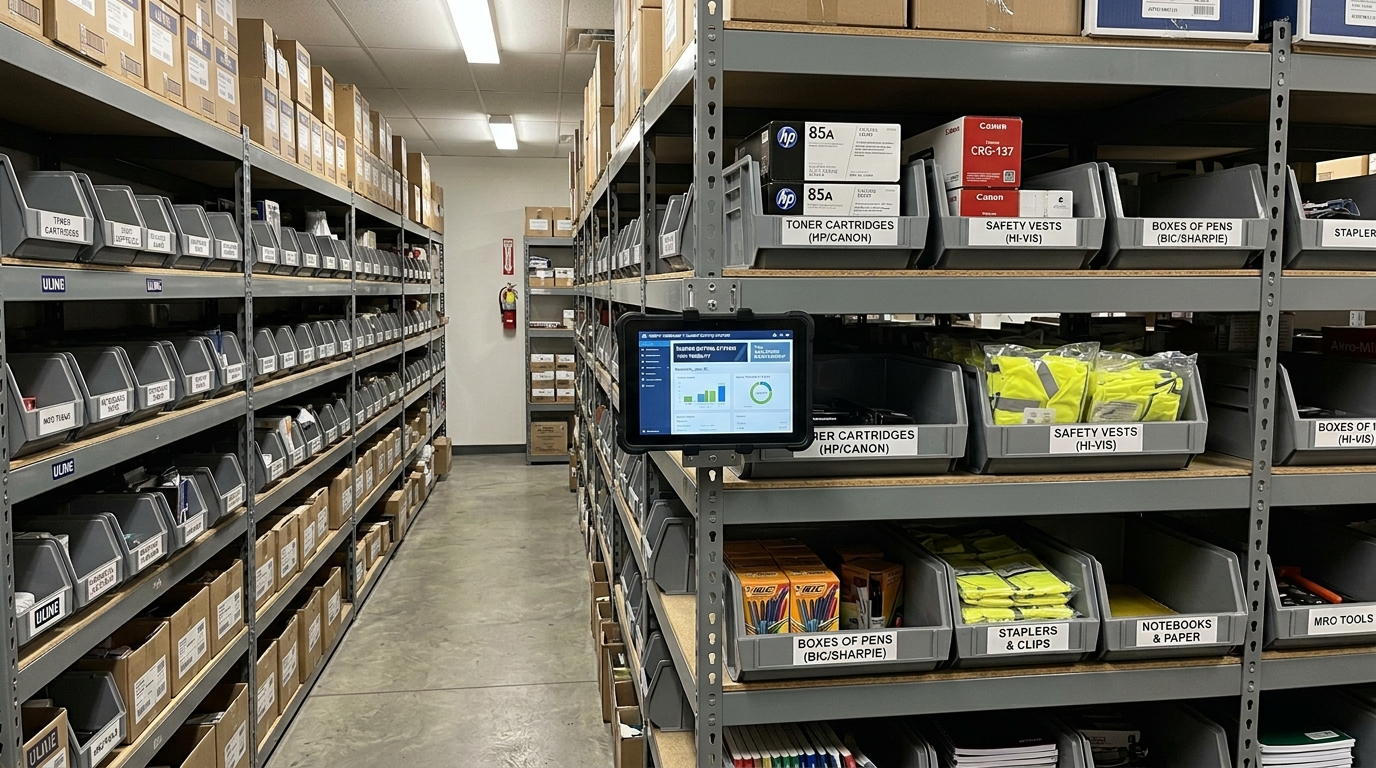
Office supplies are the everyday consumables that support work activities. This includes paper, pens, notebooks, printer toner, and breakroom supplies. While individual items are inexpensive, the costs add up across an entire organization. These seemingly small expenses are a prime area for savings through smart procurement.
The average office worker can use 10,000 sheets of paper annually, and The U.S. office supplies market size was estimated at USD 17.92 billion in 2024. By simply standardizing an approved list of supplies and consolidating purchases through a preferred vendor, companies have been shown to reduce their office supply costs by 10 to 20%.
Outsourced Services
Outsourced services involve contracting an external provider to handle a business function. This is incredibly common for non core activities like customer support call centers, IT helpdesks, payroll processing, and accounting. If you hire another company to manage a process on your behalf, it falls into this category.
Outsourcing is a popular strategy for a reason. It can reduce costs, improve service quality, and give businesses the flexibility to scale. The global market for business process outsourcing (BPO) was valued around $245 billion in 2021 and continues to grow. Expert partners like Varisource can even act as an extension of your team, automating vendor negotiations to ensure you get the best value from all your service providers. See how this translates into automated savings.
Overhead
Overhead costs are the ongoing expenses required to run the business that aren’t directly tied to producing a specific product. This includes essentials like rent for your buildings, utilities, insurance, and the salaries of administrative staff. These are often called indirect costs and are crucial for profitability.
Controlling overhead is a constant focus for any finance team. Inefficiencies often hide in these expenses. For example, printing costs alone can be as high as 1 to 3% of revenue for many companies. By scrutinizing these indirect spend categories and finding opportunities to be more efficient, you can free up capital to reinvest in growth.
Software and Communications
This has quickly become one of the fastest growing indirect spend categories. It includes all your enterprise software licenses, SaaS subscriptions and cloud services (like AWS or Azure), and software maintenance contracts. On the communications side, it covers phone systems, employee mobile plans, and internet services.
The average large enterprise uses over 180 different SaaS applications. That complexity creates waste, with studies finding that around 30% of software licenses go underutilized or unused entirely. A platform like Varisource can help you get a handle on this sprawl by automatically identifying unused subscriptions and negotiating better rates on your behalf.
Technology (Hardware and Equipment)
While software is one piece of the puzzle, the technology category also covers the physical hardware. This means the laptops, servers, data storage systems, networking gear, and mobile devices your organization relies on. Managing this spend involves navigating product lifecycles, ensuring compatibility, and managing relationships with manufacturers and resellers.
Technology hardware is a capital intensive expense. A key strategy here is standardization. By selecting standard models for equipment like laptops, companies can negotiate cost savings of 10% to 30% per purchased machines. Good asset management is also critical to avoid buying new equipment when you have unused devices sitting in a closet.
Transportation (Logistics)

Transportation spend covers the cost of moving goods, from shipping raw materials to a factory to delivering finished products to customers. This includes freight shipping by truck, rail, air, and sea, as well as managing a fleet of company vehicles. For any company dealing with physical products, this is one of the largest indirect spend categories.
In the U.S. alone, businesses spent approximately $1.63 trillion on logistics and transportation in 2019, which was about 7.6% of the national GDP. This spend is highly sensitive to external factors like fuel prices and supply chain disruptions. Using technology like a Transportation Management System (TMS) to optimize routes and consolidate shipments is a common way to control these volatile costs.
Travel and Events
This category covers all costs related to employee business travel and corporate events. Think airfare, hotels, rental cars, and meals for work trips, as well as expenses for conferences, trade shows, and company meetings. After a sharp decline, business travel is roaring back.
Global business travel spending was expected to hit $1.48 trillion in 2024 and is forecast to surpass $1.5 trillion by 2025. A well defined travel policy is the most important tool for managing these costs. Many companies also work with travel agencies or use booking tools that enforce these policies, helping to eliminate wasteful spending while still enabling the travel that grows the business. For a deeper look at your T&E spending, consider getting a free savings assessment.
Utilities
Utilities are the essential services that power your facilities, including electricity, natural gas, water, and heating. For energy intensive operations like data centers or manufacturing plants, these costs can be enormous. Even in a typical office, commercial buildings account for about 35% of all electricity consumption.
This is an area ripe for savings. Simple efficiency measures like switching to LED lighting or installing smart thermostats can save up to 30 percent on energy bills with no-cost actions, strategic investment, and smart operations and maintenance. By treating utilities as a manageable expense rather than a fixed cost, organizations can significantly reduce this overhead and improve their bottom line.
Sustainability in Indirect Spend: Beyond the Bottom Line
Modern procurement isn't just about cost—it's about compliance. Indirect categories like Utilities, Logistics, and Facility Management are prime targets for reducing a company's environmental footprint.
- Smart Buildings: Using IoT to reduce energy waste in facilities.
- Circular MRO: Prioritizing vendors who offer refurbished parts or take-back programs.
- Green Logistics: Choosing carriers with electric fleets or optimized routing to reduce emissions.
How to Tackle "Tail Spend" in Indirect Procurement
Tail spend refers to the 80% of suppliers that account for only 20% of your total spend. Because these purchases are small and frequent, they often bypass procurement oversight.
- The Problem: Fragmented buying leads to "maverick spend" and higher unit costs.
- The 2026 Solution: Implement a digital marketplace or a Guided Buying system. By funneling small purchases through a single platform, you gain 100% visibility and can negotiate "spot buy" discounts automatically.
Conclusion
Mastering your indirect spend categories is a journey, not a destination. From consulting contracts to utility bills, each area presents a unique opportunity to find savings and operate more efficiently. The key is to understand what you’re spending money on and why. With this guide, you now have a solid foundation for identifying where your biggest opportunities lie.
Solutions like Varisource can provide the data and expertise to help you capture those savings across hundreds of indirect spend categories. Private equity operating teams can also leverage these approaches to unlock portfolio-wide savings.
Frequently Asked Questions
What are indirect spend categories?
Indirect spend categories are groups of expenses that a business incurs to support its operations but are not directly tied to producing its core product or service. Examples include marketing, IT software, office supplies, and facility management.
Why is it important to manage indirect spend?
Managing indirect spend is crucial because it often represents a significant portion of a company’s total expenditures. By optimizing these costs, businesses can increase profitability, improve operational efficiency, and free up cash for strategic investments.
What is the difference between direct and indirect spend?
Direct spend refers to the purchase of goods and services that are directly incorporated into a final product, like raw materials or manufacturing components. Indirect spend covers all the other purchases needed to run the business.
How can a company start managing its indirect spend categories?
A good first step is to gain visibility into spending by categorizing all purchases. Once you know where the money is going, you can identify the largest indirect spend categories, analyze vendor contracts and improve your contract lifecycle management (CLM), and look for opportunities to consolidate suppliers or negotiate better terms.
What are some common challenges in managing indirect spend?
Common challenges include a lack of visibility into “tail spend” (many small purchases), decentralized purchasing decisions made by various departments, and a lack of resources or expertise to negotiate effectively across hundreds of different indirect spend categories.
Can technology help manage indirect spend?
Absolutely. Modern procurement platforms and AI driven tools can automate the process of tracking spend, benchmarking costs against market rates, identifying savings opportunities, and even negotiating with vendors to secure better deals.
What is tail spend?
Tail spend refers to the large number of small, infrequent purchases that often fall outside of formal procurement oversight. While each purchase is minor, together they can account for a significant portion of indirect spend and are often a source of untapped savings.
How can outsourcing help with indirect spend management?
Partnering with a specialized firm can provide the expertise, technology, and leverage needed to find and realize savings across complex indirect spend categories. These partners often work on a shared savings model, making it a risk free way to improve your bottom line. Check out how Varisource can help.
About the Author
.jpeg)
Victor Hou
Victor Hou is the founder of Varisource, the first ever Savings Automation Platform that automates Savings for Your Business. Victor helps companies access discounts, rebates, benchmark data, savings for renewals and new purchases across 100+ spend categories automatically to increase your company's margins and equity value by at least 15-20%. Victor is active and passionate about using AI + automation to help your business save time, money and run more efficiently.
%201.svg)

Varisource’s Savings Automation Platform guarantees savings and maximized leverage on every dollar spend across 100+ spend categories


