Indirect Spend Optimization: 2026 Strategies and Tools

Indirect spend optimization is the strategic process of managing and reducing the costs of goods and services that are not directly incorporated into a final product. Think of everything from software subscriptions and office supplies to marketing services and travel expenses. Explore common savings categories to see where quick wins often hide.
While often overlooked in favor of direct procurement, mastering indirect spend optimization can unlock significant, often hidden, savings, boost efficiency, and give your organization a serious competitive edge. In fact, indirect spend can account for up to 50% of a company’s total purchasing volume, making it a goldmine for potential cost reductions. Getting a handle on these costs is no longer a “nice to have”, it’s a critical business function that directly impacts the bottom line.
Key Takeaway: What is Indirect Spend Optimization? In 2026, indirect spend optimization is the autonomous management of non-production costs—such as SaaS, MRO, and professional services—which typically comprise 20% to 50% of total corporate spend. Leading organizations achieve 15% to 25% cost reductions by shifting from manual procurement to Agentic AI orchestration, which automates supplier discovery, tail-spend bidding, and contract renewals to eliminate maverick spending and capture hidden value.
From Tactical Purchasing to Strategic Procurement
The world of procurement has shifted toward a strategic procurement operating model that unifies sourcing, purchasing, and payment into a seamless, data‑driven workflow. Today, leading organizations are adopting an intelligence first, orchestrated approach to the entire invoice to pay (I2P) lifecycle. This modern strategy for indirect spend optimization involves using data and automation to make smarter, proactive decisions. It’s about moving from reactive buying to a holistic view that integrates sourcing, purchasing, and payment into a seamless, data driven workflow. This shift helps to eliminate rogue spending and ensures that every dollar is maximized for value.
Build the Data Foundation: Spend Analysis for Visibility
You can’t optimize what you can’t see. The first step in any successful indirect spend optimization journey is achieving full visibility into your spending patterns. This is where spend analysis comes in. By consolidating, cleansing, and categorizing purchasing data from across the organization, you can uncover exactly where money is going. A thorough spend analysis reveals opportunities for supplier consolidation, identifies areas of non compliant spending, and provides the benchmarks needed to negotiate better contracts. This foundational visibility is the bedrock of strategic decision making in procurement. Without a solid data foundation, efforts toward indirect spend optimization are just shots in the dark.
Tame Tail Spend for Fast Savings and Control
Tail spend refers to the large volume of small, infrequent purchases that often fly under the radar of traditional procurement processes. While each individual purchase is small, together they can represent up to 20% of a company’s total spend. Taming this long tail is a quick win for indirect spend optimization. Because it’s often unmanaged, there are significant opportunities to consolidate suppliers, leverage purchasing power, and enforce policy compliance. Using technology to automate the purchasing process for these smaller items can free up your procurement team to focus on more strategic, high value negotiations. Services like Varisource can help automate the identification and negotiation of these smaller contracts, delivering rapid savings.
The Shift to Agentic Procurement Orchestration
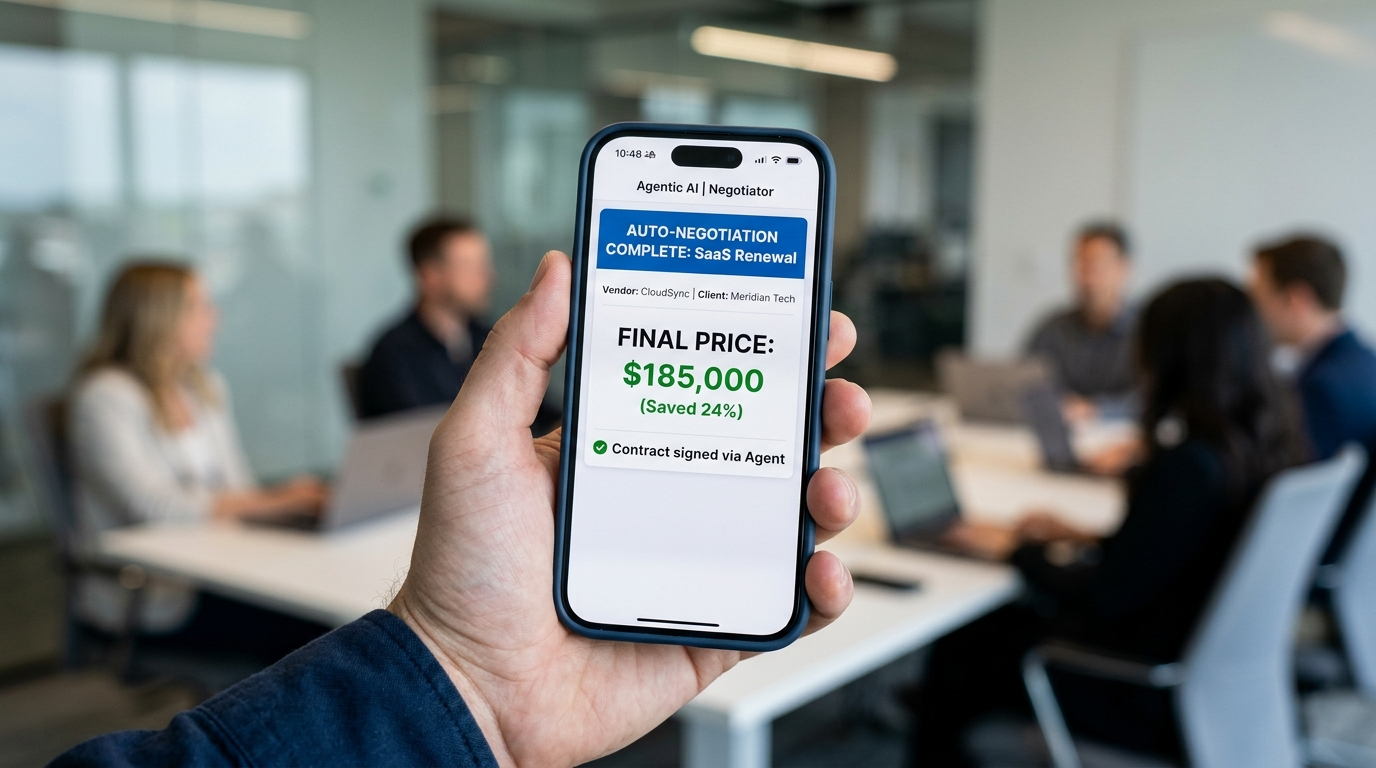
The "Strategic Procurement" of 2025 has evolved. In 2026, the competitive edge lies in Agentic AI. Unlike traditional software that merely shows you data, agentic tools—like those offered by Varisource and Zip—actually execute tasks. They can autonomously vet suppliers, draft negotiation scripts based on real-time benchmarks, and flag ESG (Environmental, Social, and Governance) risks before a contract is even signed. Moving to an orchestration model ensures that your "Front Door" for requests is intelligent, routing every dollar to the most efficient channel without human intervention.
2026 Indirect Spend Category Breakdown
Optimizing indirect spend requires a category-specific approach. Below are the primary levers for the most common non-core expense areas:
Category
Typical % of Indirect Spend
2026 Optimization Lever
Primary KPI
SaaS & Cloud
25% – 35%
License right-sizing & auto-renewal blocking
Utilization Rate
Professional Services
15% – 20%
Standardized rate cards & AI bidding
Savings vs. Market Rate
MRO (Maintenance)
10% – 15%
Catalog consolidation & tail-spend automation
On-Contract Spend %
Marketing & Media
10% – 12%
Performance-based agency fee structures
ROI per Dollar Spent
Travel & Fleet
5% – 8%
Dynamic policy enforcement via AI agents
Compliance Rate
Top 11 Indirect Spend Optimization Strategies
While establishing a framework for cost control is essential, the right technology stack is what transforms theoretical savings into tangible bottom-line results. This curated selection of industry-leading platforms represents the most effective tools for automating procurement workflows and gaining granular visibility into non-core expenses. By leveraging these specific solutions, organizations can move beyond manual oversight to a more data-driven and scalable approach to managing indirect spend.
1. Varisource
Indirect spend across hundreds of categories from SaaS to MRO is often unmanaged, leading to missed discounts, unfavorable terms, and budget leakage. Varisource combines AI-powered automation with a done-for-you service to deliver savings across your entire vendor base with no upfront cost or risk.
How to put it to work
- Get a free savings estimate to identify and prioritize cost reduction opportunities.
- Connect Varisource’s AI agents to monitor every renewal and new purchase automatically.
- Let Varisource’s team benchmark, negotiate, and execute savings across 100+ spend categories (SaaS, Cloud, Telecom, etc.).
- Review savings reports that track realized cost reductions and value delivered.
- Pay only a share of the savings achieved, aligning Varisource directly with your financial goals.
Enablers & ownership
Leverages AI agents, extensive benchmark data, and expert negotiators. It’s a done-for-you service that complements existing procurement, IT, and finance teams. Leadership from Finance (CFO), Procurement (CPO), and IT (CTO) typically owns the relationship.
Outcomes & KPIs
Realize significant savings across all indirect spend categories with zero upfront investment. Track realized savings as the primary KPI. Achieve rapid time-to-value with minimal internal effort and benefit from a risk-free, shared-savings model.
2. Vertice
SaaS sprawl and misaligned cloud commitments quietly tax EBITDA through opaque pricing, maverick purchases, and missed renewal windows. Vertice centralizes visibility and brings hard market benchmarks to every negotiation, delivering fast savings without disrupting your P2P or FinOps stack.
How to put it to work
- Inventory SaaS and cloud: pull contracts, usage, and renewal dates from ERP, SSO, and AWS/Azure to set a 12‑month baseline.
- Connect Vertice to finance/procurement systems to power intake-to-procure and real‑time pricing insights.
- Prioritize renegotiations: target renewals 90 to 120 days pre‑expiry; right‑size licenses and kill overlaps.
- Tune cloud economics: model EDP/Savings Plans/RIs; automate buy/sell adjustments in monthly FinOps reviews.
- Govern: publish a savings pipeline, enforce intake policies, and run weekly triage to curb off‑contract buys.
Enablers & ownership
Leverage Vertice’s pricing benchmarks, ERP/P2P and SSO data, plus FinOps telemetry. Procurement is RACI lead with IT, Finance, and Security as approvers. Focus on SaaS, IaaS/PaaS, and collaboration suites.
Outcomes & KPIs
Realize 20 to 30% savings on SaaS/cloud with purchasing cycles can typically be cut in half. Track >50% off‑contract reduction, and 64% average commitment rate.
3. Fairmarkit
Tail spend hides in emails and one‑off buys, eroding compliance and pushing unit prices up. Fairmarkit automates competitive sourcing for low‑value purchases, compressing price, enforcing “3 bids,” and shrinking cycle times without heavy change management.
How to put it to work
- Integrate Fairmarkit with ERP/P2P (e.g., Coupa, SAP Ariba); route PRs under thresholds to automated RFQ and baseline spend.
- Configure autonomous sourcing: AI supplier picks, mandatory “3 bids,” and RFx templates.
- Cleanse vendor masters and load catalogs; enforce audit trails for every event.
- Start with quick‑wins (IT peripherals, SaaS renewals, MRO); monitor cycle times and expand auto‑award rules quarterly.
- Institutionalize insights: push rate‑card and supplier performance data back to sourcing playbooks.
Enablers & ownership
Run Fairmarkit alongside ERP/P2P (Workday, Oracle) and catalogs. CPO and Sourcing Ops lead; IT supports. Benchmarks: ≥3 bids per RFQ across SaaS and MRO.
Outcomes & KPIs
Deliver an average of 11.4% savings of purchases through the platform and ~60% less manual effort. Target 4 to 5 day RFQ cycles, and rapid ROI, often within three months.
4. Tropic
Auto‑renew traps and unused seats quietly bloat software costs. Tropic brings centralized visibility, live benchmarks, and negotiation playbooks so you right‑size licenses, standardize terms, and control renewals without adding internal lift.
How to put it to work
- Centralize data: integrate SSO, ERP, and contracts to baseline spend, utilization, and renewal dates.
- Build a renewal calendar: enforce 90‑day prep SLAs; apply benchmarked playbooks for pricing and terms.
- Rightsize automatically: map licenses to active users; reclaim idle seats on 60‑day inactivity.
- Run benchmarked sourcing: channel every renewal through structured events with standardized legal/DPA terms.
- Govern intake: route all new SaaS through approvals to block shadow IT.
Enablers & ownership
Use Tropic with SSO/IdP and ERP. Procurement leads; IT, Finance, and Security co‑own. Priorities: collaboration suites, CRM clouds, and emerging AI platforms.
Outcomes & KPIs
Typically save 20%+ on renewals when properly prepared., often achieving 20-30% reductions by eliminating unused capacity, and reduce procurement cycle times by 50% or more. Aim for >90% of renewals managed 60+ days prior.
5. Zip
Maverick buying and silent auto‑renewals drain budgets and compress negotiating power. Zip’s intake‑to‑procure creates a single front door, orchestrating approvals and surfacing renewals early so procurement controls demand and speed.
How to put it to work
- Establish the front door: deploy Zip Intake‑to‑Procure and baseline cycle‑time metrics across IT, Legal, and Finance.
- Orchestrate approvals: automate InfoSec and budget checks; prefer approved suppliers before PO.
- Integrate ERP/P2P (e.g., NetSuite, Coupa) for two‑way sync of suppliers, invoices, and contracts.
- Automate renewals: map terms/notice windows; trigger alerts 120 days pre‑term to avoid uplifts.
- Govern adoption: review KPIs monthly; tune thresholds to reduce maverick spend.
Enablers & ownership
Use Zip, ERP/P2P integrations (SAP, Oracle), and CLM metadata. Procurement leads with Finance, IT, and Security; key categories include SaaS, Cloud, and MRO.
Outcomes & KPIs
Realize 50% faster cycle times and bring ~20% more spend under management. Gain 100% renewal visibility to avoid 5 to 15% auto‑renew uplifts.
6. ORO Labs
Email‑driven approvals and scattered onboarding spawn duplicate suppliers, delays, and unmanaged risk. ORO orchestrates intake, onboarding, risk, and renewals across tools, unlocking visibility, compliance, and consistent cost control.
How to put it to work
- Baseline: measure cycle times and off‑contract rates; define thresholds and risk tiers.
- Design smart intake: map category‑specific paths (e.g., SaaS, marketing) with embedded legal reviews.
- Integrate stack: connect ERP (SAP, NetSuite) and P2P (Coupa, Ariba) for vendor sync and touchless PO creation.
- Launch supplier controls: enable self‑service onboarding with automated bank validation and fraud checks.
- Manage renewals: import contract metadata and trigger early cross‑functional reviews.
Enablers & ownership
ORO’s AI orchestration plugs into ERP, P2P, and bank‑fraud services like Nium. Procurement Ops leads with IT, Finance, and Legal for SaaS, cloud, and marketing governance.
Outcomes & KPIs
Expect ~20 days faster source‑to‑contract, 30 to 50% efficiency gains, and 2.9x more touchless POs, plus meaningful spend avoidance via policy‑backed renewal coverage.
7. Coupa
Disparate processes and manual approvals obscure indirect spend and leak value. Coupa unifies source‑to‑pay with policy‑driven workflows and community benchmarks so negotiated savings actually show up in the P&L.
How to put it to work
- Baseline and classify: load 12 to 18 months of AP; normalize suppliers and categories to hit ≥90% coverage.
- Configure controls: set buying channels, catalogs, and approvals; enable 3‑way match and e‑invoicing.
- Operationalize S2C: centralize agreements in CLM; auto‑validate invoices to contracted pricing; integrate ERP/SSO.
- Drive adoption: roll out guided buying and use Community.ai price insights to target sourcing events and stop leakage.
Enablers & ownership
Coupa BSM, Community.ai benchmarks, and ERP integrations (SAP, Oracle) form the backbone. Procurement leads; IT, Finance, and Legal approve. Key categories: SaaS, cloud infrastructure, MRO.
Outcomes & KPIs
Mature programs deliver ~9% realized savings, >70% on‑contract spend, and ~95% first‑time PO match with ~12‑hour req‑to‑order cycle times.
8. Tonkean
When requests and renewals bypass policy, shadow IT and risk follow. Tonkean’s procurement orchestration creates a guided, compliant front door, freeing capacity to execute savings plays without swapping your core P2P.
How to put it to work
- Baseline: assess request capture, off‑contract percentages, and average cycle time to size ROI.
- Build a policy matrix: define category‑specific approvals and risk checks across InfoSec, Legal, and Finance.
- Integrate stack: connect ERP, P2P (Coupa, SAP Ariba), and SSO for seamless data flow.
- Deploy guided buying: launch intuitive intake via Slack/Teams to simplify user experience.
- Automate renewals: enforce a 90‑day review cadence to stop surprise auto‑renews.
Enablers & ownership
Use Tonkean with ERP and SSO. CPO and Procurement Ops lead; IT, InfoSec, and Finance support across SaaS, cloud, and marketing.
Outcomes & KPIs
See ~1.4x more spend under management and 50% faster cycles. Track fewer off‑channel requests, higher renewal policy adherence, and weekly hours returned to the team.
9. Levelpath
Shadow spend and missed renewals multiply when intake is scattered. Levelpath’s AI‑native platform centralizes intake‑to‑procure, standardizing sourcing and risk so teams move faster with tighter control across indirect categories.
How to put it to work
- Baseline: audit 12 months of POs/contracts to quantify cycle times and off‑contract rates.
- Deploy the front door: configure intake flows; integrate ERPs (NetSuite, Oracle) and CLMs (Ironclad).
- Standardize: activate AI‑driven sourcing/risk modules; publish RfX templates; set automated renewal alerts.
- Scale: monitor triage SLAs and RFP throughput; expand coverage across SaaS and cloud.
- Optimize quarterly: refine guardrails and grow the savings pipeline.
Enablers & ownership
Integrate Levelpath with Coupa, NetSuite, and OneTrust. Procurement Ops leads with IT, Legal, and Finance; target SaaS, cloud infrastructure, and professional services.
Outcomes & KPIs
Achieve 76% faster cycle times and up to 10x RFP capacity. Expect up to 70% operational efficiency gains plus renewal‑avoidance via higher on‑contract compliance.
10. Omnea
Email requests and spreadsheets invite duplicate tools, slow approvals, and risk. Omnea’s intelligent front door centralizes demand, nudges users to preferred suppliers, and turns renewals into proactive, data‑driven decisions.
How to put it to work
- Audit and map: inventory suppliers and renewals; baseline off‑contract spend and redundancy.
- Deploy intelligent intake: implement Omnea via Slack/web; map categories to preferred vendors.
- Automate routing: trigger legal, security, and finance reviews by risk, budget, and contract value.
- Sync systems: integrate ERP, CLM, and SSO to automate POs and renewal tracking.
- Govern and consolidate: use dedup reports to decommission overlaps; re‑negotiate volume deals in QBRs.
Enablers & ownership
Combine Omnea’s orchestration, supplier repository, and renewal alerts with ERP and SSO data. Procurement leads; IT Security, Legal, and Finance co‑own SaaS, cloud, and pro‑services.
Outcomes & KPIs
Realize 62.5% decrease in procurement cycle time (from 40 to 15 days)., 93.7% average spend under control and weeks shaved off approvals.
11. Spendflo
Decentralized SaaS buying breeds opaque pricing and painful auto‑renews. Spendflo centralizes inventory, benchmarks market rates, and runs renewals with discipline, so budgets stay predictable and negotiations are grounded in data.
How to put it to work
- Centralize inventory: aggregate apps from AP/ERP and SSO; tag owners, terms, and notice dates.
- Standardize renewals: enforce 90‑day prep with business justification and mandatory benchmark checks.
- Optimize licensing: right‑size tiers to utilization; consolidate redundant tools across teams.
- Leverage benchmarks: use peer pricing to set caps and strike auto‑renew clauses.
- Monitor continuously: track consumption monthly and refresh benchmarks before every negotiation.
Enablers & ownership
Use Spendflo for benchmarks, ERP/AP for spend, and SSO for utilization. Procurement leads with IT, Legal, and Finance across CRM, security SaaS, and cloud.
Outcomes & KPIs
Unlock on average, 23% savings on annual SaaS spend and procure 3X faster. Aim for 70% of spend under management within 60 days and zero missed renewals while neutralizing vendor price uplifts.
Technology Enablers and Buying Criteria
The right technology is a crucial enabler for effective indirect spend optimization. Modern procurement platforms leverage AI and machine learning to automate manual tasks, provide deep spend visibility, and deliver actionable insights. When evaluating technology, look for solutions that offer:
- Comprehensive Spend Analytics: The ability to automatically aggregate and classify spend data from multiple sources.
- Sourcing and Contract Management: Tools to streamline RFPs, manage contracts, and track supplier performance.
- Procure to Pay (P2P) Automation: End to end automation from purchase requisition to invoice payment to eliminate manual work and enforce compliance.
- AI Powered Negotiations: Emerging tools can now automate the negotiation process for renewals and new purchases, ensuring you get the best price without the manual effort.
Choosing the right technology partner is key to scaling your indirect spend optimization efforts.
Strategic Sourcing Software: Accelerating Savings
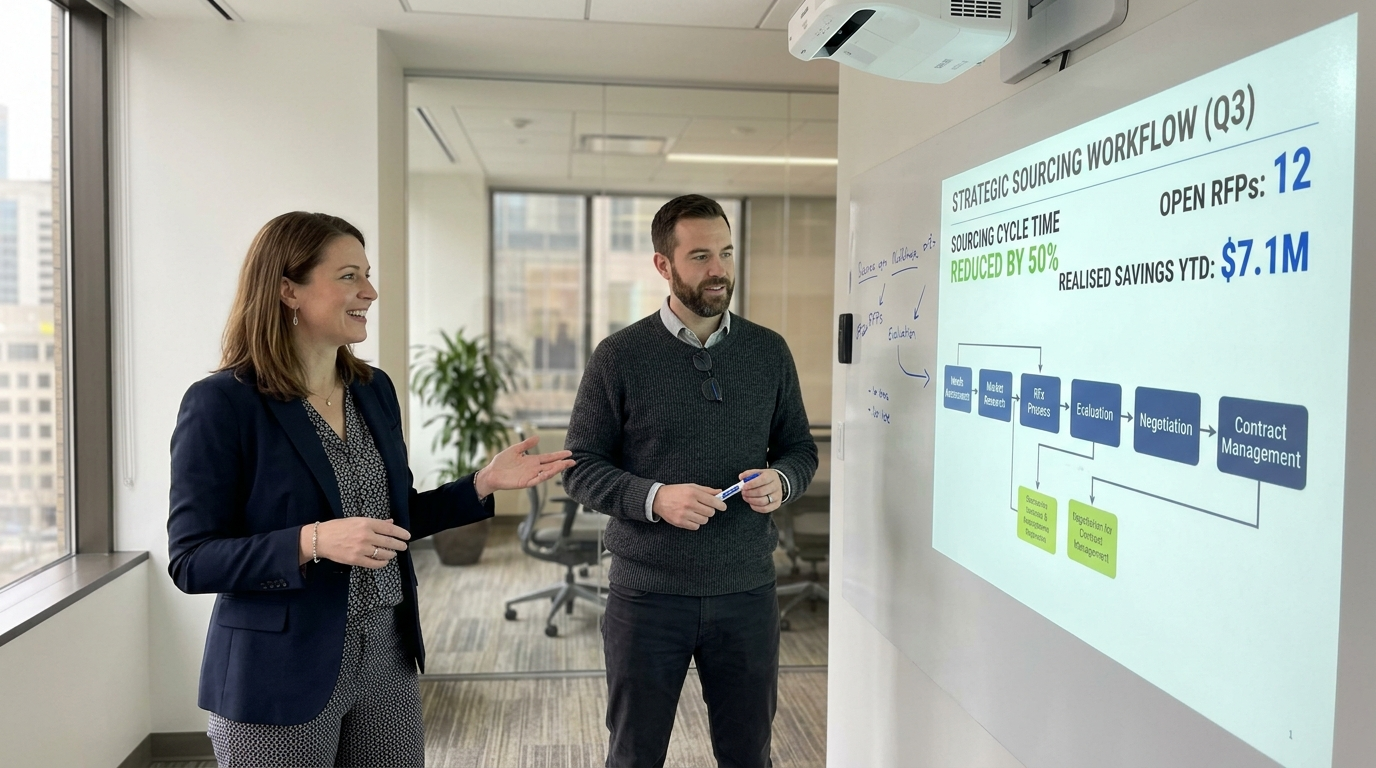
Strategic sourcing software takes the data foundation from spend analysis and turns it into an actionable savings pipeline. These tools help procurement teams manage the entire sourcing lifecycle, from identifying opportunities and running competitive bidding events to negotiating contracts and tracking realized savings. By digitizing and automating these workflows, strategic sourcing software can reduce sourcing cycle times by as much as 50%. This acceleration means your team can tackle more categories, negotiate more effectively, and deliver value back to the business faster. It’s a core component of any mature indirect spend optimization program.
Vendor Landscape and Independent Evaluations
The procurement technology landscape is vast and can be confusing. It includes large, end to end suite providers like Coupa and GEP, as well as niche specialists focused on areas like SaaS management (Zylo, Productiv) or automated negotiation (Varisource). When evaluating vendors, it’s important to look at independent evaluations from firms like Gartner and Forrester. Consider your organization’s specific needs, existing technology stack, and maturity level. For many mid‑market and enterprise companies, and private equity portfolio companies, a service that combines technology with expert support, like Varisource, can provide a faster path to value without the heavy lift of implementing a large software suite.
Implementation Playbook and Operating Model
Implementing a successful indirect spend optimization program requires more than just technology. It requires a clear playbook and a well defined operating model. This means defining roles and responsibilities, establishing clear processes for sourcing and purchasing, and securing C‑level buy‑in. A phased approach often works best. Start with a pilot project in a specific category to demonstrate value and build momentum. Your operating model should define how procurement engages with business stakeholders, including IT teams, ensuring collaboration and alignment on savings goals.
Governance, Controls, and Compliance by Design
To make savings stick, governance and controls must be built into your procurement processes. This means creating clear purchasing policies, setting preferred supplier lists, and implementing automated approval workflows. The goal is to make it easy for employees to do the right thing and hard to do the wrong thing. By embedding compliance into the natural workflow, you can significantly reduce rogue spending and ensure that negotiated savings actually hit the bottom line. Effective governance is the backbone that supports long term, sustainable indirect spend optimization.
Measuring Success: ROI, Speed to Value, and Proof Points
Finance teams should measure the success of the indirect spend optimization program with clear, quantifiable metrics. Key performance indicators (KPIs) include:
- Cost Savings: The primary metric, tracking both negotiated savings and actual, realized cost reductions.
- Spend Under Management: The percentage of total indirect spend that is actively managed by procurement.
- Cycle Time: The time it takes to complete sourcing events and contract negotiations.
- Return on Investment (ROI): The financial return generated by your procurement team and technology investments.
Tracking these metrics not only proves the value of your program but also helps identify areas for continuous improvement. Companies with mature procurement practices often achieve savings of 10% to 25% in managed indirect spend categories.
Conclusion: Align Your Path to Your Maturity
Ultimately, the right path for indirect spend optimization depends on your organization’s current maturity level. Whether you are just starting by building a data foundation or are ready to implement advanced AI powered negotiation tools, the goal is the same: to transform procurement from a tactical function into a strategic driver of value. By focusing on visibility, control, and automation, you can unlock significant savings that can be reinvested into growth and innovation.
FAQ
What is indirect spend optimization?
Indirect spend optimization is the strategic process of managing and reducing the costs of goods and services that are not part of a final product, such as software, marketing, office supplies, and professional services. The goal is to increase efficiency and achieve significant cost savings.
Why is managing indirect spend important?
Managing indirect spend is crucial because it can represent a significant portion of a company’s total expenditures, often up to 50% of all purchases. Optimizing this area can lead to substantial bottom line savings, improved supplier relationships, and reduced operational risk.
What is the difference between direct and indirect spend?
Direct spend refers to the purchase of goods and services directly related to producing a company’s end product (e.g., raw materials). Indirect spend covers all the other operational purchases necessary to run the business.
How does spend analysis help with indirect spend optimization?
Spend analysis provides the critical visibility needed to understand where money is going. It involves collecting, cleansing, and classifying spend data to identify savings opportunities, consolidate suppliers, and track compliance.
What is tail spend?
Tail spend consists of the 80% of transactions that typically only account for 20% of the total spend value. While individual purchases are small, they are numerous and often unmanaged, representing a significant opportunity for quick savings through indirect spend optimization.
How can technology help optimize indirect spend?
Technology, including AI and automation, streamlines the entire procure to pay process. It provides spend visibility, automates sourcing and negotiation, enforces compliance, and frees up procurement teams to focus on strategic initiatives.
What is a shared savings model?
A shared savings model, like the one offered by Varisource, is a no risk approach where you only pay a fee when measurable savings are achieved. This eliminates upfront costs and aligns the provider’s goals with your own savings objectives.
How do I start an indirect spend optimization program?
A great first step is to conduct a spend analysis to gain visibility. From there, you can identify a few key categories to target for quick wins, which helps build momentum and prove the value of the program to stakeholders.
About the Author
.jpeg)
Victor Hou
Victor Hou is the founder of Varisource, the first ever Savings Automation Platform that automates Savings for Your Business. Victor helps companies access discounts, rebates, benchmark data, savings for renewals and new purchases across 100+ spend categories automatically to increase your company's margins and equity value by at least 15-20%. Victor is active and passionate about using AI + automation to help your business save time, money and run more efficiently.
%201.svg)

Varisource’s Savings Automation Platform guarantees savings and maximized leverage on every dollar spend across 100+ spend categories


