Indirect Procurement Strategy 2026: The Complete Guide

Think about everything your business buys to keep the lights on and operations running smoothly. We’re talking about office supplies, software subscriptions, marketing services, and even the coffee in the breakroom. That’s all part of indirect procurement, and it represents a huge, often overlooked, opportunity for savings and efficiency. While these purchases don’t go directly into your final product, they are essential for your business.
The problem? Managing this spend is notoriously tricky. In fact, a staggering 82% of procurement professionals admit their indirect spend is poorly managed. That’s where a strong indirect procurement strategy comes in. It’s not just about cutting costs; it’s a comprehensive plan to get the most value out of every dollar your company spends on itself.
This guide will walk you through everything you need to know, from foundational concepts to advanced tactics, to build and execute an indirect procurement strategy that delivers real results.
At a Glance: What is an Indirect Procurement Strategy?
An indirect procurement strategy is a structured framework used by organizations to source, purchase, and manage goods and services not directly involved in product manufacturing (e.g., IT, marketing, and facilities). In 2026, a successful strategy focuses on three core pillars:
1. Spend Visibility: Centralizing data to eliminate maverick spend.
2. Digital Transformation: Leveraging AI and automation for sourcing.
3. Stakeholder Alignment: Ensuring procurement processes support internal business goals.
Key Benefit: Effective management typically reduces indirect costs by 10% to 25% annually.
Understanding the Fundamentals of Your Strategy
Before diving into complex processes, it’s crucial to get the basics right. A successful indirect procurement strategy is built on a foundation of clear goals, stakeholder buy in, and a sensible organizational structure.
What Is Indirect Procurement, Really?
Indirect procurement is the entire process of sourcing and buying the goods and services your company needs for its day to day operations. Unlike direct procurement, which covers raw materials for your products, indirect procurement focuses on internal consumption. And it’s a bigger deal than you might think. Globally, this type of spending has been growing by about 7% annually, making it a significant and rising portion of a company’s total costs.
Feature
Direct Procurement
Indirect Procurement
Definition
Materials for the end product.
Goods/services to run the business.
Examples
Raw materials, components.
SaaS, Travel, Utilities, Marketing.
Demand
Driven by production schedules.
Driven by internal department needs.
Supplier Base
Few, high-volume partners.
Many, fragmented vendors.
Primary Goal
Supply chain continuity & COGS.
Spend control & operational efficiency.
Balancing Quick Wins with Long Term Value
A great indirect procurement strategy delivers results both now and later. Quick wins, like renegotiating a few high cost contracts, are fantastic for building momentum and showing immediate impact. These early successes build stakeholder confidence and can earn procurement a seat at the more strategic table.
However, an exclusive focus on short term gains can cause you to miss bigger opportunities, such as overhauling a supplier base or implementing new analytics software. The best approach is to capture the low hanging fruit now while simultaneously laying the groundwork for future gains. This balanced approach ensures you deliver immediate results without sacrificing sustainable, long term value.
Why Stakeholder Alignment is Non Negotiable
A procurement strategy is only as effective as the support it has from the rest of the business. Stakeholder alignment means getting everyone, from department heads to executives, on board with procurement’s goals and processes. When you engage stakeholders early, you can influence decisions that lock in value from the start.
Failing to align is a recipe for disaster. It leads to low adoption of new systems, resistance to change, and “rogue” buying that bypasses approved channels. To prevent this, procurement must act as a true partner to the business, understanding each department’s unique needs and working collaboratively to meet them.
Creating a Great Procurement Customer Experience
To get that crucial buy in, you need to think about the procurement “customer experience”. This means making the internal buying process as smooth and user friendly as possible for your colleagues. If your processes are confusing or slow, employees will naturally find workarounds, leading to maverick spend.
Eliminating friction is key. This could involve creating guided buying tools that lead users to the right suppliers, simplifying request forms, or providing clear, accessible policies. When you treat your employees like valued customers of the procurement process, compliance and satisfaction soar.
Structuring for Success: Your Operating Model and Technology
With the foundational concepts in place, the next step in your indirect procurement strategy is to build the right structure, supported by the right technology.
Designing Your Indirect Procurement Operating Model
Your operating model is the blueprint for how your company handles indirect purchasing. It defines who does what, how the team is structured (centralized, decentralized, or a hybrid), and what processes are used. There’s no single right answer, but a fragmented model where every department does its own thing is a common pitfall. This approach misses out on volume discounts and creates inefficiencies. Many successful companies use a “center led” model, where a central team sets the strategy and major contracts, while business units handle execution within that framework.
The Critical Role of Procurement Technology and Automation
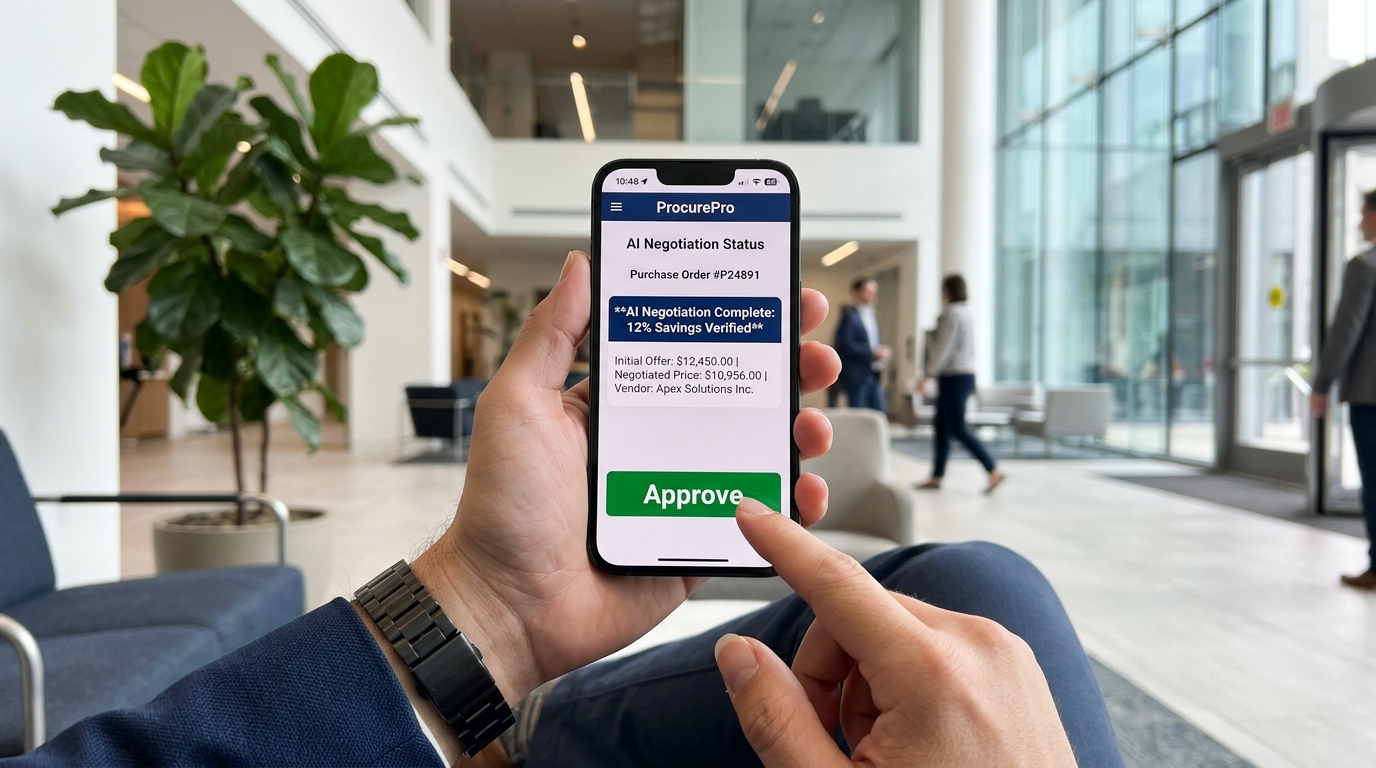
Technology is the engine that powers a modern indirect procurement strategy. Digital tools can automate routine tasks, provide clear data visibility, and enforce compliance, freeing up your team to focus on more strategic work. A majority of Chief Procurement Officers report that 68% say they are improving and automating procurement processes with modern IT applications.
From e-sourcing platforms and spend analytics software to AI driven negotiation tools, technology addresses procurement’s biggest challenges. For instance, poor data quality is a major obstacle for 60% of CPOs, a problem that modern analytics platforms are built to solve. Embracing technology allows you to do more with less and make smarter, faster decisions. If you’re looking to see how AI can create immediate value, you can explore services that augment your team with AI agents for negotiation and benchmarking.
The Modern Indirect Procurement Tech Stack
To stay competitive in 2026, your strategy must move beyond spreadsheets. Integrate these four layers:
- Intelligent Spend Analytics: Platforms that use machine learning to categorize 95%+ of spend automatically.
- Guided Buying Portals: An "Amazon-like" internal interface that steers employees toward preferred vendors.
- AI Negotiation Bots: Tools that handle high-volume, low-value "tail spend" negotiations without human intervention.
- CLM (Contract Lifecycle Management): Automated alerts for renewals and price escalations.
The Data Driven Approach to Indirect Procurement
You can’t manage what you can’t see. A data driven indirect procurement strategy transforms spending information from a confusing mess into a strategic asset.
Achieving True Spend Visibility
Spend visibility is the ability to see exactly who is buying what, from whom, and at what price across the entire organization. It’s the bedrock of strategic procurement. Without it, you’re flying blind, likely paying different prices for the same items and missing huge opportunities for consolidation. Achieving this requires consolidating procurement data from various systems like accounts payable, credit cards, and purchase orders into a single, unified view. See our guide to spend data management for how to build that view.
The Power of Consistent Spend Classification
Once you have your data in one place, you need to make sense of it. Consistent spend classification means using a uniform method to categorize every single purchase. This ensures you’re comparing apples to apples. Without a standard taxonomy, a laptop might be classified under “IT Hardware” in one department and “Office Equipment” in another, making it impossible to see your true total spend. This consistency turns raw data into reliable intelligence for decision making.
Using Spend Analysis and Analytics
- Spend Analysis: This is the process of examining your categorized spend data to identify opportunities. It answers critical questions like: Who are our top suppliers? Where can we consolidate volume? Are there any unusual spending spikes? For a practical walkthrough, read how to boost your bottom line with spend analysis.
- Spend Analytics: This refers to the ongoing capability and the tools used to perform this analysis continuously. Modern spend analytics platforms offer interactive dashboards, automated alerts, and predictive insights, giving you a dynamic, real time view of your spending patterns.
Making Data Driven Sourcing Decisions
Armed with clear data and powerful analytics, you can shift from gut feel decisions to an evidence based approach. Data driven sourcing means using market intelligence, price benchmarks, and supplier performance metrics to choose the right suppliers, negotiate effectively, and ensure you’re getting the best possible value. For example, benchmark data can reveal if a quote is above the market rate, giving you concrete leverage in negotiations. This analytical rigor is a cornerstone of any effective indirect procurement strategy.
Executing Your Strategy: Key Levers for Value
With a solid structure and data foundation, you can begin executing on specific initiatives that drive savings and efficiency.
Strategic Category Management and Ownership

Category management involves grouping similar spend items (like IT, Marketing, or Professional Services) into categories and managing each one with a dedicated strategy. This approach moves procurement from reactive, transactional buying to proactive, strategic sourcing. To prioritize where to start, explore common savings categories. A designated category owner becomes the expert for that area, responsible for market analysis, supplier relationships, and a long term value creation plan. Organizations with formal category management report significant cost reductions.
Smart Vendor Selection and Consolidation
- Vendor Selection: Choosing the right supplier is about more than just the lowest price. A robust vendor selection process evaluates suppliers based on a range of criteria, including quality, reliability, financial stability, and total cost of ownership. If SaaS makes up a major slice of your stack, start with these tips to improve your SaaS vendor management process.
- Vendor Consolidation: Most companies accumulate a long “tail” of suppliers they barely use. Vendor consolidation is the process of reducing this number, concentrating your spend with fewer, more strategic partners. This not only unlocks volume discounts but also reduces administrative overhead. In some cases, companies see potential savings of 10–20% in tech and telecom for banks by consolidating with preferred supplier(s) under managed services.
Building Strong Supplier Relationships
Supplier Relationship Management (SRM) is a systematic approach to working collaboratively with your key suppliers. It’s about moving beyond transactional interactions to build true partnerships that unlock innovation, mitigate risk, and create mutual value. Companies with strong SRM programs often report significant annual financial benefits that go beyond the original contract terms.
Streamlining the Procurement Process
An efficient process makes it easy for employees to do the right thing. Streamlining involves eliminating bottlenecks, standardizing workflows, and automating manual tasks in the purchase to pay cycle. This not only saves time and reduces frustration but also frees up the procurement team to focus on higher value activities instead of chasing paperwork.
Overcoming Common Hurdles
Even the best plans face challenges. A smart indirect procurement strategy anticipates these hurdles and includes plans to overcome them.
Avoiding Common Indirect Procurement Pitfalls
Several common traps can undermine your efforts. These include:
- Poor Spend Visibility: Not knowing where the money is going.
- Maverick Spend: Employees buying outside of approved channels.
- Lack of Stakeholder Engagement: Pushing changes without getting buy in.
- A Fragmented Supplier Base: Missing out on volume leverage.
- Inconsistent Data: Making analysis impossible.
Recognizing these pitfalls is the first step to actively avoiding them and keeping your strategy on track.
Controlling Maverick Spend
Maverick spend directly erodes savings and introduces risk. To control it, you need a two pronged approach. First, make the official process as frictionless as possible. Second, implement clear governance and controls. Formal approval workflows are a key tool here. They ensure purchases are properly vetted before any money is spent, providing an essential check against rogue buying.
Effective Negotiation Strategy and Formal Workflows
- Negotiation Strategy: Strong negotiation is a core procurement skill. A good strategy is built on solid preparation, clear data (like price benchmarks), and an understanding of both your goals and the supplier’s.
- Formal Approval Workflow: This is the standardized sign off process for purchases. A well designed workflow is risk based, meaning a small purchase might be auto approved while a large contract routes through multiple levels of review. Automation here is key to ensuring control without creating bottlenecks.
The Importance of Governance, Policy, and Training
- Procurement Governance and Policy: This is the framework of rules and oversight that ensures procurement is conducted fairly, ethically, and consistently. Clear policies on bidding, approvals, and conflicts of interest are essential for managing risk.
- Employee Procurement Training: You can have the best tools and policies in the world, but they’re useless if your employees don’t understand them. Training for both procurement staff and the wider organization is crucial for driving adoption, compliance, and a culture of smart spending.
Integrating Sustainability into Indirect Sourcing
A 2026 strategy is incomplete without ESG (Environmental, Social, and Governance) goals. Indirect spend often accounts for a significant portion of a company's environmental footprint and social impact.
- Supplier Diversity: Set targets for spend with minority-owned or small businesses.
- Circular Economy: Prioritize vendors with "Product-as-a-Service" models (e.g., managed print services) to reduce hardware waste.
- Energy Efficiency: Evaluate service providers based on their renewable energy commitments and resource conservation.
Conclusion: Elevate Your Business with a Smart Strategy
An effective indirect procurement strategy is far more than a cost cutting exercise. It’s a powerful lever for creating enterprise wide value. By achieving spend visibility, aligning with stakeholders in Finance, leveraging technology, and executing proven best practices, you can transform your procurement function from a tactical back office department into a strategic business partner.
The journey starts with a single step. By focusing on these core areas, you can build a robust program that controls costs, improves efficiency, and contributes directly to your company’s bottom line.
Ready to see where your biggest savings opportunities are hiding? A great first step can be getting a clear picture of your spend. You can get a free Savings Estimate Report to quickly identify and prioritize areas for improvement.
Frequently Asked Questions
What is the first step in creating an indirect procurement strategy?
The first step is always to achieve spend visibility. You need to collect, cleanse, and categorize your spending data from all sources to get a clear and accurate picture of who you are spending money with and on what. This analysis forms the foundation for all subsequent strategic decisions.
How can technology improve an indirect procurement strategy?
Technology and automation are critical enablers. They can automate manual tasks (like processing purchase orders and invoices), provide real time spend analytics and dashboards, enforce compliance through automated workflows, and even assist in negotiations with AI powered market benchmarks. This frees up your team for more strategic activities.
What is the difference between direct and indirect procurement?
Direct procurement involves purchasing all the raw materials and components that go directly into producing a company’s end product (e.g., the screen for a smartphone). Indirect procurement covers all the goods and services needed to run the business itself (e.g., marketing software, office furniture, consulting services).
How do you measure the success of an indirect procurement strategy?
Success is measured through a variety of key performance indicators (KPIs), including:
- Cost savings achieved (both hard and soft savings).
- Spend under management (the percentage of total spend that procurement influences).
- Rate of contract compliance or reduction in maverick spend.
- Process efficiency metrics (like purchase order cycle time).
- Stakeholder satisfaction scores.
What is maverick spend in indirect procurement?
Maverick spend, also known as rogue spend, refers to any purchase made by an employee that bypasses the company’s established procurement processes and approved suppliers. This often results in paying higher prices and introduces potential compliance and security risks.
Why is stakeholder alignment so important for procurement?
Without alignment, procurement initiatives often fail due to low adoption. If stakeholders (the internal business users) see procurement as a roadblock, they will find ways to work around the process. When procurement partners with stakeholders, they ensure that sourcing strategies meet actual business needs, which leads to better compliance, higher savings, and more value creation.
{
"@context": "https://schema.org",
"@type": "FAQPage",
"@id": "#faq",
"mainEntity": [
{
"@type": "Question",
"@id": "#faq-question-1",
"name": "What is the first step in creating an indirect procurement strategy?",
"acceptedAnswer": {
"@type": "Answer",
"text": "The first step is always to achieve spend visibility. You need to collect, cleanse, and categorize your spending data from all sources to get a clear and accurate picture of who you are spending money with and on what. This analysis forms the foundation for all subsequent strategic decisions."
}
},
{
"@type": "Question",
"@id": "#faq-question-2",
"name": "How can technology improve an indirect procurement strategy?",
"acceptedAnswer": {
"@type": "Answer",
"text": "Technology and automation are critical enablers. They can automate manual tasks (like processing purchase orders and invoices), provide real time spend analytics and dashboards, enforce compliance through automated workflows, and even assist in negotiations with AI powered market benchmarks. This frees up your team for more strategic activities."
}
},
{
"@type": "Question",
"@id": "#faq-question-3",
"name": "What is the difference between direct and indirect procurement?",
"acceptedAnswer": {
"@type": "Answer",
"text": "Direct procurement involves purchasing all the raw materials and components that go directly into producing a company's end product (e.g., the screen for a smartphone). Indirect procurement covers all the goods and services needed to run the business itself (e.g., marketing software, office furniture, consulting services)."
}
},
{
"@type": "Question",
"@id": "#faq-question-4",
"name": "How do you measure the success of an indirect procurement strategy?",
"acceptedAnswer": {
"@type": "Answer",
"text": "Success is measured through a variety of key performance indicators (KPIs), including: Cost savings achieved (both hard and soft savings). Spend under management (the percentage of total spend that procurement influences). Rate of contract compliance or reduction in maverick spend. Process efficiency metrics (like purchase order cycle time). Stakeholder satisfaction scores."
}
},
{
"@type": "Question",
"@id": "#faq-question-5",
"name": "What is maverick spend in indirect procurement?",
"acceptedAnswer": {
"@type": "Answer",
"text": "Maverick spend, also known as rogue spend, refers to any purchase made by an employee that bypasses the company's established procurement processes and approved suppliers. This often results in paying higher prices and introduces potential compliance and security risks."
}
},
{
"@type": "Question",
"@id": "#faq-question-6",
"name": "Why is stakeholder alignment so important for procurement?",
"acceptedAnswer": {
"@type": "Answer",
"text": "Without alignment, procurement initiatives often fail due to low adoption. If stakeholders (the internal business users) see procurement as a roadblock, they will find ways to work around the process. When procurement partners with stakeholders, they ensure that sourcing strategies meet actual business needs, which leads to better compliance, higher savings, and more value creation. ---"
}
}
]
}
About the Author
.jpeg)
Victor Hou
Victor Hou is the founder of Varisource, the first ever Savings Automation Platform that automates Savings for Your Business. Victor helps companies access discounts, rebates, benchmark data, savings for renewals and new purchases across 100+ spend categories automatically to increase your company's margins and equity value by at least 15-20%. Victor is active and passionate about using AI + automation to help your business save time, money and run more efficiently.
%201.svg)

Varisource’s Savings Automation Platform guarantees savings and maximized leverage on every dollar spend across 100+ spend categories


