SaaS Management Platform 2026: 10 Best Tools Compared

The average enterprise now wastes $19.8 million annually on unused SaaS licenses, and SaaS prices are climbing nearly 5x faster than general inflation. A SaaS management platform helps you find, optimize, and govern your software stack from one console. This guide compares 10 platforms across pricing, strengths, and tradeoffs, covering everything from spend-focused tools to automation-first platforms to service-and-AI models that go beyond SaaS-only savings.
The SaaS Waste Problem Is Getting Worse
Organizations don’t have a software shortage. They have a software surplus they can’t see.
According to Zylo’s 2026 SaaS Management Index, the average enterprise now manages 291 SaaS applications, up from 110 in 2020. That explosion has a price tag: $19.8 million in annual license waste per organization, driven by unused licenses, overlapping tools, decentralized purchasing, and auto-renewals nobody approved.
The cost pressure keeps compounding. SaaS pricing has increased roughly 11.4% compared to the same period in 2024, far outpacing the 2.7% average inflation rate across G7 countries. Businesses now spend an average of $7,900 per employee per year on SaaS tools, a 27% jump over the last two years. And 60% of vendors are deliberately masking price hikes by bundling AI features into existing plans.
Here’s the part that makes this hard to fix internally: lines of business now account for 70% of SaaS spend, while IT controls just 26.1%. The buying is decentralized, the contracts are scattered, and no single team has full visibility.
That’s the problem a SaaS management platform is designed to solve. But not all platforms approach it the same way, and some of the most valuable solutions go beyond SaaS entirely.
This guide covers 10 platforms worth evaluating in 2026, with real pricing, honest tradeoffs, and user feedback from G2, Capterra, and practitioner communities. Whether you’re in IT, procurement, or finance, you’ll find a clear recommendation for your situation.
If you’re building a SaaS management strategy from scratch, start here before picking a tool.
What Is a SaaS Management Platform?
Gartner defines SaaS management platforms (SMPs) as software tools that help organizations discover, manage, optimize, and automate the SaaS application lifecycle from one centralized console. Core capabilities include discovery (finding all SaaS in use), cost optimization, employee self-service through an app catalog, usage insights, and automation of onboarding and offboarding.
In practice, the 2026 SMP market has split into three distinct types:
Knowing which type matches your primary pain point is the fastest way to narrow your shortlist.
Explore savings across 100+ categories
At-a-Glance Comparison Table
Platform
Best For
Starting Price
Key Differentiator
Main Tradeoff
Varisource
Broad vendor savings (SaaS + 100+ categories)
No upfront cost; shared-savings model
$80B+ group buying power, 50M+ benchmarks
Not a shadow IT discovery tool
Zylo
Enterprise procurement and FinOps
~$60K–$160K/yr (3–8% of managed spend)
Deepest renewal management; Gartner MQ Leader
Expensive; manual license reclamation
BetterCloud
IT ops on Google Workspace/M365
$3–$10/user/mo ($17K–$111K/yr)
3x ROI guarantee; strongest automation engine
Premium pricing; Google Workspace roots
Torii
Mid-market IT teams
Seat-based; quote required
Highest G2 satisfaction score
Usage accuracy concerns with Okta data
CloudEagle
AI governance + procurement
$2,000–$2,500/mo
2026 Gartner MQ Leader; 500+ integrations
Younger platform; documentation gaps
Zluri
Identity governance + SaaS management
Custom quote
IGA positioning; 800+ integrations
Depth concerns across broad capability set
Productiv
Deep usage analytics
~3–8% of managed spend
Feature-level usage tracking (not just logins)
Weaker on action and automation
Nudge Security
Security-first SaaS discovery
$5/user/mo
Day-one visibility; AI and shadow IT focus
Not a spend optimization tool
Vendr
Outsourced SaaS buying
From $36,000/yr
Expert negotiators; massive pricing database
Expensive minimum; SaaS-only
SpendHound
Budget-conscious SMBs
Free up to 1,000 employees
Most transparent pricing; $150K savings guarantee
Smaller data set than enterprise tools
The 10 Best SaaS Management Platforms in 2026
1. Varisource
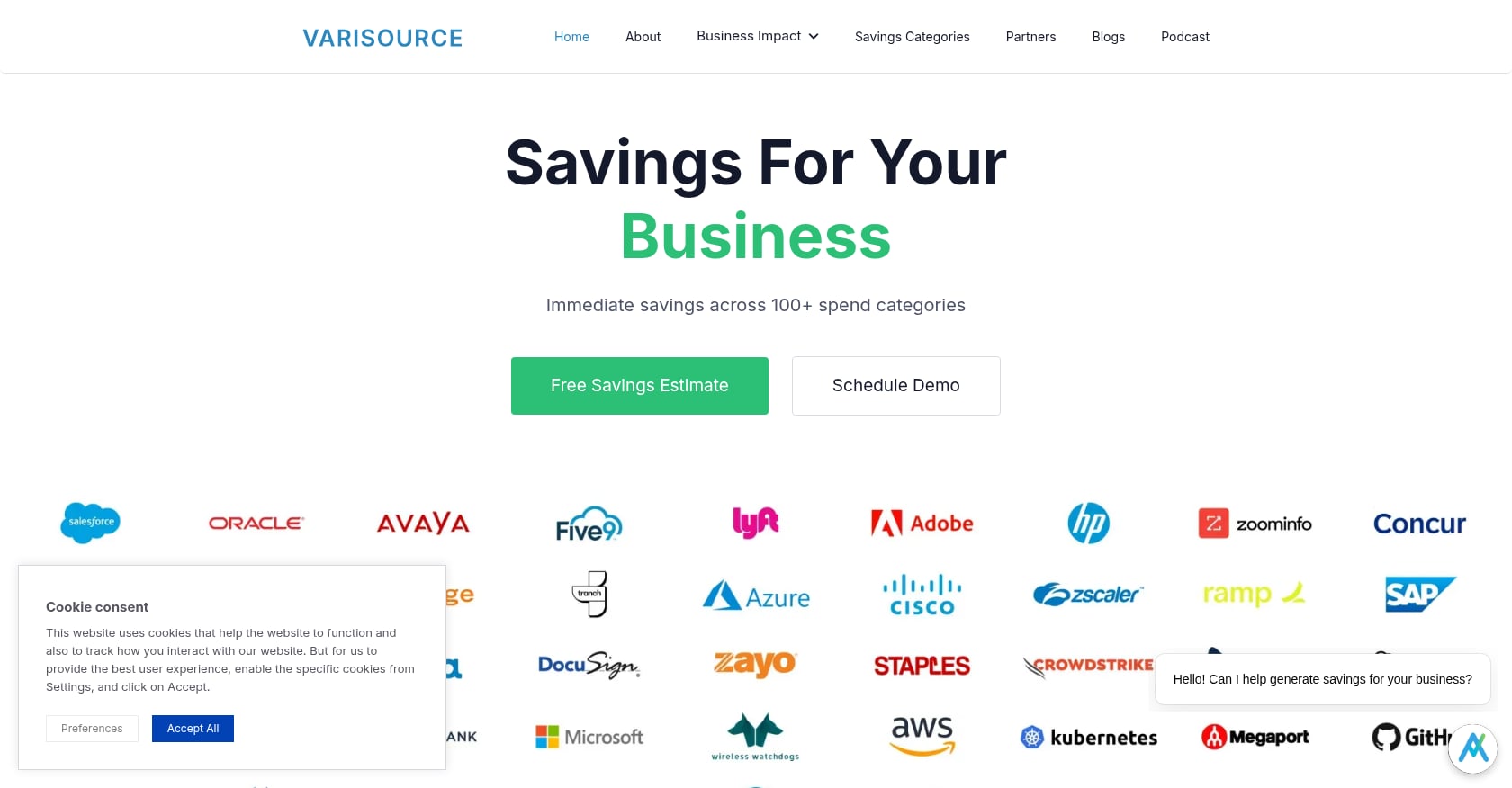
Best for: Mid-market and enterprise teams that want immediate vendor savings across SaaS and 100+ other indirect spend categories, without deploying a full software platform.
Varisource takes a fundamentally different approach than traditional SaaS management platforms. Rather than giving you a dashboard to discover waste and then leaving you to negotiate on your own, Varisource combines AI agents with hands-on negotiation support to actually capture savings on your behalf. It covers over 300 spend categories (SaaS, cloud, security, telecom, hardware, payments, travel, and more), which means the value extends far beyond your software stack.
Key features:
Pricing: No upfront cost. Varisource operates on a shared-savings model, meaning you only pay when savings are achieved. Typical savings materialize in under 30 days.
Tradeoffs:
Why it matters: The recurring complaint practitioners voice about SaaS management platforms is that discovery doesn’t equal savings. Dashboards show you the problem; actually negotiating better prices requires benchmark data, vendor relationships, and buying leverage. Varisource fills that gap. For teams already managing SaaS spend management with another tool, Varisource stacks on top to capture the savings those tools identify but can’t execute.
Get a free Savings Estimate Report
2. Zylo
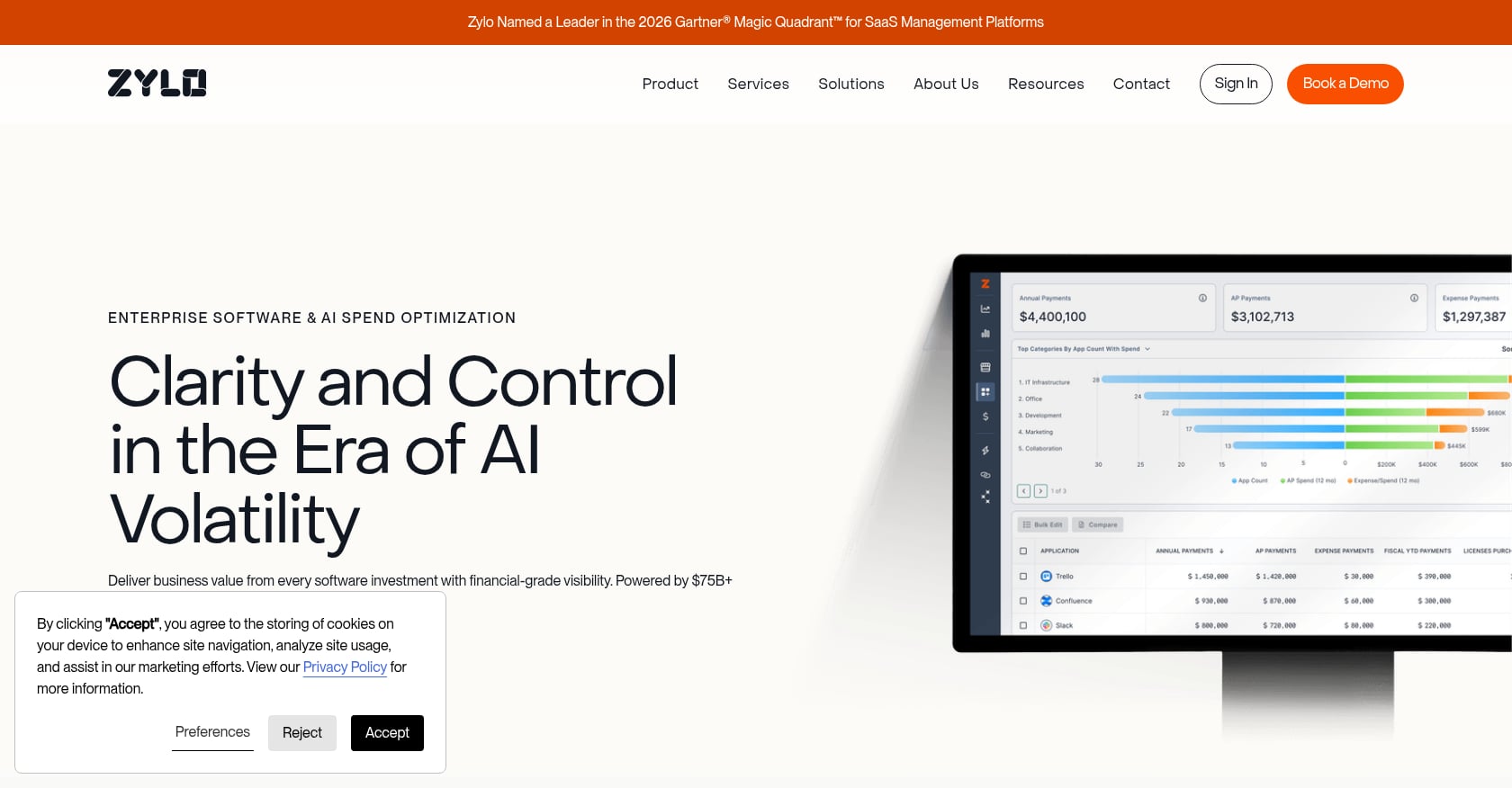
Best for: Enterprise procurement and IT teams that want the most mature, data-rich SaaS management platform with deep renewal management.
Zylo launched in 2016 and has built what is arguably the most comprehensive renewal management workflow in the SMP category. It was named a Leader in the 2025 Gartner Magic Quadrant for SaaS Management Platforms, and customers currently manage more than $34 billion in annual SaaS investments through the platform.
Key features:
Pricing: Zylo typically charges a percentage of SaaS spend under management, usually 3–8%. For an organization managing $2 million in SaaS spend, expect annual costs between $60,000 and $160,000. All pricing is quote-based.
Tradeoffs:
Real user perspective: G2 reviewers consistently praise Zylo’s financial reporting depth but note that turning insights into action (actually reclaiming and reassigning licenses) involves more manual work than expected.
3. BetterCloud
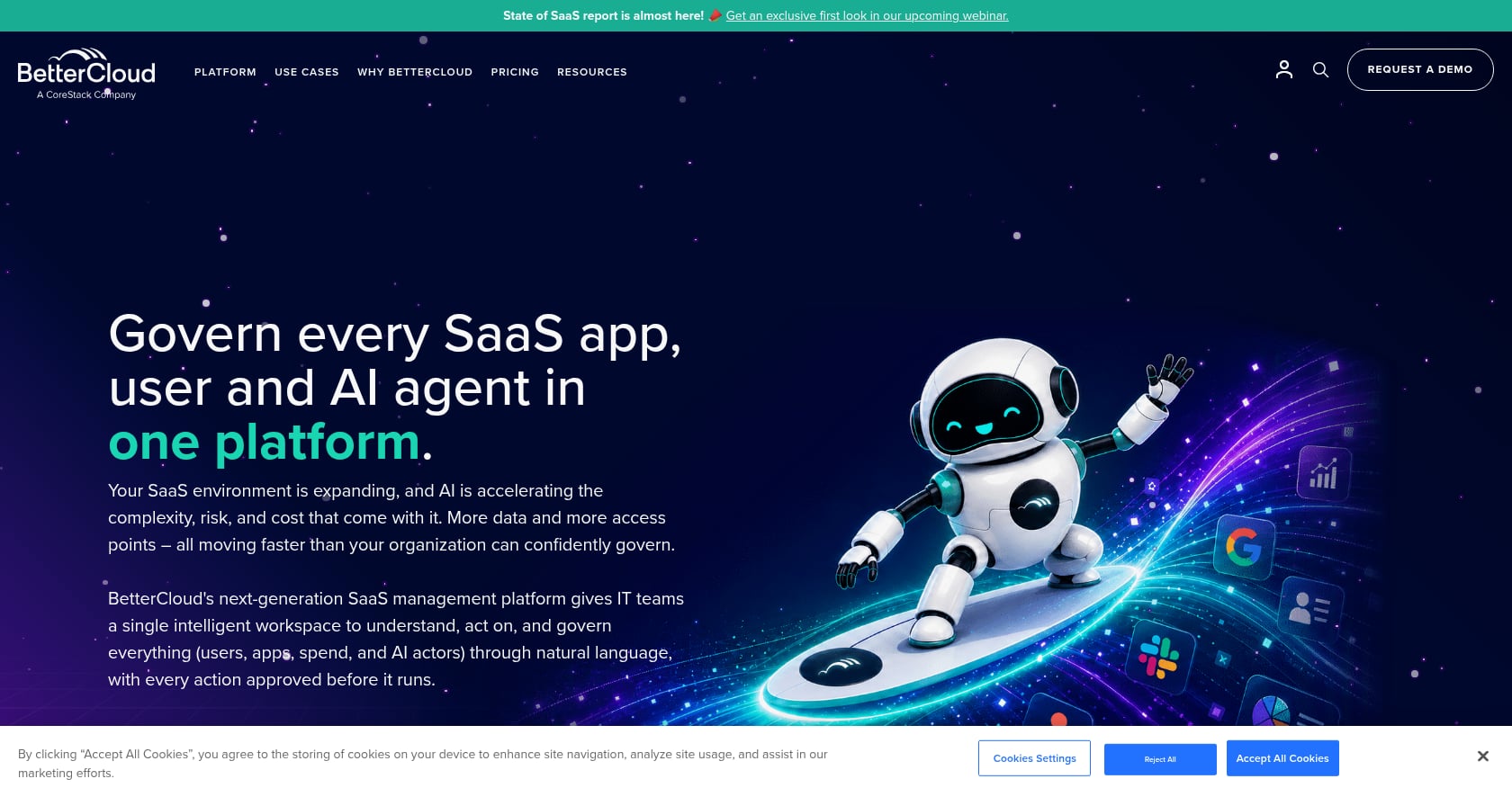
Best for: IT operations teams standardized on Google Workspace or Microsoft 365 that want policy automation and lifecycle management tightly integrated with their core productivity platforms.
BetterCloud claims to be the only SaaS management platform that guarantees results: “If you don’t see 3x ROI in 90 days, we’ll make it right.” It was recognized as a Leader in 30+ categories in the G2 Summer 2026 Grid Reports, making it one of the most broadly validated tools in the space.
Key features:
Pricing: Three tiers: Discover+Platform at $3/user/month, Manage+Platform at $6/user/month, and Secure+Platform at $10/user/month. All plans require annual commitments. Annual costs range from $17,000 to $111,111 depending on organization size and tier.
Tradeoffs:
Real user perspective: G2 reviewers consistently praise BetterCloud’s automation capabilities and ease of use. Many appreciate how it centralizes management across SaaS applications. However, pricing comes up repeatedly as a concern for smaller teams.
4. Torii

Best for: Mid-market IT teams that want strong lifecycle automation and workflow capabilities alongside SaaS discovery and license management.
Torii earned the highest satisfaction score in G2’s first-ever Grid Report for SaaS Management Platforms, which says something about how its users feel day-to-day. Its shadow IT discovery and automated cleanup workflows are among the best in the category.
Key features:
Pricing: Torii uses seat-based pricing rather than percentage-of-spend, which tends to be more predictable. Specific pricing requires a quote.
Tradeoffs:
Real user perspective: Torii scores high on satisfaction because the core experience is clean and usable. But teams with strict accuracy requirements for license reclamation should test the usage data against actual app activity before committing.
5. CloudEagle

Best for: Mid-to-large organizations wanting AI-powered governance, procurement workflows, and identity orchestration combined in one SaaS management platform.
CloudEagle.ai was recognized as a Leader in the 2026 Gartner Magic Quadrant for SaaS Management Platforms, putting it alongside Zylo at the top of analyst rankings. With 500+ native integrations, it covers a broad surface area.
Key features:
Pricing: Three pricing editions ranging from $2,000 to $2,500 per month, based on employee headcount. CloudEagle charges by headcount rather than stacking separate fees per module, which simplifies budgeting.
Tradeoffs:
Real user perspective: One G2 reviewer shared: “Before CloudEagle, we missed renewals the last time, and some subscriptions were auto-renewed at higher prices. CloudEagle uses AI to pull renewal data and contract details automatically.” The renewal management alone can justify the investment for teams dealing with SaaS contract red flags.
6. Zluri

Best for: Mid-to-large organizations that want SaaS management combined with identity governance and finance-friendly spend visibility in a single platform.
Zluri is positioning itself as a “next-gen Identity Governance and Administration (IGA) platform,” which makes it unique in the SMP category. Rather than treating identity as a secondary feature, Zluri puts access management at the center of its SaaS management approach. It offers 800+ direct app integrations.
Key features:
Pricing: Custom quote only. Not publicly listed, which is frustrating for early-stage buyers trying to compare options.
Tradeoffs:
Real user perspective: Practitioners appreciate the “one platform” vision but note that individual modules sometimes feel thinner than dedicated alternatives. If identity governance is your primary need, Zluri is worth evaluating. If spend optimization is the priority, look elsewhere.
7. Productiv
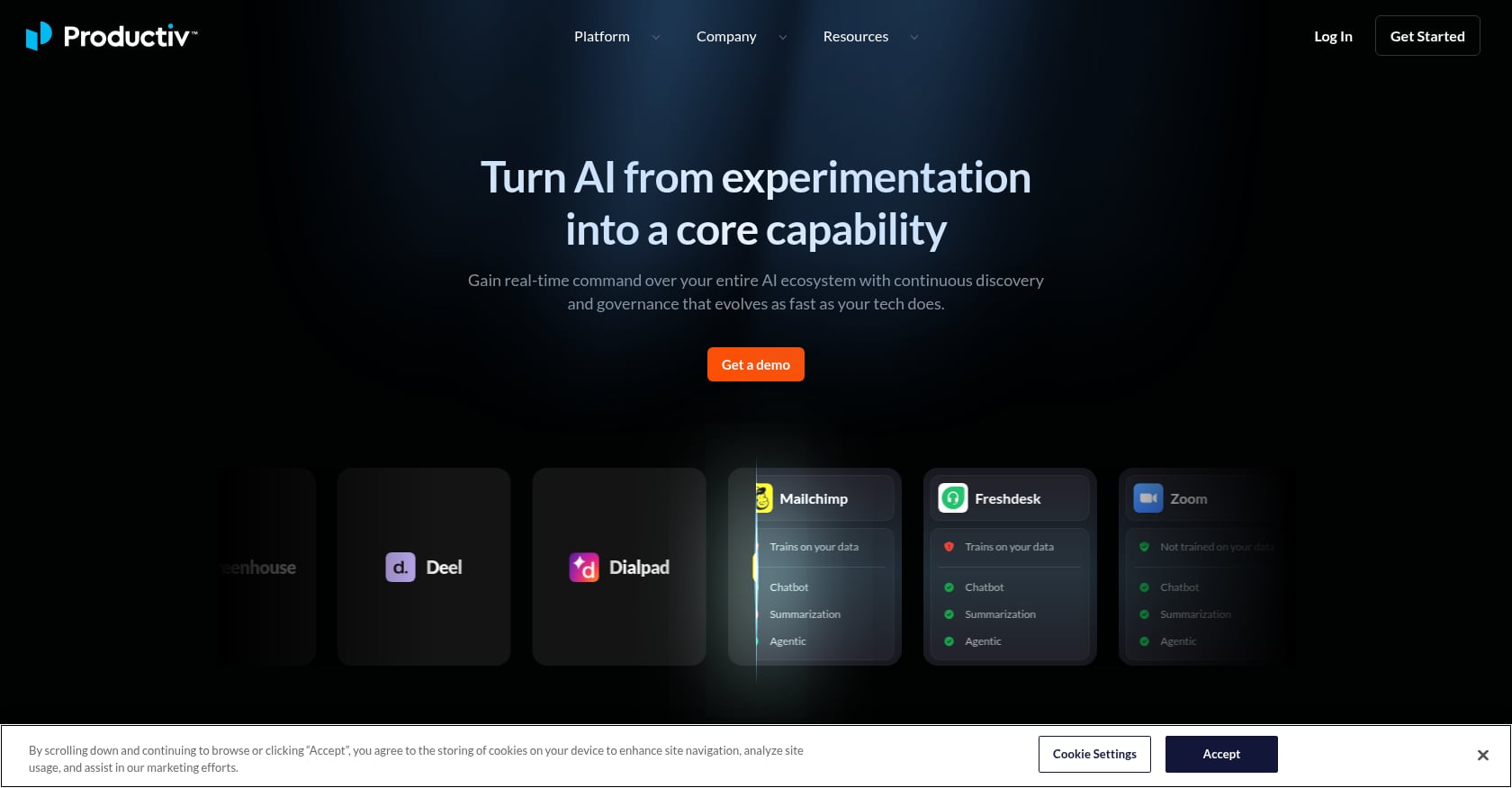
Best for: Organizations that need feature-level usage analytics and deep engagement data to make informed license decisions, not just login tracking.
Most SaaS management platforms measure “usage” by tracking whether someone logged in. Productiv goes deeper, looking at feature usage, engagement patterns, and user activity to distinguish between power users and people who log in once a month and never touch the tool. That distinction matters when you’re deciding whether to renew 500 seats or 200.
Key features:
Pricing: Tailored to each organization. Typically falls in the 3–8% of managed SaaS spend range, similar to Zylo.
Tradeoffs:
Real user perspective: Productiv appeals most to analytics-minded procurement and finance teams who want data to support negotiations. IT teams looking for workflow automation will find it lacking compared to action-oriented platforms.
8. Nudge Security
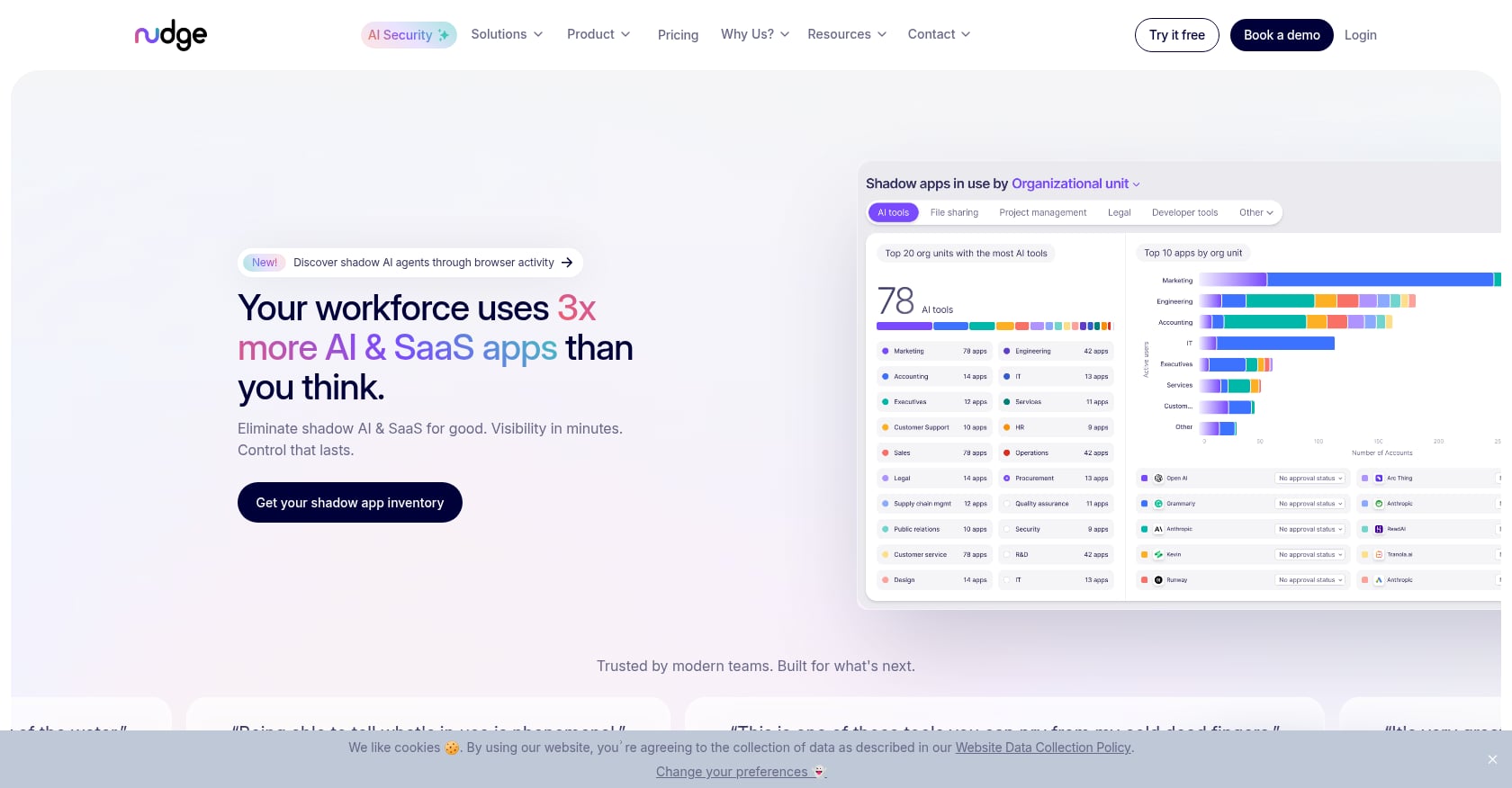
Best for: Security teams that want complete SaaS estate visibility, including shadow apps and AI tools, alongside security posture management.
Nudge Security takes a security-first approach to SaaS management. Its patented discovery method delivers complete visibility into all accounts, users, activities, and third-party integrations on day one, without requiring agents or browser extensions. In a world where employees are signing up for AI tools daily, that instant visibility is valuable.
Key features:
Pricing: $5 per active user per month for organizations with 150–2,500 accounts. Flat rate of $750/month for organizations with fewer than 150 accounts. 14-day free trial available.
Tradeoffs:
Real user perspective: Security practitioners on forums praise Nudge for catching SaaS sprawl that other tools miss, particularly free-tier AI tools that employees adopt without IT’s knowledge. But it’s clearly a complement to, not a replacement for, spend-focused management.
9. Vendr
Best for: Companies that want to outsource SaaS purchasing and negotiation to expert buyers rather than building internal capabilities.
Vendr has facilitated more than $4 billion in SaaS purchases across more than 10,000 suppliers, saving customers more than $400 million. The model is straightforward: Vendr’s team handles your SaaS negotiations using their pricing database and vendor relationships.
Key features:
Pricing: Starts at $36,000 per year.
Tradeoffs:
Real user perspective: Vendr works well for organizations that lack internal negotiation resources entirely. But teams with any procurement capability may find the cost hard to justify given the SaaS-only scope. For broader coverage, a vendor savings program that spans multiple spend categories often delivers higher total ROI.
10. SpendHound

Best for: SMBs and mid-market teams that want free or low-cost SaaS spend management with embedded negotiation support.
SpendHound is the pricing transparency champion in this category. While nearly every competitor hides behind “contact us for a quote,” SpendHound publishes its pricing clearly and even offers a free tier.
Key features:
Pricing: Free for companies with up to 1,000 employees. Flat enterprise pricing of $10,000 per year for larger organizations, with a $150,000 savings guarantee.
Tradeoffs:
Real user perspective: SpendHound’s customers typically reduce software overspend by 20–30%. For SMBs that have never tracked their SaaS spend before, the free tier alone can surface surprising waste. It’s a solid starting point before upgrading to a more comprehensive solution.
How to Choose the Right SaaS Management Platform
With 10 options on the table, the fastest way to narrow your list is to match the platform type to your biggest pain point.
If your primary pain is spend visibility and cost reduction, start with Zylo, Productiv, or SpendHound. These platforms are built for finance and procurement teams who need to understand what they’re paying, whether they’re overpaying, and where to cut. If your spend extends beyond SaaS into cloud, telecom, and other vendor categories, Varisource covers the widest ground.
If your primary pain is IT operations and security, look at BetterCloud, Torii, or Nudge Security. These platforms prioritize automation, lifecycle management, shadow IT discovery, and security posture. The right choice depends on whether you’re standardized on Google Workspace (BetterCloud), need the strongest discovery engine (Nudge), or want flexible workflow automation (Torii).
If you want someone to handle negotiations for you, Varisource and Vendr both offer service-led models. The key difference: Vendr is SaaS-only at $36K/year minimum, while Varisource covers 100+ categories with no upfront cost.
Ask yourself three questions before scheduling demos:
Answering those questions honestly will cut your evaluation time in half.
Beyond SaaS: Why Total Vendor Spend Management Matters
Most SaaS management platforms focus exclusively on software. That’s a reasonable starting point, given that the global SaaS market is forecast to reach $465 billion in 2026. But SaaS is just one slice of what companies spend on vendors.
Cloud infrastructure, telecom, hardware, payment processing, insurance, consulting, managed services: these categories collectively dwarf SaaS spend at many organizations, and they suffer from the same problems. Prices are opaque. Contracts auto-renew. Nobody benchmarks. Vendors know their customers don’t have time to run competitive processes on every renewal.
SaaS price inflation running at nearly 5x the G7 average is not a SaaS-only phenomenon. It’s a symptom of vendor pricing power across all indirect spend categories. When you lack benchmark data and buying leverage, every vendor renewal becomes a missed opportunity.
This is the core argument for looking beyond SaaS-only tools. A platform like Varisource, with its 50M+ benchmark data points and $80B+ in group buying power across 300+ categories, addresses the full scope of vendor overspending. The shared-savings model (no upfront cost, pay only when savings are achieved) removes the budget objection that often stalls procurement tool adoption.
For IT leaders, finance teams, and procurement professionals, the question isn’t just “how do we manage our SaaS?” It’s “how do we stop overpaying on everything?”
Get a free Savings Estimate Report
Frequently Asked Questions
What is a SaaS management platform?
A SaaS management platform is software that helps organizations discover, manage, optimize, and automate their SaaS application lifecycle from a centralized console. According to Gartner, core capabilities include application discovery, cost optimization, employee self-service through an app store, usage insights, and automation of onboarding and offboarding. Think of it as the control center for every software subscription across your company.
How much do SaaS management platforms cost?
Pricing varies dramatically. At the low end, SpendHound offers a free tier for companies under 1,000 employees. Mid-range options like BetterCloud start at $3/user/month. Enterprise platforms like Zylo typically charge 3–8% of your managed SaaS spend, which can translate to $60K–$160K annually. Vendr starts at $36,000/year. Varisource takes a different approach with no upfront cost and a shared-savings model. Nearly every vendor uses quote-based pricing, which makes comparison shopping frustrating.
What’s the difference between SaaS management and SaaS spend management?
SaaS management covers the full lifecycle: discovery, security, compliance, user provisioning, and governance. SaaS spend management is a subset focused specifically on cost, including license optimization, renewal tracking, and software pricing benchmarks. Some platforms (like BetterCloud or Torii) lean toward the broader management definition, while others (like Zylo or Productiv) focus more narrowly on the spend side.
Can a SaaS management platform help with vendor negotiations?
Most SaaS management platforms identify savings opportunities but don’t actually negotiate on your behalf. They show you that 40% of your Slack licenses are unused, but closing that gap still requires someone to call the vendor. Platforms like Vendr and Varisource explicitly include negotiation support. Varisource goes further by combining AI-powered benchmarking with human negotiation expertise across SaaS and 100+ additional spend categories.
How fast can you see ROI from a SaaS management platform?
It depends on the platform and your starting point. BetterCloud guarantees 3x ROI within 90 days. Varisource reports typical savings in under 30 days. Most traditional SMPs take 3–6 months to fully deploy, onboard data, and generate actionable recommendations. The quickest wins usually come from eliminating obviously unused licenses and catching auto-renewals before they trigger.
Do I need a SaaS management platform if I already use a spreadsheet?
Yes. Spreadsheets break down at scale. With the average enterprise running 291 SaaS applications and lines of business driving 70% of spend, manual tracking misses shadow IT entirely. You can’t optimize what you can’t see. Even a lightweight SMP like SpendHound’s free tier will surface waste that spreadsheets will never catch.
What should I look for in a SaaS management platform for security?
If security is your primary concern, prioritize platforms with agentless discovery (no browser extensions or agents to deploy), OAuth grant monitoring, supply chain risk analysis, and the ability to detect AI tools employees adopt without approval. Nudge Security is built specifically for this use case. For broader security governance combined with identity management, CloudEagle and Zluri are worth evaluating.
About the Author
.jpeg)
Victor Hou
Victor Hou is the founder of Varisource, the first ever Savings Automation Platform that automates Savings for Your Business. Victor helps companies access discounts, rebates, benchmark data, savings for renewals and new purchases across 100+ spend categories automatically to increase your company's margins and equity value by at least 15-20%. Victor is active and passionate about using AI + automation to help your business save time, money and run more efficiently.
%201.svg)

Varisource’s Savings Automation Platform guarantees savings and maximized leverage on every dollar spend across 100+ spend categories


