9 Best Vendor Savings Program Options in 2026: Cut Costs

Companies waste millions annually on vendor contracts due to limited price transparency, auto-renewal traps, and unmanaged indirect spend. A vendor savings program helps recover that money through benchmarking, negotiation support, group buying power, or some combination of all three. Varisource stands out as the best overall option because it covers 100+ indirect spend categories (not just SaaS), charges nothing upfront, and stacks multiple savings levers including group buying, rebates, and AI-powered negotiation. For SaaS-only savings, Vendr and Vertice are strong alternatives if you have the budget.
The Direct Takeaway Block
The Bottom Line: The best vendor savings program for most companies in 2026 is Varisource, due to its zero-risk shared savings model and broad coverage across 100+ categories. For organizations focused exclusively on SaaS license management, Vendr and Vertice provide the best niche negotiation support.
Top 3 Recommendations by Use Case:
1. Best for Total Cost Reduction: Varisource (Covers SaaS, Telecom, Hardware, etc.)
2. Best for SaaS Negotiation: Vendr
3. Best for Cloud & AWS Optimization: Vertice
Spend Category
Examples
Management Difficulty
Direct Spend
Raw materials, inventory
Low (usually managed by ERP)
Indirect Spend
SaaS, Telecom, Insurance, MRO
High (often unmanaged/shadow spend)
Why Vendor Savings Programs Matter Right Now
Companies wasted an average of $18 million on unused SaaS licenses in 2023 alone, a 7% jump from the prior year, according to Zylo’s SaaS Management Index. And that figure only captures software. When you factor in telecom, hardware, payments, shipping, insurance, and other indirect categories, the total vendor overspend gets much worse. Indirect spend often flies under the radar and can represent 20 to 40 percent of total company spend.
A vendor savings program is any structured approach, whether a service, platform, or hybrid of both, designed to reduce what you pay vendors across your existing and future contracts. Some programs focus narrowly on SaaS negotiation. Others cover broad categories of indirect spend. The right choice depends on how much you spend, where you spend it, and how much internal capacity you have to manage vendor relationships.
Most articles on this topic only cover SaaS spend management software. That misses the bigger picture. This guide organizes vendor savings programs into four distinct models so you can find the right fit:
- Free / shared-savings programs that charge nothing upfront and take a percentage of realized savings
- Subscription + negotiation services that charge an annual fee and provide hands-on negotiation help
- SaaS management platforms focused on visibility, license optimization, and shadow IT discovery
- Enterprise procurement suites that offer full source-to-pay infrastructure
Understanding which model matches your situation is the single most important decision you’ll make. A good spend analysis is the starting point.
At-a-Glance Comparison Table
Program
Best For
Risk Level
Primary Lever
Varisource
Broad Indirect Spend
Lowest (No Upfront Cost)
Group Buying + AI Benchmarks
Vendr
SaaS-Heavy Orgs
Medium ($12k+ Fee)
Pricing Transparency Data
Zylo
Enterprise Governance
High (Implementation)
License Usage Discovery
Coupa
Global Global S2P
Very High (ERP Integration)
Process Automation
The 9 Best Vendor Savings Programs
1. Varisource
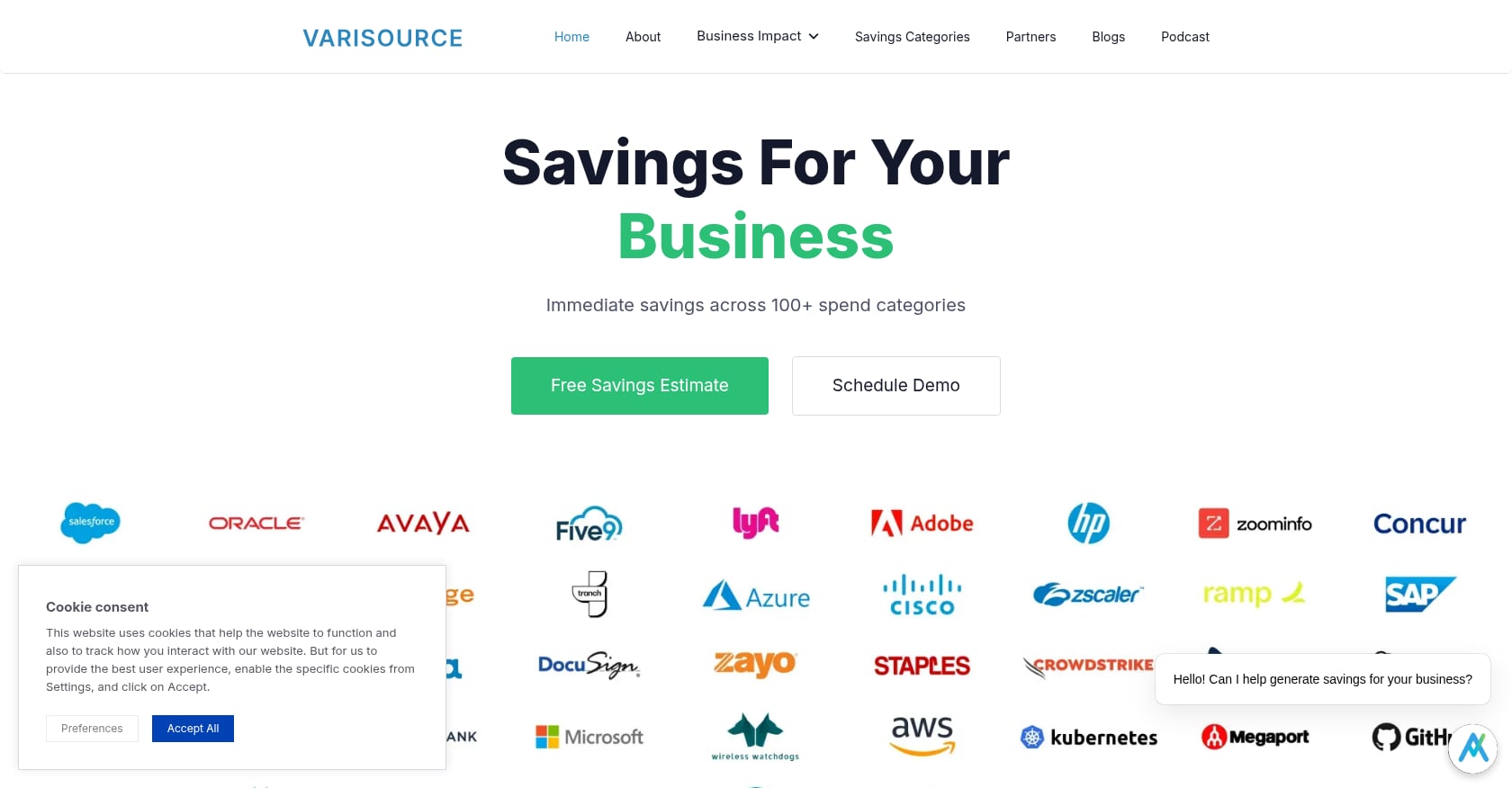
Best for: Organizations that want broad indirect spend savings across 100+ categories without upfront cost or long implementation timelines.
Varisource takes a fundamentally different approach from most entries on this list. Rather than focusing exclusively on SaaS, it operates as a comprehensive vendor savings program covering software, cloud, security, telecom, hardware, payments, travel, shipping, MRO, office supplies, insurance, consulting, professional services, and managed services. The model combines AI agents with done-for-you and done-with-you service, so it works as a complement to existing procurement, IT, and finance teams rather than a replacement.
Pricing:
No upfront cost. Varisource uses a shared savings model where you only pay when savings are achieved. A free Savings Estimate Report is typically delivered within 48 hours.
Key features:
- Group buying discounts backed by $80B+ in collective purchasing power
- Rebates on renewals and new purchases (often without switching vendors)
- Benchmark data from 50M+ data points at the SKU and quote level
- Renewal savings automation with contract reminders
- Negotiation and quoting support across all categories
- Tracking support for contracts, inventory, and spend
- Escalation support for vendor issues
- Seven purpose-built AI agents: Savings AI, Benchmark AI, Sourcing AI, Extraction AI, Request AI, Negotiation AI, and Contract Reminder AI
Why it ranks first:
The combination of zero upfront cost, broad category coverage, and stacked savings mechanisms (group buying + rebates + benchmarks + negotiation) is unique in this market. Most competitors cover SaaS only and charge $12K to $45K annually before delivering a dollar of savings. Varisource flips that risk equation entirely.
The IWG partnership validates the model at scale. IWG launched “Business Savings” with Varisource, offering their North American customers 1:1 procurement support and typical 25–30% savings, with up to 60% discounts via marketplace offers.
Tradeoffs:
- Not a full procure-to-pay suite; if you need purchase order workflows and invoice matching, you’ll need additional tools
- Requires sharing AP spend and vendor data to generate savings estimates
- Public buyer pricing is not published beyond the shared savings model
- Limited public third-party reviews compared to more established SaaS management platforms
Best for: Mid-market and enterprise companies, PE portfolio companies seeking fast cost reduction, and any organization whose vendor spend extends beyond software. If your indirect spend touches multiple categories, this is the most comprehensive option.
To see what savings look like for your specific vendor mix, request a free Savings Estimate Report from Varisource.
2. Vendr
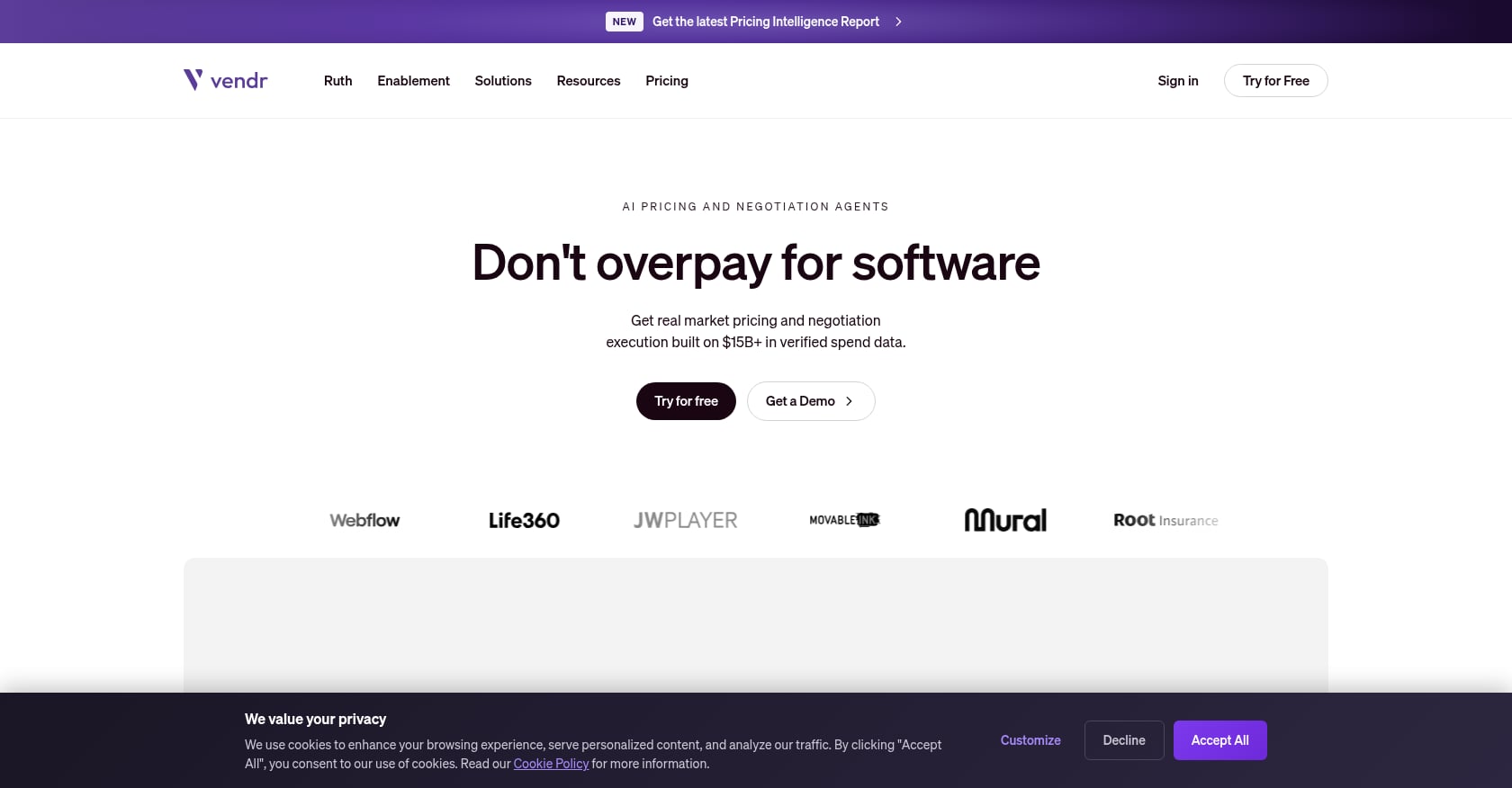
Best for: Companies with $250K+ in annual SaaS spend that want dedicated negotiation support for software contracts.
Vendr built its reputation on SaaS purchasing and negotiation. The platform provides access to $15B+ in real pricing data, and its AI negotiator (“Ruth”) can run negotiations autonomously or in an advisory capacity. It’s a focused tool that does one thing well: help you pay less for software.
Pricing:
Platform access starts at $12,000/year, which includes unlimited benchmarks across 2,500+ products, 100 Negotiation Credits, and contract price review. Historical reports from RevPilots suggest earlier packages started at $36,000 for larger spend bands, so pricing has become more accessible.
Key features:
- Price benchmarking against $15B+ in transaction data
- AI-powered negotiation (autonomous or advisory modes)
- Contract price review for renewals
- Renewal management and tracking
- 2,500+ product benchmark database
Tradeoffs:
- SaaS only. No coverage for telecom, hardware, MRO, payments, insurance, or other indirect categories
- $12K/year minimum creates a real barrier for smaller companies
- Credit-based negotiation model means costs scale with volume
- Reporting capabilities have drawn criticism from users
User perspective: Practitioners on RevPilots report that users are generally pleased with Vendr’s ability to close deals faster and save money on SaaS contracts. The most common complaints involve navigation difficulties within the application and a desire for more effective reporting features.
3. Vertice
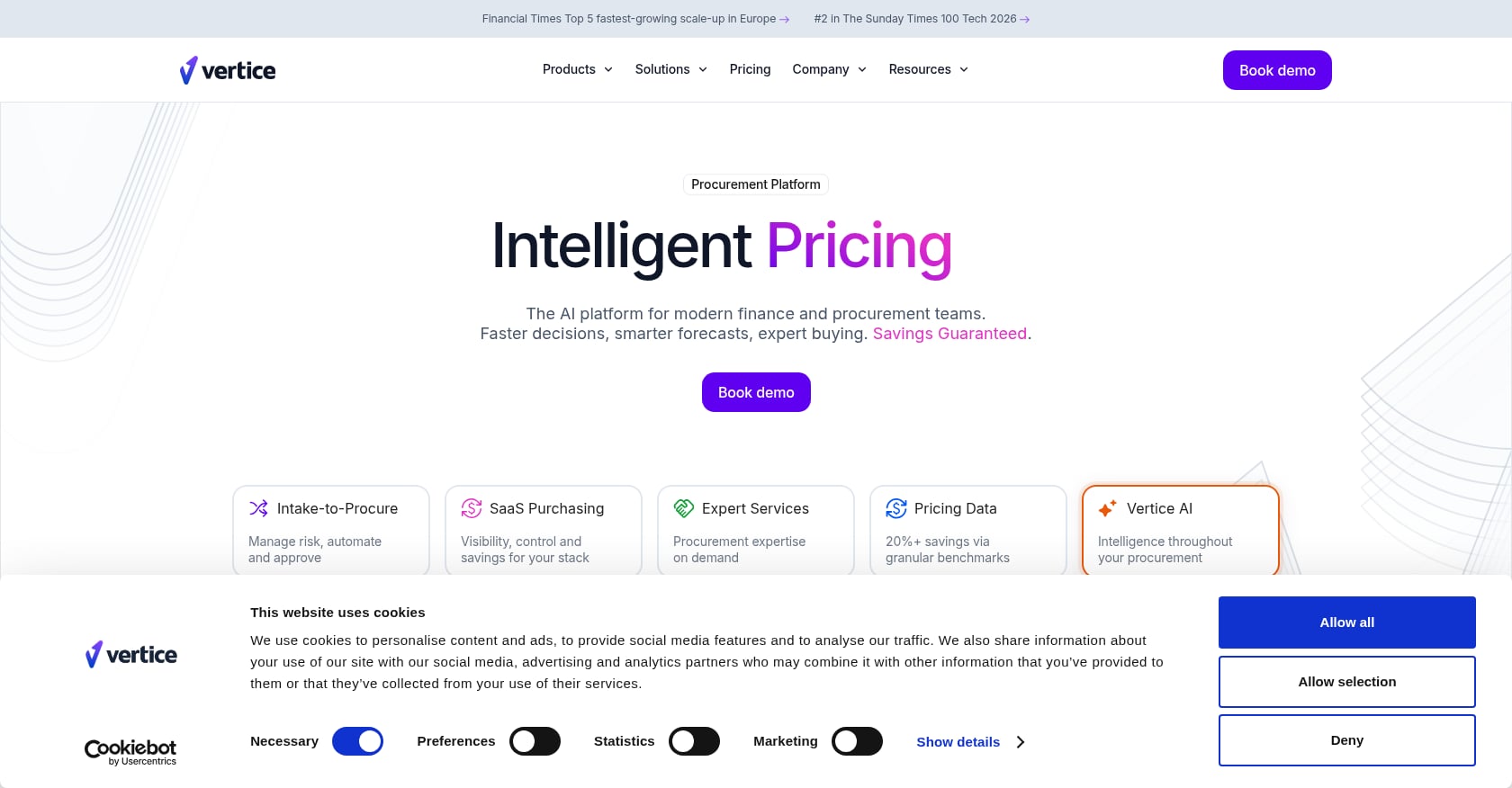
Best for: Companies that need combined SaaS purchasing and cloud cost optimization in a single platform with procurement workflow automation.
Vertice positions itself as an intelligent procurement platform that covers SaaS purchasing, intake-to-procure workflows, and cloud cost optimization. It assigns a dedicated buyer to handle negotiations, which provides a more hands-on experience than purely self-serve tools.
Pricing:
Custom quotes only. No published pricing. Vertice does guarantee savings, which reduces risk.
Key features:
- SaaS purchasing with a dedicated buyer assigned to your account
- Intake-to-procure workflows for request management
- Pricing benchmarks across SaaS and cloud categories
- Cloud cost optimization (AWS, Azure, GCP)
- Vendor management dashboard
- Vertice AI for spend analysis
Tradeoffs:
- Primarily focused on SaaS and cloud; does not cover telecom, MRO, shipping, insurance, or other broad indirect categories
- Custom pricing means you cannot quickly evaluate cost before engaging with sales
- Newer entrant with less market data than platforms like Vendr or Zylo
- Cloud optimization capabilities are still maturing
User perspective: Users on G2 consistently praise the intuitive interface and responsive support, noting that Vertice acts like an extension of their procurement and IT teams rather than just a software tool.
4. Zylo
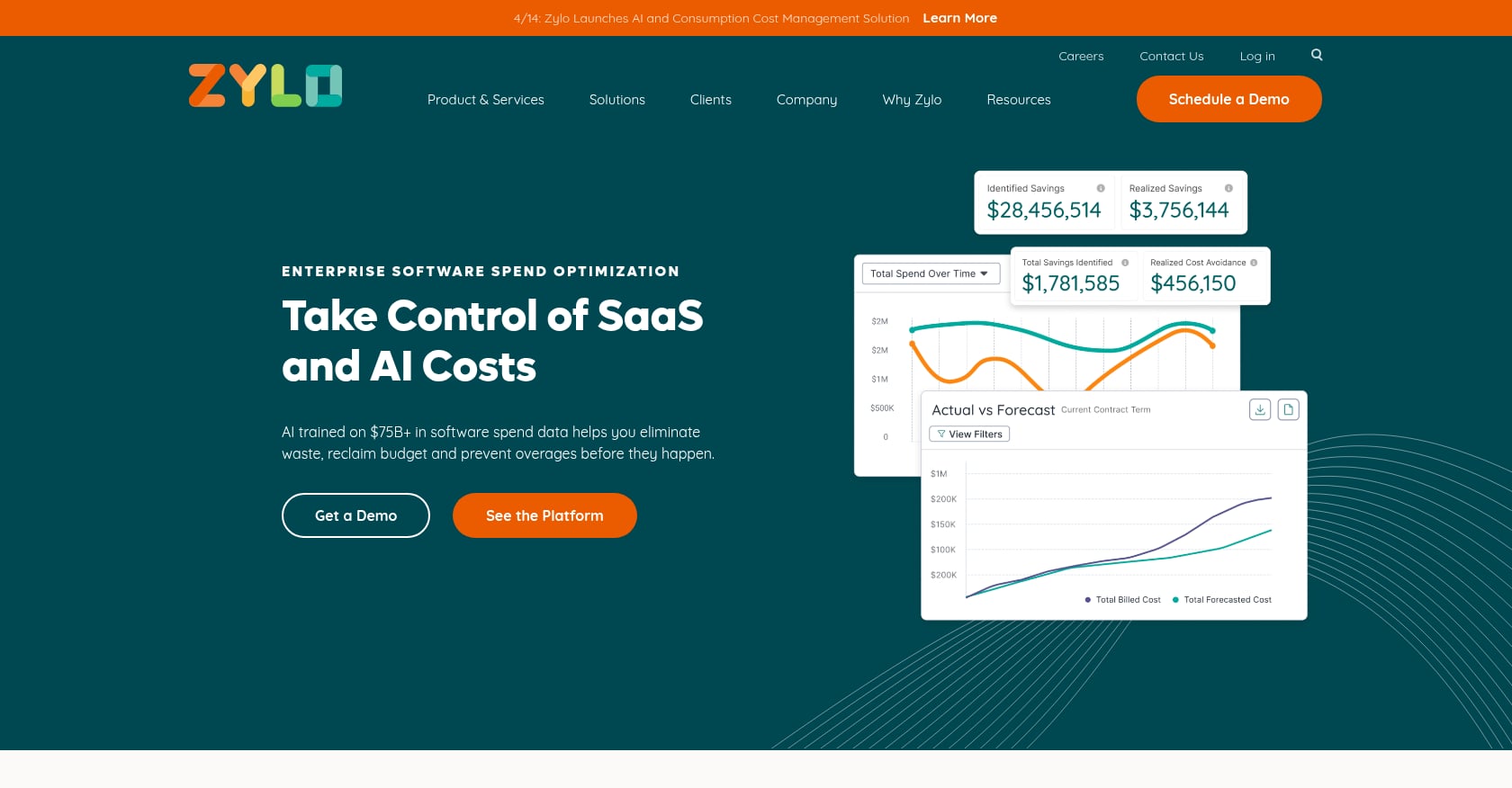
Best for: Large enterprises that need deep SaaS visibility, license optimization, and shadow IT governance before they can even begin saving.
Zylo is a SaaS management platform, not a negotiation service. Its primary value is discovery: finding every SaaS application in your environment (including ones nobody approved), measuring actual usage, and identifying waste. The platform then supports renewal management and provides benchmarking data to inform negotiations.
Pricing:
Custom quotes. Multiple sources describe the entry point as high and not suited for SMBs. Zylo targets enterprise organizations with substantial SaaS portfolios.
Key features:
- AI-powered SaaS discovery engine
- License management and utilization tracking
- Shadow IT detection
- Renewal and spend management dashboards
- Data-driven price benchmarking
- Professional negotiation services (add-on)
Tradeoffs:
- SaaS only. Zero coverage for non-software vendor categories
- Expensive entry point excludes mid-market buyers
- Discovery-focused rather than action-focused; you still need to negotiate separately or pay for that service
- Heavy dependency on Okta for discovery, which limits effectiveness if you don’t use Okta
- Users have flagged limited integration options and reporting constraints
User perspective: RevPilots reports that users find Zylo’s renewal handling, visibility, and software management praiseworthy. The recurring complaints center on UI limitations and the Okta dependency, which narrows the discovery funnel for companies using other identity providers.
5. Tropic
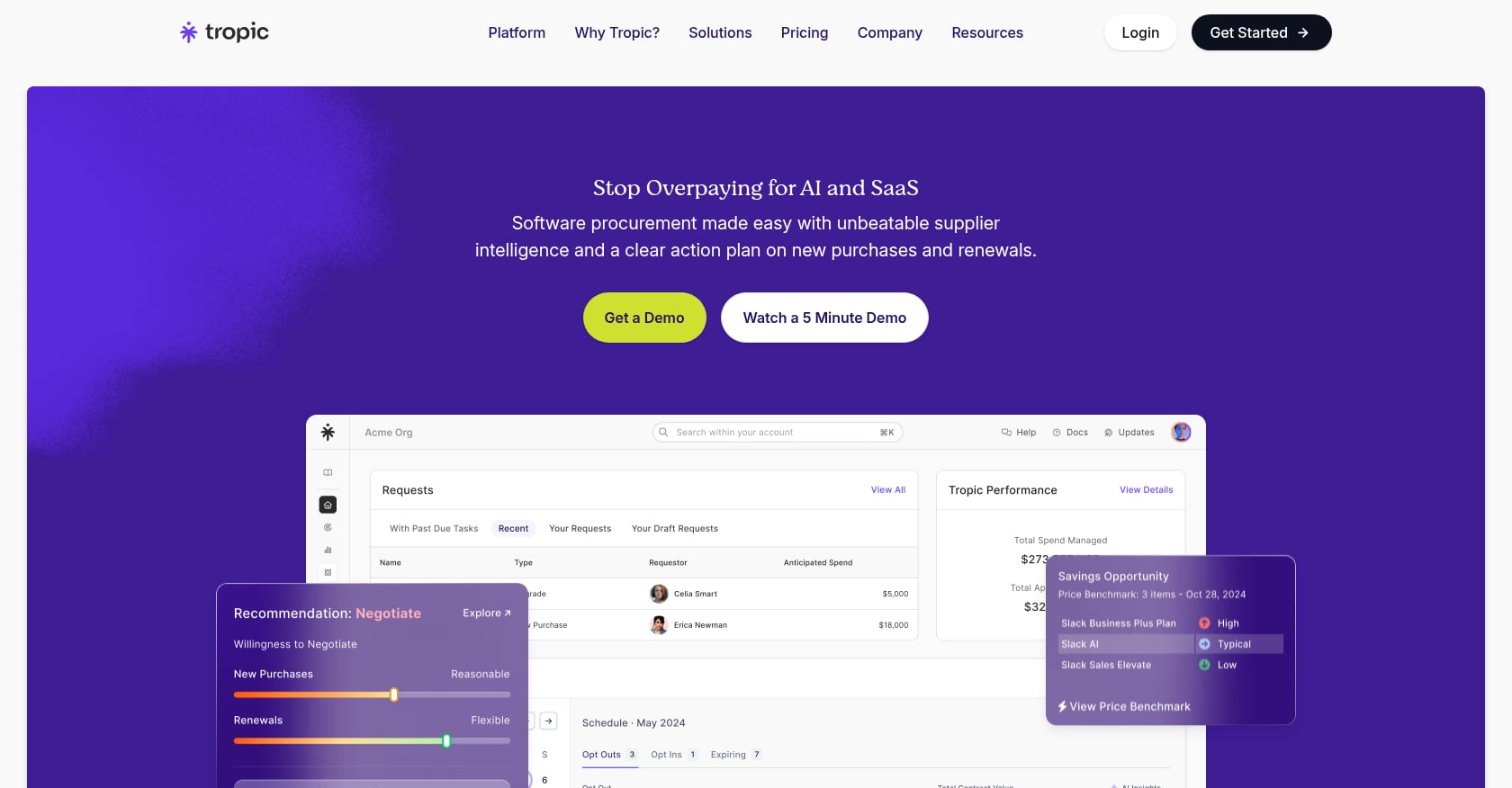
Best for: Tech-forward companies with large SaaS budgets that want end-to-end procurement orchestration with built-in compliance.
Tropic combines a negotiation team with procurement workflow automation. It’s designed for organizations that want to control the entire purchasing process, from intake request through vendor scorecard, and have the budget to pay for that level of service.
Pricing:
The basic plan starts at $3,750/month ($45,000/year) and requires a minimum SaaS spend of $250K to $1M. This is among the most expensive options in this list.
Key features:
- Dedicated negotiation team
- Procurement workflow automation and intake management
- Compliance management and audit trails
- Benchmark data for pricing validation
- Vendor scorecards and performance tracking
Tradeoffs:
- Very expensive. The $45K+ annual cost puts it out of reach for many mid-market companies
- Requires substantial SaaS spend to be worthwhile
- Dashboard has been flagged as needing improvement
- No Slack integration (a gap for Slack-first organizations)
- Primarily focused on tech and SaaS categories
User perspective: RevPilots notes that customers back up Tropic’s claims around stakeholder compliance, savings per deal, and reduced negotiation time. The consistent pushback comes from small and mid-sized businesses that find the offering too expensive for their spend volume.
6. Spendflo
Best for: Mid-market companies with significant SaaS budgets that value responsive customer service and Slack-first workflows.
Spendflo is a SaaS buying platform with renewal management, spend management, and negotiation services. It differentiates through strong customer service and practical features like Slack integration that fit naturally into how modern teams work.
Pricing:
The basic package costs $2,500/month ($30,000/year), with a promise of $300K in savings and a minimum SaaS spend requirement of $250K.
Key features:
- Benchmarking data for SaaS pricing validation
- Native Slack integration for workflow management
- Contract visibility dashboard
- Security and compliance checks
- Negotiation playbooks and tactical information
Tradeoffs:
- $30K/year entry point is still a significant investment before seeing returns
- More services-dependent than automated; less AI-driven than newer alternatives
- Requires substantial minimum spend to justify the platform cost
- Multiple account executives can be hard to track, per user feedback
User perspective: G2 reviews highlight customer service as Spendflo’s standout quality. Users appreciate the personal attention and Slack-based communication, though some note that the platform itself is less automated than they expected.
7. CloudEagle

Best for: Companies looking for a lower-cost entry point into SaaS management with strong integrations and self-serve negotiation playbooks.
CloudEagle is an AI-powered SaaS management and procurement platform that stands out for its integration depth and relatively accessible pricing. With 500+ direct integrations, it can pull data from more systems than most competitors, giving it a broader view of your SaaS environment.
Pricing:
CloudEagle has three pricing editions ranging from $2,000 to $2,500, priced based on number of employees. This appears to be monthly pricing, making it one of the more affordable SaaS management options.
Key features:
- 500+ direct integrations for comprehensive SaaS discovery
- Slack-based workflows for request and approval management
- Zero-touch onboarding process
- Benchmarking data for pricing context
- Vendor-specific buying guides and negotiation playbooks
Tradeoffs:
- SaaS-focused only; no coverage for non-software categories
- Newer and smaller player with a less established track record
- Negotiation support comes through playbooks rather than dedicated negotiators
- Limited to software categories
8. Coupa

Best for: Large enterprises that need a full procure-to-pay suite with deep ERP integration and global supply chain management.
Coupa is not a vendor savings program in the traditional sense. It’s enterprise procurement infrastructure. The platform covers sourcing, procurement, invoicing, expenses, and payments across every category. If you need to manage billions in spend across dozens of countries, Coupa is built for that. If you just want to save money on your vendor contracts, it’s overkill.
Pricing:
Enterprise deployments with multiple modules, high transaction volumes, and global rollouts can reach $500,000 to $2,000,000+ annually. Even mid-market implementations require substantial investment.
Key features:
- Full procure-to-pay workflow (sourcing through payment)
- Supply chain management
- Invoice and expense management
- Deep ERP integrations (SAP, Oracle, etc.)
- Community intelligence and benchmarking
- Spend analytics and reporting
Tradeoffs:
- Extremely expensive, with pricing that excludes all but the largest organizations
- Complex implementations that can take 6 to 12+ months
- Massive feature set means a steep learning curve
- Mixed reviews across G2, Capterra, and TrustRadius suggest the user experience doesn’t always match the price tag
- Not designed as a focused savings program; it’s procurement infrastructure
9. GEP SMART
Best for: Global enterprises with complex, multi-region procurement operations that need unified source-to-pay capabilities.
GEP SMART is a unified procurement platform that uses AI-powered analytics to cover the entire source-to-pay lifecycle. It targets the same enterprise market as Coupa but emphasizes AI-driven spend analysis and sourcing capabilities.
Pricing:
GEP SMART pricing starts at $500,000 annually and is quote-based. This firmly positions it as an enterprise-only solution.
Key features:
- Unified source-to-pay platform
- AI-based spend analytics for identifying savings opportunities
- Sourcing and procurement automation
- Supplier management
- Contract lifecycle management
- Claims of 25% to 40% increases in cost savings
Tradeoffs:
- $500K+ annual minimum places it far beyond reach for most companies
- Long implementation cycles typical of enterprise procurement suites
- Full procurement platform, not a focused vendor savings program
- Requires dedicated internal resources to operate effectively
How to Choose the Right Vendor Savings Program
The decision comes down to five factors. Get clear on these before evaluating any specific tool.
1. Annual vendor spend volume. If your total vendor spend is under $500K, options like Tropic ($45K/year) and Spendflo ($30K/year) will eat a large percentage of any savings they generate. A shared-savings model with no upfront cost makes more sense at this level. If you’re spending $5M+, the ROI math works differently.
2. Breadth of categories. Ask yourself: is our overspending problem limited to SaaS, or does it span telecom, hardware, cloud, payments, and other indirect categories? According to Ardent Partners, the average procurement team sources only 44% of their addressable spend. World-class teams hit 60%. The gap usually sits in non-software categories that SaaS-focused tools ignore entirely. For organizations managing vendor relationships across IT, finance, and operations, a vendor savings program with broad category coverage will capture more value.
3. Budget for the tool itself. This is the factor most articles gloss over. Several competitors charge $12K to $45K per year before you see a dollar of savings, with minimum spend requirements of $250K to $1M. If budget pressure is the reason you’re looking for savings in the first place, paying five figures for the privilege of saving feels backwards.
4. Internal team capacity. If you have a dedicated procurement team with negotiation expertise, a visibility and benchmarking tool (like Zylo or CloudEagle) might be enough. If your team is stretched thin, a service-based or hybrid model that handles negotiations for you will generate better outcomes with less internal effort. Understanding the difference between cost savings and cost avoidance can help align expectations with your leadership team.
5. Speed of results needed. Enterprise procurement suites take 6 to 12 months to implement. Subscription negotiation platforms take weeks. Shared-savings programs can deliver results in under 30 days. If your CFO needs to show cost improvements this quarter, implementation timeline is not a nice-to-have. It’s the deciding factor.
What Savings Can You Realistically Expect?
Savings vary widely based on program type, category mix, and your current vendor relationships. Here are the benchmarks worth knowing.
World-class procurement organizations achieve a savings rate of just over 6%, and they deliver nearly double the cost savings of median performers while spending 21% less on procurement overall, according to the Hackett Group via Esker.
Group purchasing organizations (GPOs) consistently outperform those benchmarks. Among Fortune 1000 companies that participate in buying consortiums, 85% report savings of 10% or more. Businesses using GPO models average 18 to 22% in savings. This is a proven mechanism that most SaaS-focused vendor savings programs ignore entirely.
For SaaS-specific negotiations, companies typically see 20 to 30% savings per deal through dedicated negotiation services. But those percentages only apply to software. If software represents just 30% of your indirect spend, you’re leaving 70% on the table.
The auto-renewal problem deserves special attention. Companies lose an estimated $14,400+ annually from just 20% of subscriptions auto-renewing unused or at inflated rates. The error rate on spreadsheet-based renewal tracking sits at 73%. CFOs commonly discover that 15 to 25% of SaaS spend goes to orphaned licenses. Addressing renewal management alone can produce quick wins. Exploring AI-powered procurement tools can help automate this process so savings happen without constant manual oversight.
The takeaway: the right vendor savings program should target all of your addressable indirect spend, not just the software slice. A comprehensive indirect spend analysis is the first step toward understanding where the real money is.
The ROI of Professional Negotiation
- Benchmarking (2-5% Savings): Simply knowing what others pay stops you from overpaying on the initial quote.
- Consolidation (5-12% Savings): Reducing three Project Management tools down to one increases your volume discount.
- Group Buying (15-25% Savings): Joining a GPO (Group Purchasing Organization) allows a 50-person startup to buy at "Fortune 500" prices.
The Group Buying Advantage Most Companies Overlook
One of the most underappreciated savings mechanisms is collective purchasing power. GPOs aggregate demand across multiple companies to negotiate pricing that no single buyer could achieve alone. The model is well established: the US GPO industry includes 560 businesses and has grown at a 2.7% compound annual rate over the past five years.
What makes GPOs particularly compelling is the economics. GPOs typically generate revenue through administrative fees paid by suppliers, not members. That means membership is usually free with no purchase minimums. You get access to pre-negotiated rates without paying for the negotiation.
Most SaaS-focused vendor savings programs don’t offer group buying. They rely on benchmarking data and individual negotiations. Both are valuable, but stacking group buying power on top of benchmarks and negotiation creates a compounding effect that produces larger savings.
For procurement teams evaluating vendor savings programs, asking whether the program includes group purchasing should be near the top of the requirements list. It’s the difference between negotiating from your own position and negotiating with the weight of billions in collective spend behind you.
Frequently Asked Questions
What is a vendor savings program?
A vendor savings program is a structured service, platform, or hybrid approach designed to reduce what companies pay for vendor products and services. Programs vary widely in scope. Some focus only on SaaS contract negotiation, while others cover 100+ categories of indirect spend including telecom, hardware, cloud, payments, shipping, and insurance. The core promise is the same: pay less for what you already buy (or plan to buy) through better pricing intelligence, negotiation support, and purchasing leverage.
How much do vendor savings programs cost?
Costs range from zero upfront (shared-savings models like Varisource, which only charge when savings are achieved) to $500,000+ per year for enterprise procurement suites like Coupa and GEP SMART. Mid-range options like Vendr start at $12,000/year, while platforms like Tropic and Spendflo cost $30,000 to $45,000 annually. The key question is whether the program’s cost structure aligns with your spend volume and risk tolerance.
How quickly can I see savings from a vendor savings program?
It depends on the model. Shared-savings and negotiation service programs can often deliver results within 30 days, particularly on upcoming renewals. SaaS management platforms focused on discovery and visibility might take several weeks to months before producing actionable savings recommendations. Enterprise procurement suites typically require 6 to 12+ months of implementation before they become operational.
Do I need to switch vendors to save money?
Usually not. Most vendor savings programs focus on renegotiating existing contracts, identifying unused licenses, and applying benchmark data to get better pricing from your current vendors. Some programs also offer rebates that apply to your existing vendor relationships. Switching vendors is sometimes recommended when alternatives offer substantially better pricing, but it’s rarely required.
What’s the difference between a vendor savings program and procurement software?
A vendor savings program is specifically designed to reduce what you pay vendors. Procurement software is broader infrastructure that manages the entire purchasing lifecycle, from requisition and approval to purchase orders, invoicing, and payment. Enterprise procurement suites (like Coupa and GEP SMART) include savings capabilities but also do far more, which is why they cost $500K+ and take months to implement. A focused vendor savings program delivers faster results at a fraction of the cost.
What categories does a vendor savings program typically cover?
This varies dramatically. Most options in the market cover SaaS only. A smaller number cover SaaS plus cloud infrastructure. Comprehensive vendor savings programs extend across all indirect spend categories, including software, cloud, security, telecom, hardware, payments, travel, shipping, MRO, office supplies, insurance, consulting, professional services, and managed services. If your goal is to reduce total business costs, look for a program that addresses the full breadth of your vendor relationships.
How does a shared-savings model work?
In a shared-savings model, the vendor savings program provider charges nothing upfront. Instead, they take a percentage of the actual savings they help you realize. If they save you nothing, you pay nothing. This aligns incentives directly: the provider only earns money when you do. It’s the lowest-risk model for companies that want to test vendor savings without committing to a five or six-figure annual platform fee.
Is a vendor savings program worth it for mid-market companies?
Yes, but the model matters. Many SaaS-focused platforms price themselves for enterprise buyers with $1M+ in software spend. Mid-market companies with $200K to $2M in total vendor spend often find these tools too expensive relative to the savings they generate. A shared-savings or GPO-based vendor savings program tends to work better at this scale because there’s no upfront investment eating into the returns. Private equity portfolio companies in particular benefit from fast, no-risk savings programs that generate quick wins across their portfolio.
{
"@context": "https://schema.org",
"@type": "FAQPage",
"@id": "#faq",
"mainEntity": [
{
"@type": "Question",
"@id": "#faq-question-1",
"name": "What is a vendor savings program?",
"acceptedAnswer": {
"@type": "Answer",
"text": "A vendor savings program is a structured service, platform, or hybrid approach designed to reduce what companies pay for vendor products and services. Programs vary widely in scope. Some focus only on SaaS contract negotiation, while others cover 100+ categories of indirect spend including telecom, hardware, cloud, payments, shipping, and insurance. The core promise is the same: pay less for what you already buy (or plan to buy) through better pricing intelligence, negotiation support, and purchasing leverage."
}
},
{
"@type": "Question",
"@id": "#faq-question-2",
"name": "How much do vendor savings programs cost?",
"acceptedAnswer": {
"@type": "Answer",
"text": "Costs range from zero upfront (shared-savings models like Varisource, which only charge when savings are achieved) to $500,000+ per year for enterprise procurement suites like Coupa and GEP SMART. Mid-range options like Vendr start at $12,000/year, while platforms like Tropic and Spendflo cost $30,000 to $45,000 annually. The key question is whether the program's cost structure aligns with your spend volume and risk tolerance."
}
},
{
"@type": "Question",
"@id": "#faq-question-3",
"name": "How quickly can I see savings from a vendor savings program?",
"acceptedAnswer": {
"@type": "Answer",
"text": "It depends on the model. Shared-savings and negotiation service programs can often deliver results within 30 days, particularly on upcoming renewals. SaaS management platforms focused on discovery and visibility might take several weeks to months before producing actionable savings recommendations. Enterprise procurement suites typically require 6 to 12+ months of implementation before they become operational."
}
},
{
"@type": "Question",
"@id": "#faq-question-4",
"name": "Do I need to switch vendors to save money?",
"acceptedAnswer": {
"@type": "Answer",
"text": "Usually not. Most vendor savings programs focus on renegotiating existing contracts, identifying unused licenses, and applying benchmark data to get better pricing from your current vendors. Some programs also offer rebates that apply to your existing vendor relationships. Switching vendors is sometimes recommended when alternatives offer substantially better pricing, but it's rarely required."
}
},
{
"@type": "Question",
"@id": "#faq-question-5",
"name": "What's the difference between a vendor savings program and procurement software?",
"acceptedAnswer": {
"@type": "Answer",
"text": "A vendor savings program is specifically designed to reduce what you pay vendors. Procurement software is broader infrastructure that manages the entire purchasing lifecycle, from requisition and approval to purchase orders, invoicing, and payment. Enterprise procurement suites (like Coupa and GEP SMART) include savings capabilities but also do far more, which is why they cost $500K+ and take months to implement. A focused vendor savings program delivers faster results at a fraction of the cost."
}
},
{
"@type": "Question",
"@id": "#faq-question-6",
"name": "What categories does a vendor savings program typically cover?",
"acceptedAnswer": {
"@type": "Answer",
"text": "This varies dramatically. Most options in the market cover SaaS only. A smaller number cover SaaS plus cloud infrastructure. Comprehensive vendor savings programs extend across all indirect spend categories, including software, cloud, security, telecom, hardware, payments, travel, shipping, MRO, office supplies, insurance, consulting, professional services, and managed services. If your goal is to reduce [total business costs](https://www.varisource.com/blog/business-cost-reduction-strategies), look for a program that addresses the full breadth of your vendor relationships."
}
},
{
"@type": "Question",
"@id": "#faq-question-7",
"name": "How does a shared-savings model work?",
"acceptedAnswer": {
"@type": "Answer",
"text": "In a shared-savings model, the vendor savings program provider charges nothing upfront. Instead, they take a percentage of the actual savings they help you realize. If they save you nothing, you pay nothing. This aligns incentives directly: the provider only earns money when you do. It's the lowest-risk model for companies that want to test vendor savings without committing to a five or six-figure annual platform fee."
}
},
{
"@type": "Question",
"@id": "#faq-question-8",
"name": "Is a vendor savings program worth it for mid-market companies?",
"acceptedAnswer": {
"@type": "Answer",
"text": "Yes, but the model matters. Many SaaS-focused platforms price themselves for enterprise buyers with $1M+ in software spend. Mid-market companies with $200K to $2M in total vendor spend often find these tools too expensive relative to the savings they generate. A shared-savings or GPO-based vendor savings program tends to work better at this scale because there's no upfront investment eating into the returns. [Private equity portfolio companies](https://www.varisource.com/private-equity) in particular benefit from fast, no-risk savings programs that generate quick wins across their portfolio."
}
}
]
}
About the Author
.jpeg)
Victor Hou
Victor Hou is the founder of Varisource, the first ever Savings Automation Platform that automates Savings for Your Business. Victor helps companies access discounts, rebates, benchmark data, savings for renewals and new purchases across 100+ spend categories automatically to increase your company's margins and equity value by at least 15-20%. Victor is active and passionate about using AI + automation to help your business save time, money and run more efficiently.
%201.svg)

Varisource’s Savings Automation Platform guarantees savings and maximized leverage on every dollar spend across 100+ spend categories


