The CFO's Guide to Corporate Travel Cost Savings Without Added Headcount

Family trips are one of the things I knowingly overpay for. Taking the kids to Disney World is very, very expensive, between the park tickets, the food, the drinks and the travel to get there, and I know I'm overpaying for most of it. I pay it happily, because the kids get a life experience they won't forget and we get that time together as a family.
Business spending works differently for me. When a company pays more for something, it should be because it gets more value or better quality, and because that quality matters in a meaningful way. In corporate travel, a lot of companies let the two kinds of spending run together. Employees book on their own consumer accounts, the same way they'd book a family vacation, and send finance the receipt afterward. And so the company ends up buying its business travel as a pile of personal purchases, without the budgets and policies that would let anyone manage it.
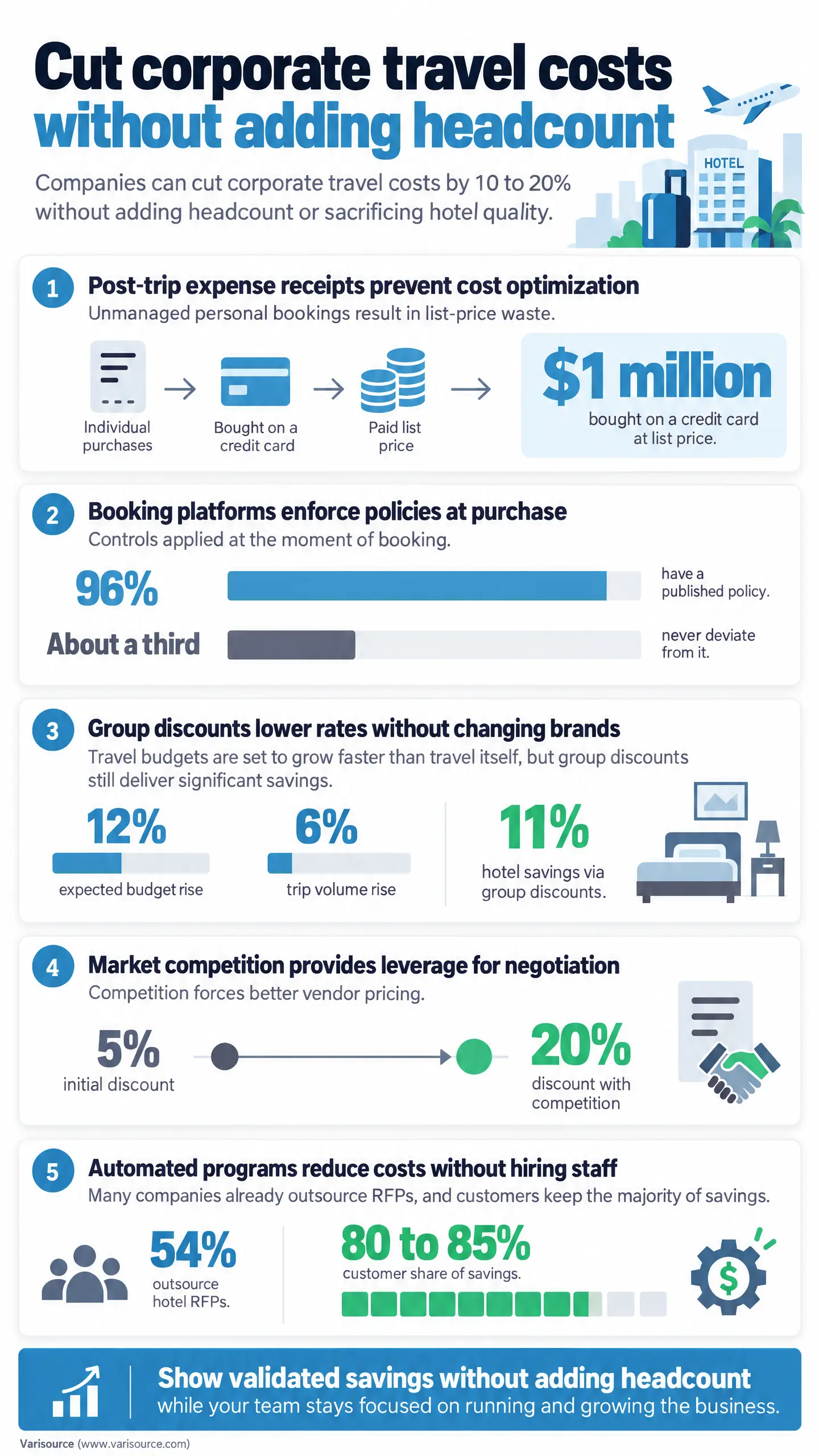
At Varisource, our corporate travel cost savings usually land between 10 and 20%, depending on the category, the location and the geography. They come from control at the moment of booking and from leverage on the rates. A company can get both without hiring a travel manager and without moving anyone into a worse hotel.
Key Takeaways
- Varisource achieves 10% to 20% cost savings on corporate travel by enforcing company policies and budgets directly within enterprise booking platforms rather than reviewing post-trip expense receipts.
- Despite 96% of companies maintaining published travel policies, a BCD Travel survey found that only roughly one-third of employees strictly adhere to them when booking independently on consumer platforms.
- Deloitte's 2026 corporate travel survey projects U.S. travel budgets to rise 12% against only a 6% increase in trip volume, driven heavily by inflating hotel and flight prices.
- Unlike deeply integrated cloud software, corporate hotel bookings provide significant negotiation leverage because procurement teams can easily shift traveler volume to competing brands without facing technical lock-in.
- Enterprise booking platforms utilize pooled group purchasing across multiple organizations to reduce corporate hotel expenses by up to 20% without forcing employees to abandon preferred brands like Hilton or Marriott.
- Research from GBTA and Radisson Hotel Group indicates that 54% of organizations outsource their hotel RFP processes to capture market-rate discounts without hiring full-time, in-house travel managers.
- Under a performance-based shared savings model, companies retain 80% to 85% of their negotiated corporate travel discounts while shifting vendor execution and baseline analysis to third-party procurement platforms.
Why Do Post-Trip Expense Receipts Hinder Corporate Travel Cost Optimization?

By the time finance sees a travel receipt, the cost has already been charged, and that makes the spend very difficult to police, track or optimize. An expense report does give you visibility, which is the first step toward optimization. But you only get it after the room is booked and the flight is paid for, when you can no longer benchmark the price, negotiate it or steer the booking somewhere better.
One of the wildest things my team has found in a customer's spend was close to $1 million of Microsoft bought on a credit card, which meant they were paying list price. Travel booked trip by trip on personal accounts has the same problem, because every booking gets whatever price that one traveler found, with no company program behind it.
I think the worst travel waste comes from not setting the right policies. With no budget, people can eat anywhere and fly any airline, and sometimes they still aren't staying at the best hotel or on the best flight for the trip. Employees make a lot of small decisions every day that end up costing the company more money, and every hotel night booked on a personal account is one of them. Executives may not see those decisions add up, because as long as revenue is ahead of spend, things look okay. And because the money belongs to the company, the person booking has little reason to think about price unless leadership sets goals and incentives that give them one.
How Do Enterprise Booking Platforms Enforce Corporate Travel Policies at the Point of Sale?
For travel specifically, I think it's all about control. That means setting budgets and policies, and giving your people one platform where they search and book hotels, flights and car rentals inside a controlled environment. A consumer site like Expedia is very difficult to control, because everybody has their own account and every booking is basically a personal purchase.
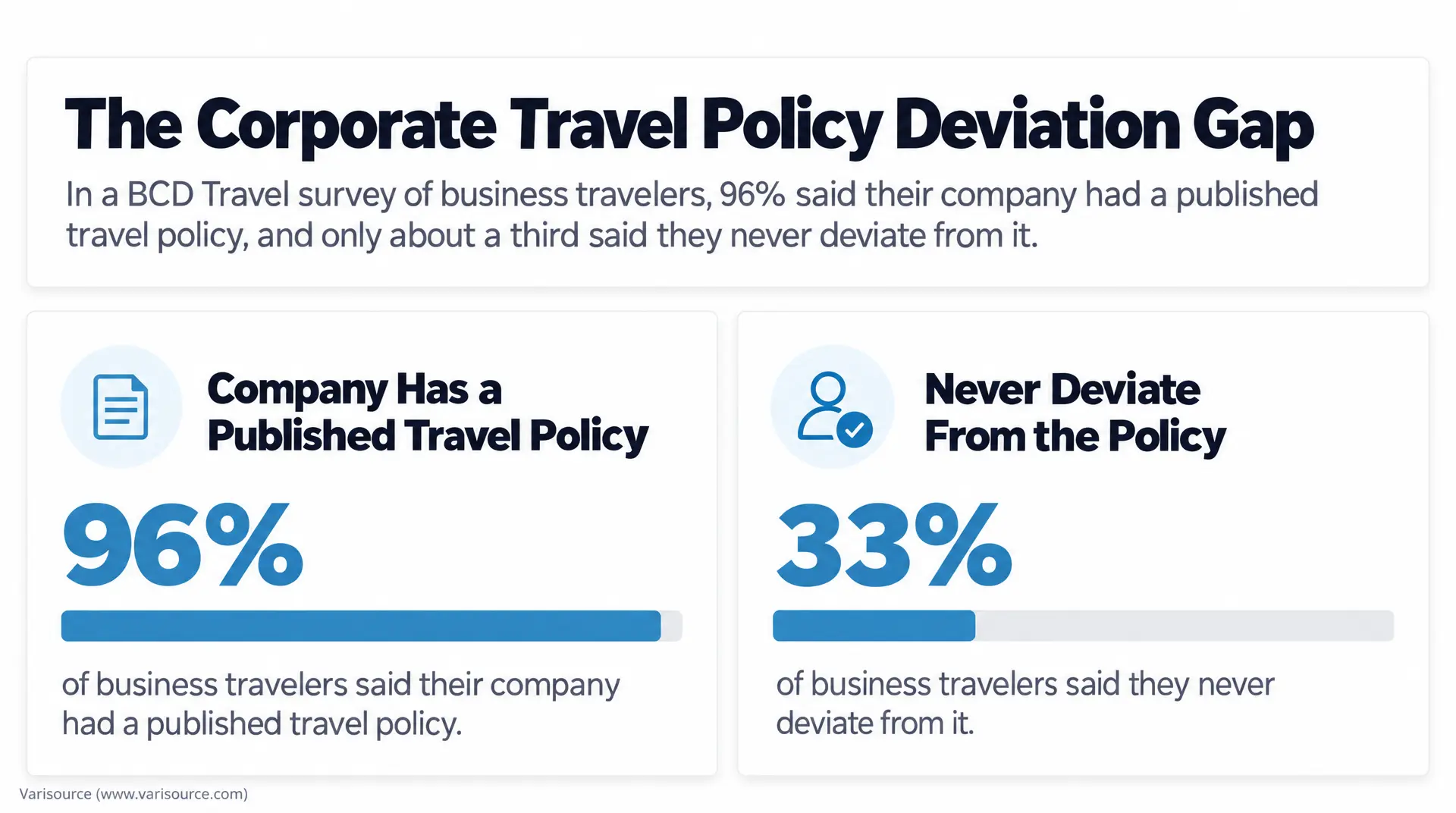
Most companies already have a travel policy, but the document by itself usually doesn't control much. In a BCD Travel survey of business travelers, 96% said their company had a published travel policy, and only about a third said they never deviate from it. An enterprise booking platform works a lot like Expedia for the traveler, since they still search and book on their own. The difference is that the company's policies, guidelines and budgets are built into the search. The rules get applied at the moment of purchase, while there's still something to optimize, and that change alone can lead to pretty significant savings.
The goal is a program that gives your people a good experience and still keeps the spend from ballooning. Getting there is a lot of work, because someone has to write the travel policy, set up the credit card program, put the internal financial controls in place and get the platform running. Our savings program at Varisource sets all of that up for the customer, on top of generating the savings.
The mandate still has to come from you. As the CFO, you have the authority to set the policy and make it stick with the department heads whose teams travel the most. I think that matters more than any tool, because it always comes down to whether the company cares enough to make its spend better. My rule for CFOs is a clear mandate that every spend dollar with a vendor has an ROI. If your company is PE-backed, the operating partner is going to ask about the return on the who, what, when, why and how of every vendor and every dollar of spend. That's a hard question to answer for travel that only exists as expense receipts, and it gets much easier once every trip is booked in one place under one policy.
How Do Pre-Negotiated Group Discounts Lower Corporate Hotel Costs Without Changing Brands?
I think one thing CFOs get wrong about saving money is assuming it means reducing service or quality, which in travel means picturing your people in cheaper hotels. Most of the time, saving money just means knowing the fair price in the market and paying it. The belief that the more you pay, the better quality you get is often wrong.
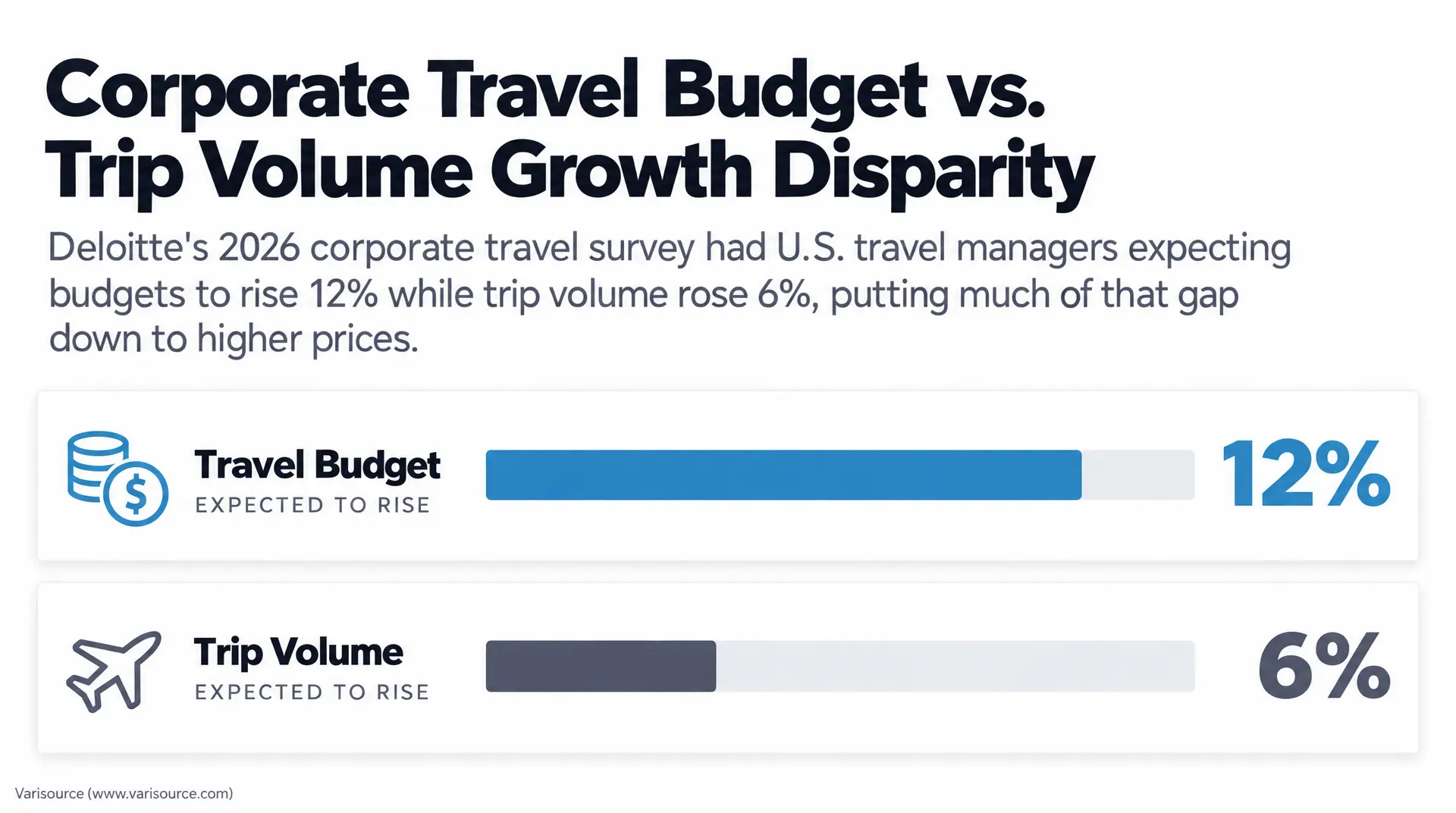
Travel budgets are also set to grow faster than travel itself. Deloitte's 2026 corporate travel survey had U.S. travel managers expecting budgets to rise 12% while trip volume rose 6%, and they put much of that gap down to higher prices. That's a good reason to put the effort into the rate on each room and flight, which can come down without changing the hotel.
Your people can keep booking Hilton and its brands, or Marriott, and keep using their own memberships, because the better rate comes through the platform they book on. Part of it comes from travel platforms we work with that already have pre-negotiated discounts for individual users. Part of it comes from group discounts, where spend from a lot of different customers is pooled to get better rates and programs. On hotel stays for one customer, we saved around 11%, and the group discounts on hotels and flights are what move a company toward the 20% end of the range.
I don't think group buying has worked well in technology, because a lot of technology is proprietary. Microsoft doesn't need to give a buying group a discount when everybody already uses Microsoft. Every category is different, though, and in travel, pooled spend does real work, so group discounts sit right next to negotiation in how we save customers money there.
Corporate travel cost savings come from booking control and negotiated or pooled hotel rates, often 10% or more off best available rates, while hotel member rates start at 2%.
Corporate travel cost savings lever | Published savings or discount (%) | Applies to | Travelers keep hotel brand and loyalty membership? |
|---|---|---|---|
Travel policy and budgets enforced at booking (enterprise booking platform) | 20% lower spend by policy-adherent employees (TravelBank-commissioned Forrester model) | Hotels, flights and car rentals | Yes, within policy budget |
Pre-negotiated hotel discounts on corporate booking platforms | Up to 15% off best available rate (Navan, 2024) | Hotels | Yes, same brands and memberships |
Group discounts from pooled travel spend | Hotel tiers of 10% to 25%+ off best available rate (Amex GBT, 2025) | Hotels and flights | Yes, same hotel and airline brands |
Company-negotiated corporate hotel rate (using competing hotel offers) | 10%+ discount 50% of the time, 20%+ 34% of the time (150 BCD client hotel programs) | Hotels | |
Hotel loyalty member rate on a personal account (no company program) | From 2% off lowest public rate, up to 5% at Marriott on weekends (2026) | Hotels | Yes, booked direct as a member |
How Does Market Competition Provide Leverage for Corporate Hotel Rate Negotiations?

To get a better rate, you need leverage. For me, leverage is information and competition, plus the time and expertise to use them. Without it, asking for a better price gets you very little, and a hotel can simply tell you its member rate is already the best one available.
I spent 15 years on the vendor side. At renewal time, the pitch was that the service had been great, the team had put in a lot of effort and the pricing the customer had was really, really good. The point was to give the customer enough comfort and confidence that they never went out to market. And so I don't take a vendor's claim of best pricing at face value, any more than you'd take the first price on a car or a house. Datadog told us on the first call that it had already given the best discount it could on a usage product. After several calls, with competition and some optimization options on the table, the customer's discount went from 5% to 20%.
With cloud and software, I think threatening to leave is a weak move, because the integrations run deep and the vendor knows you are stuck. Hotels are different, because nothing is integrated and the same travelers can book somewhere else on their next trip. Part of our negotiation is making clear that our members, the individuals booking through the program, could end up staying at another hotel. A brand that wants those stays has a reason to improve the rate, and if it does, your people keep the brand they like at a better price. We keep those conversations professional and look for a win-win, and when a vendor can see what the market offers, it's usually very willing to help.
How Do Automated Travel Savings Programs Reduce Corporate Costs Without Adding Headcount?
Most companies don't have the time, the resources or the expertise to run those negotiations, because their people are focused on running and growing the business. Hiring a travel manager to fill that gap means paying a salary before you see a result and hoping the person works out, and that person covers one category out of hundreds. Somebody who understands travel isn't going to be an expert in Microsoft licensing, AWS or Salesforce. I believe there are savings with every vendor, no matter the category, so a hire who only knows travel leaves most of your vendor list untouched.
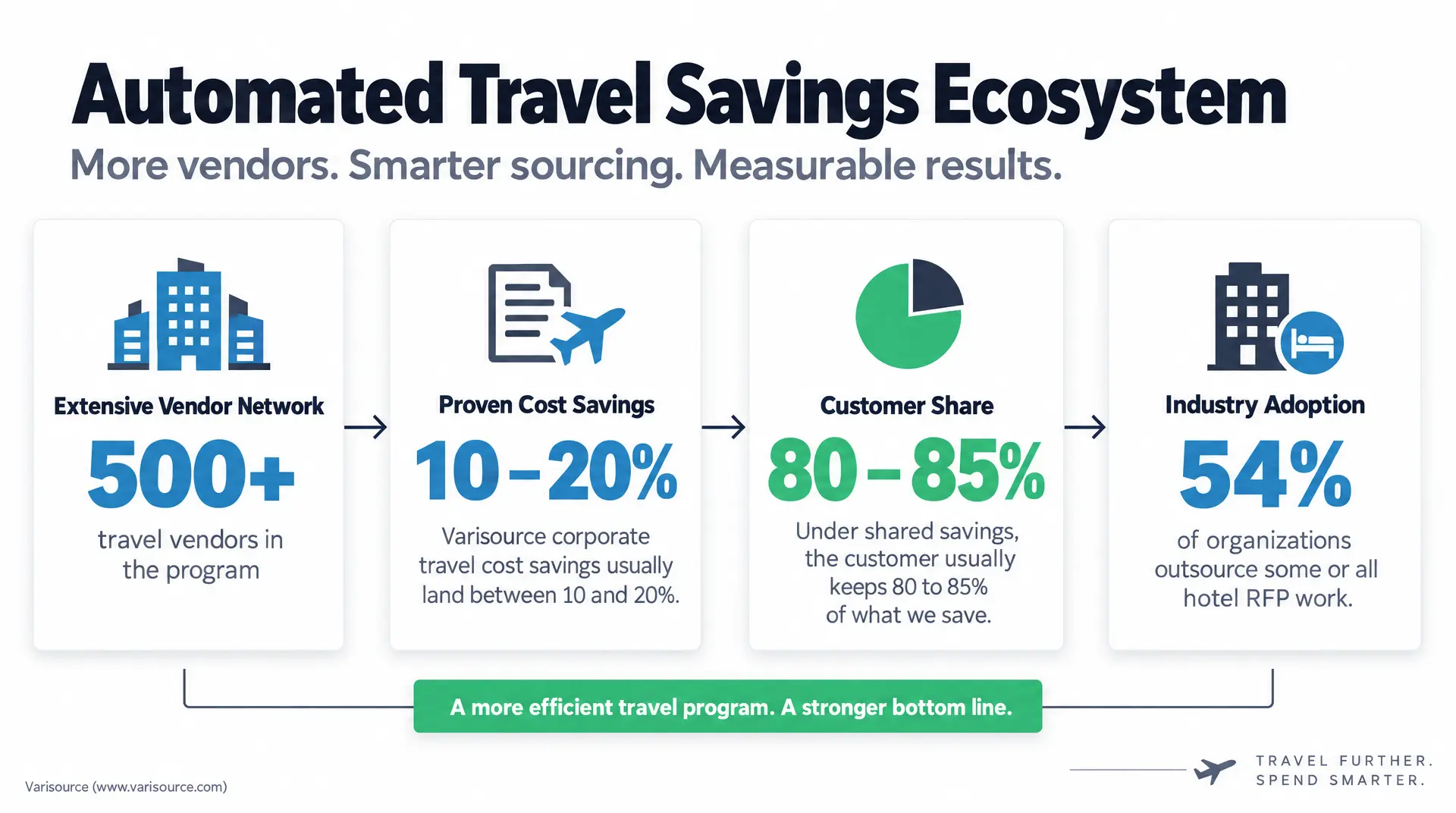
Handing this kind of work to someone outside the payroll is already common in travel. In GBTA and Radisson Hotel Group's research on hotel programs, 54% of organizations outsource some or all hotel RFP work. Our travel savings come from hundreds of partnerships around the world with travel systems, travel platforms and travel agencies, with more than 500 travel vendors in the program. With automation on top, we can handle so much of the savings process that a company doesn't need a procurement person or travel staff to get the results. We do the setup and the negotiation, and the decisions stay with you and your team.
We're paid based on performance, so we have to perform. Under shared savings, the customer usually keeps 80 to 85% of what we save, and there's a fixed-fee option for companies that would rather have a predictable cost. Every saving is measured against a baseline, usually what you paid before. We validate it with you before we count it, so the number is one you can take to your board.
If you already have a procurement person or a small team, we complement them. They keep their focus on the strategic vendors and the stakeholder relationships, and we take on the execution and analysis for the categories they don't have time to reach. One procurement leader told us his concern was that if we really did what we said, his boss would question why he was still needed. He gave us a chance, found that we made him look good, and he's still a customer.
For a CFO answering to a board on cost, with hundreds of vendors and no one dedicated to travel, this is a category where you can show validated savings without adding headcount. You also don't have to ask anyone to give up the hotels they like. Setting the mandate is the part that needs you. The platform, the partnerships and the negotiation can be handled while your team stays focused on running and growing the business. I'm happy to look at how your people book travel today and walk you through where we'd expect the savings to come from, and what we'd measure them against.
Frequently Asked Questions
Will aggressive corporate travel cost savings negatively impact our top-line revenue?
Rigid cuts limit returns. A GBTA analysis links a 1% T&E increase to a 0.2% revenue bump. The goal isn't stopping travel. It's paying fair market rates. Restrictive policies limit ROI.
Why are our written corporate travel policies failing to control EBITDA margins?
Documents don't control point-of-sale behavior. Per BCD Travel, 96% of companies publish policies, but only a third strictly comply. Without a platform enforcing budgets pre-booking, your policy is just a suggestion.
How do we achieve corporate travel cost savings without hiring a dedicated procurement team?
Leverage pooled spend instead. Research from GBTA shows 54% of organizations outsource hotel RFP work. Automated platforms and shared-savings partnerships negotiate on your behalf, delivering hard-dollar EBITDA improvements without adding fixed payroll costs.
How should CFOs balance booking compliance with traveler satisfaction?
Provide beloved brands at pre-negotiated rates. A 2026 Deloitte survey notes pressure on hotel choice dropped to 41%. Savings shouldn't mean forcing employees into worse hotels. It means utilizing group discounts on preferred stays.
How do we establish a defensible baseline for travel savings to present to the board?
Isolate rates from volume. With budgets outpacing trips - like Deloitte's projected 12% budget rise against a 6% volume increase - baselines must track historical spend. We validate prior-price comparisons jointly before executing.
About the Author

Victor Hou
Victor Hou is the founder of Varisource, the first ever Savings Automation Platform that automates Savings for Your Business. Victor helps companies access discounts, rebates, benchmark data, savings for renewals and new purchases across 100+ spend categories automatically to increase your company's margins and equity value by at least 15-20%. Victor is active and passionate about using AI + automation to help your business save time, money and run more efficiently.


Varisource’s Savings Automation Platform guarantees savings and maximized leverage on every dollar spend across 100+ spend categories


